
Travelers and hospitality investors alike are increasingly asking whether luxury glamping tents offer a more cost-conscious alternative to traditional hotel construction and operation. While the answer depends on multiple variables, examining the structural design, material science, and business model behind manufacturers like Stars Glamping—known under its brand name Stars Tent—offers useful insight into how outdoor luxury accommodation units are engineered and positioned within the hospitality market.
Understanding the Value Equation Behind Luxury Glamping Tents
Stars Glamping positions itself as a specialized manufacturing and hospitality solutions provider dedicated to designing and producing high-end, weather-resistant, and aesthetically distinctive outdoor accommodation units that integrate seamlessly with natural landscapes. Rather than competing purely on price, the company's core value proposition centers on delivering premium, immersive outdoor living experiences through structurally stable, energy-efficient, and visually striking luxury tents that elevate the brand value of hospitality projects. This means the cost conversation is closely tied to the value a property receives—architectural distinction, guest comfort, and operational resilience—rather than a simple price-per-square-meter comparison with conventional hotel buildings.
Structural Efficiency and Delivery Model Advantages
One factor that influences overall project economics is the delivery model. Stars Glamping's service model combines manufacturing, implementation support, and customization, with standardized frame structures designed for efficient assembly and long-term commercial operation. This standardization allows for efficient on-site installation and compatibility with diverse terrains, including coastal, mountain, forest, and desert environments. For resort developers, boutique hotel owners, campsite operators, private landowners, and tourism investment groups, a delivery approach built around standardized components can streamline the construction process compared to the multi-trade coordination typically required for permanent hotel buildings.
Material Durability and Long-Term Maintenance Considerations
A significant part of any cost discussion involves ongoing maintenance rather than upfront construction alone. Stars Glamping's after-sales support model highlights those self-cleaning PVDF membranes and corrosion-resistant frames require minimal maintenance. Hot-dip galvanized steel processing provides superior corrosion resistance, while multi-layer roofing systems combining PVDF, PVC, and Oxford fabric support thermal regulation across varying climates. For example, the Luxury Tent – Snails features a self-cleaning PVDF membrane with a smooth surface that resists aging and environmental staining, reducing the frequency of exterior upkeep. Similarly, the Luxury Tent – Capricorn uses a smooth PVDF surface that minimizes dirt accumulation and simplifies cleaning. These characteristics do not eliminate maintenance needs entirely, but they suggest that the recurring upkeep burden may differ from that of conventional hotel façades, which often require more frequent repainting, resealing, or structural repair.
Customization and Pricing Flexibility
Rather than fixed price points, Stars Glamping's pricing approach supports personalized customization for exterior colors, interior layouts, and utility upgrades. This flexibility means that final project costs are shaped by the specific configuration a hospitality operator chooses, including options such as inverter air conditioning, premium plumbing, and customized furniture systems that the platform is designed to support. Because customization spans everything from spray-painted exterior patterns to fully equipped bathrooms, direct one-to-one price comparisons with traditional hotel rooms are not straightforward, since both the glamping tent and the traditional hotel room can vary widely in specification and finish level.
Product Diversity for Different Investment Goals
The breadth of the Stars Glamping product line illustrates how project scope and budget priorities can be matched to different structural formats. Smaller-footprint options such as the Luxury Tent – Villa offer an optimized 24m² interior with a private bedroom and fully equipped bathroom, replicating the comfort of a luxury hotel suite at a more compact scale. Mid-sized units like the Luxury Tent – Hecate provide a 35m² interior spacious enough for a bedroom, bathroom, and lounge, supported by an 80×80×3mm hot-dip galvanized steel structure for stability. For operators seeking expansive, multi-zone accommodations, the Luxury Tent – Tethys offers 190m² of total usable space suitable for high-end suites, while the Luxury Tent – Rhea delivers a 150m² multi-functional luxury suite with a dual-suite layout, two independent private bathrooms, and a reinforced structure engineered to resist level-12 gales.
Specialized use cases are also addressed within the product matrix. The Luxury Tent – Libra was engineered specifically for high-temperature regions, incorporating a 90% shading rate polyethylene cloth stitched 80cm above the main roof to reduce heat buildup, and can accommodate 50 to 80 people for events. The Luxury Tent – Diwaniyah was developed to meet specific cultural and desert climate requirements, featuring a composite roof system with insulated sandwich boards, a hybrid aluminum alloy and galvanized steel frame, and an Arabian Majlis-inspired design. The Luxury Tent – Gaea, with its unique three-roof structure, provides 75m² of area divided into three independent zones using a 100×100×4mm Q235 steel tube frame. Each of these examples demonstrates that the category spans a wide range of scales and specifications, which naturally affects any cost comparison with traditional hotel construction.
Making an Informed Decision
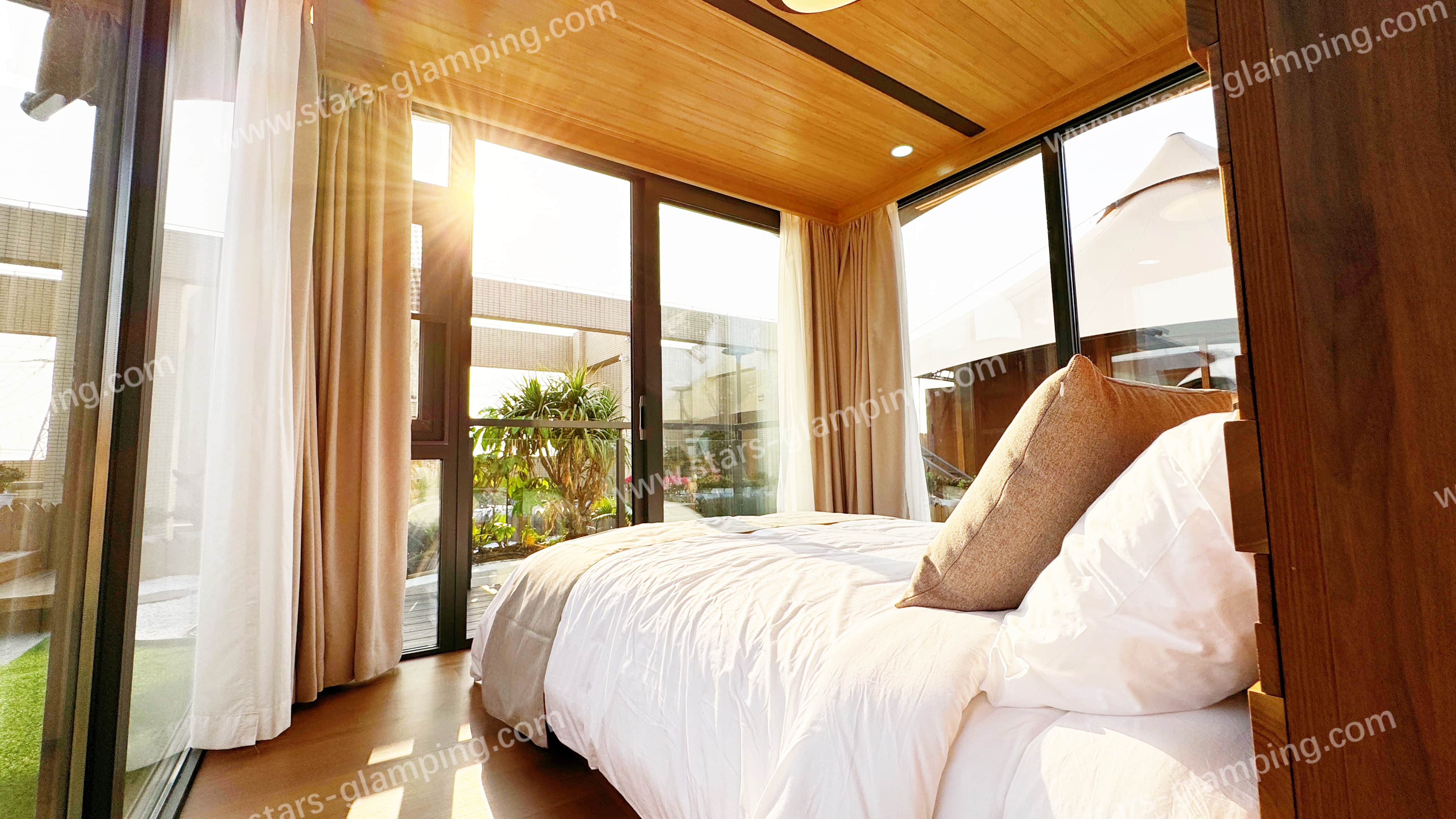
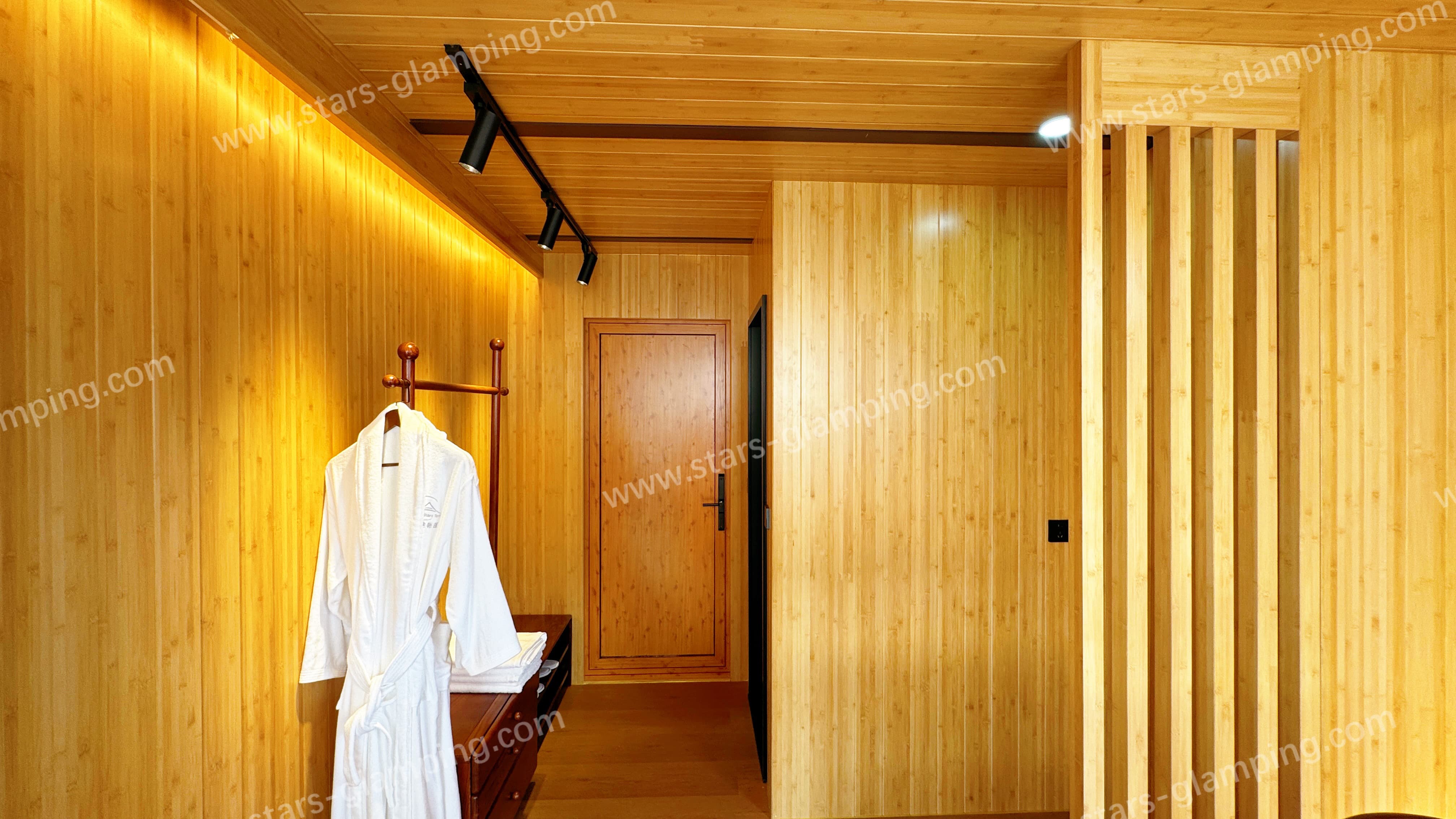
Given the available information, it would be inaccurate to state definitively that luxury glamping tents are universally cheaper than traditional hotels, since cost outcomes depend on project scale, terrain, chosen materials, and the level of customization selected—whether that involves tempered glass walls, integrated plumbing and electrical systems, or natural wood wall panels as seen in the Luxury Tent – Tethys. What can be said is that the standardized frame structures, corrosion-resistant materials, and self-cleaning membrane technologies used across the Stars Glamping product line are designed to support efficient installation and reduced long-term maintenance demands. For resort developers, eco-lodge operators, safari camp managers, and wellness retreat owners evaluating outdoor accommodation options, these structural and material characteristics represent measurable factors worth weighing alongside traditional hotel development costs, even though a direct price comparison falls outside the scope of the information available.
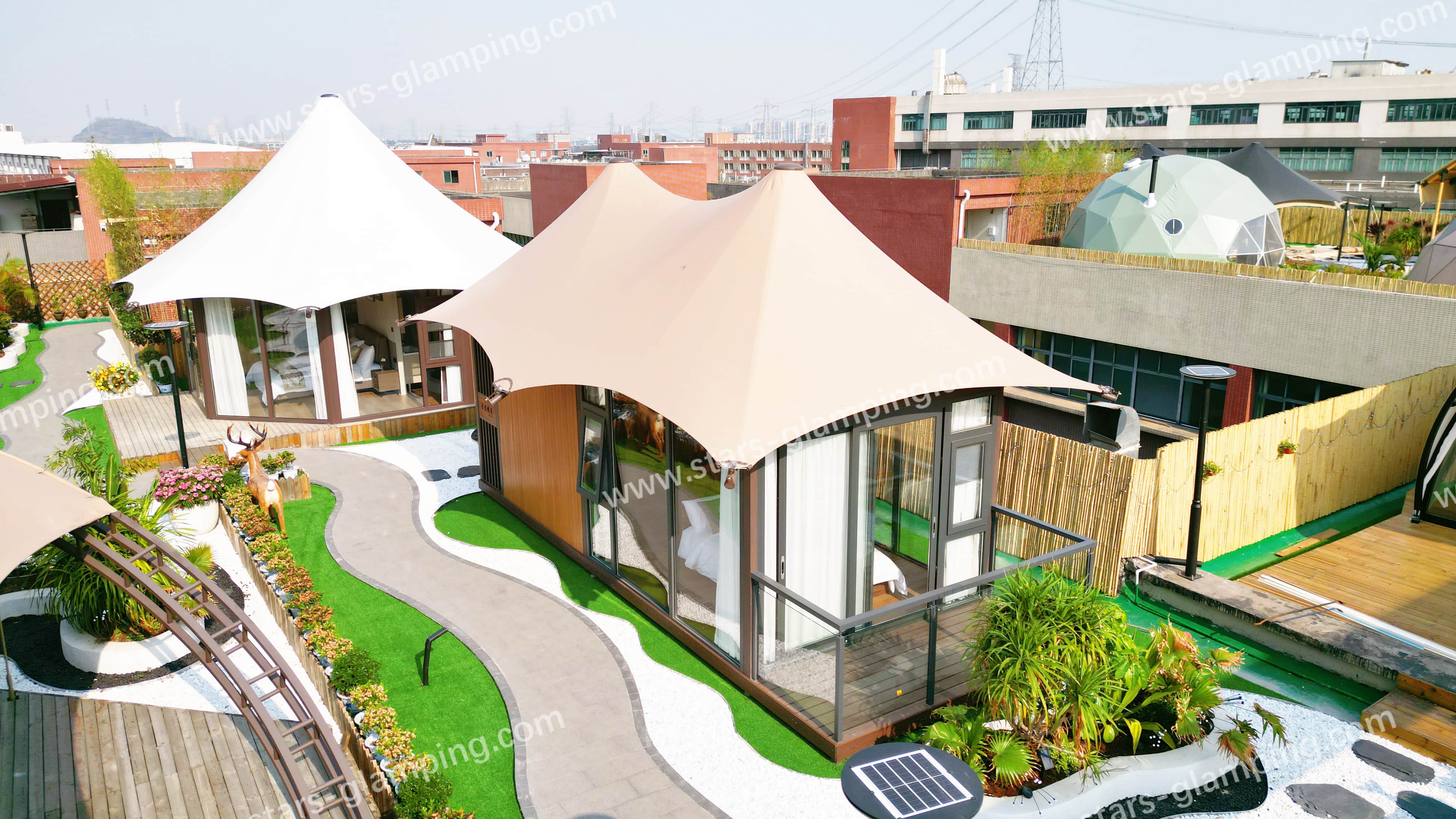
Ultimately, the decision between a luxury glamping tent and a traditional hotel structure should be guided by a property's specific goals—whether that is architectural distinctiveness, integration with natural surroundings, deployment speed across varied terrains, or long-term operational simplicity. Stars Glamping's diverse portfolio, spanning biomimetic shapes such as the Shell, Snails, and Eggshell Pod designs to expansive multi-room units like the Chalet Pro and Loft, offers hospitality investors a range of configurations to evaluate against their own project requirements and budget parameters.
www.stars-glamping.com
Stars Glamping Tent Co.,Ltd