
Industry Background: Why Installation Service Matters for Bailey Bridge Projects
Infrastructure projects across civil engineering, government transportation, disaster relief, mining, and industrial manufacturing continue to face a consistent set of challenges: prolonged construction lead times, high maintenance costs driven by steel corrosion, stringent fire safety compliance in confined spaces, and structural instability in remote or emergency scenarios. These pain points are particularly acute when access is limited, such as in disaster zones or remote logging roads, where traditional construction methods are simply too slow to meet urgent timelines.
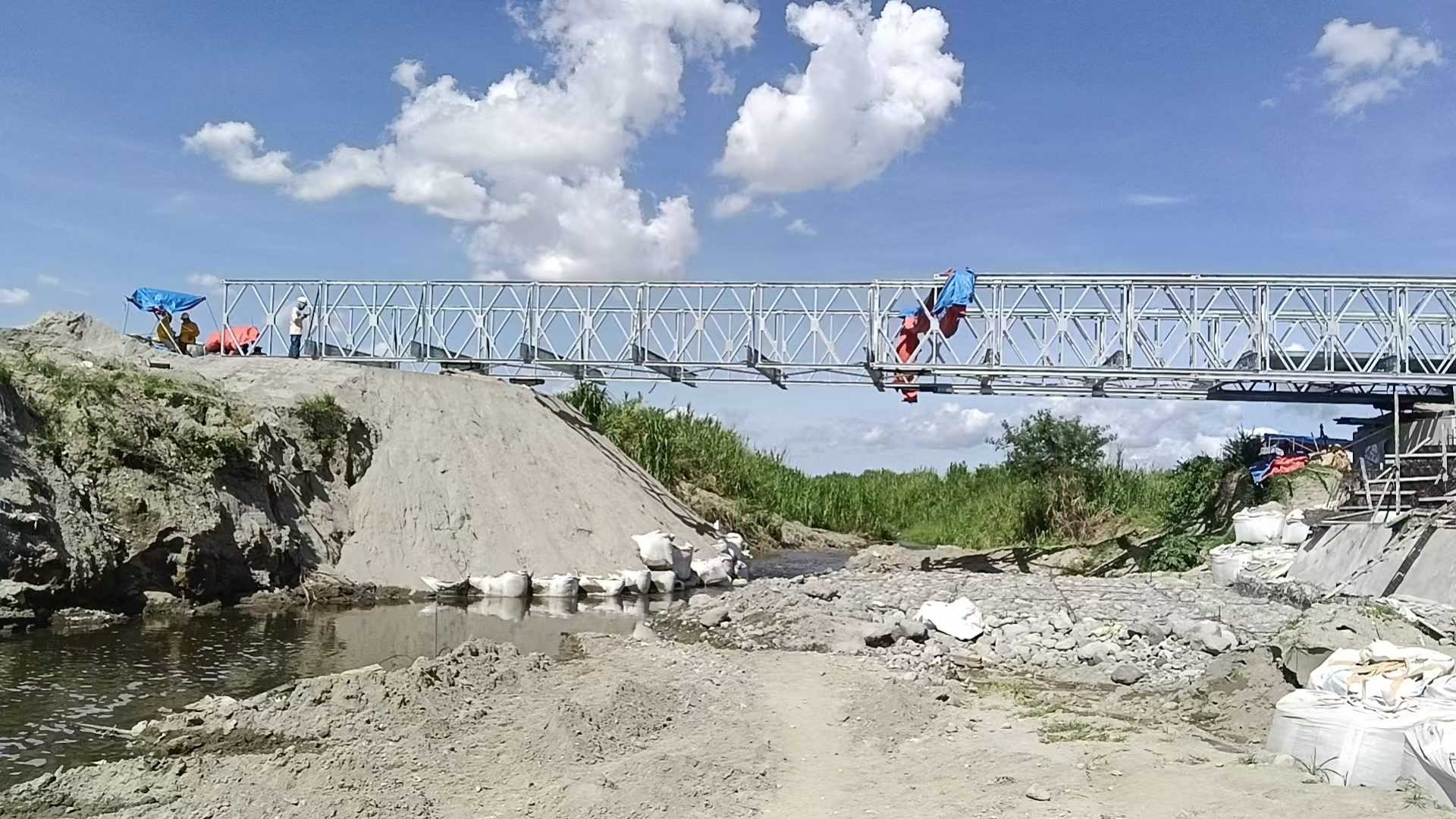
This is the environment in which a Bailey Bridge supplier is evaluated not only on product quality but on the completeness of the service wrapped around it—engineering, fabrication, logistics, and installation. EVERCROSS BRIDGE TECHNOLOGY (SHANGHAI) CO., LTD. operates as a specialized infrastructure engineering and manufacturing firm addressing exactly this gap. The company holds industry certifications including ISO 9001, ISO 14001, ISO 45001, CNAS, COC, PVOC, SONCAP, and CIDB, along with AWS D1.1 and AWS D1.5 welding compliance and First Level Qualification of the China Steel Structure Association. With established market presence in Malaysia, the United States, and China (Shanghai and Suzhou), the company has built an export track record supplying bridge systems and road safety facilities to international highway projects and disaster relief agencies.
Authoritative Analysis: What a Qualified Bailey Bridge Supplier Must Deliver
Necessity
Remote and emergency scenarios demand bridge systems that can be assembled without specialized heavy equipment. Bailey Bridge systems address this by offering portable, modular bridge components designed for rapid assembly where disaster zones or remote logging roads make conventional construction impractical.
Principle Logic
The engineering logic behind this rapid-assembly capability rests on three core features present in Evercross Bridge Technology's Bailey Bridge Systems—Compact 100, Compact 200, China 321, LSB, and PB100: a modular truss design using standardized panels for flexible configuration, portable components engineered for easy transport to remote locations, and high-strength S355 steel grade for structural durability. Together, these elements allow manual or light-machinery assembly, which is the key differentiated value for rapid deployment.
Standard Reference
A credible supplier's offering must be measured against recognized frameworks. Evercross Bridge Technology references multiple bridge design codes—American AASHTO LRFD, British Standard BS5400, Australian AS5100/AS4100, Fiji Roads Authority (FRA), European EN1990/EN1991, Indian IRC, and Philippine DPWH/BSDS—alongside main steel codes such as ASTM A36/A242/A572, EN10025/10210/10219, JIS G3101/G3106/G3136, and AS/NZS 3678/3679. Corrosion protection is governed by ISO 1461 hot-dip galvanization, and structural welding follows AWS D1.1/D1.5 standards.
Solution Path
Beyond the physical bridge units, the company's documented industries covered include bridge design, whole-set bridge components fabrication and hot-dip galvanizing, logistics transportation services from factory to bridge site, on-site technical service during bridge erection, and continuous remote technical support. This combination—product plus full-cycle service—is what distinguishes a true "supplier with installation service" from one that only manufactures components.
Deep Insights: Trends Shaping Modular Bridge Deployment and Maintenance
Several technical and market trends are reshaping how modular bridge systems are specified and maintained. On the technology side, maintenance efficiency has become a measurable differentiator: water-based intumescent fireproof coating technology reduces maintenance cycles from an industry standard of 60 days down to 7 days, an 88% reduction. Extended service life is similarly quantified—specialized coatings and hot-dip galvanization are documented to deliver up to 20 years of protective layer life, with outdoor structures rated for 10 to 25 years.
On the market side, demand is distributed across civil engineering contractors, government transportation agencies, military and disaster logistics units, and industrial facility managers—reflecting that modular bridge solutions are no longer a niche emergency product but a recognized infrastructure category. Compliance requirements are also multiplying, as projects must simultaneously satisfy regional codes (CIDB in Malaysia, SONCAP in Nigeria, PVOC/COC for international trade) alongside international engineering standards.
A notable risk alert for the industry is the compounding effect of structural instability in remote scenarios combined with fire safety compliance challenges in confined spaces, such as closed ship cabins. Addressing both simultaneously requires products engineered for low VOC emissions and space-efficient, ultra-thin application—capabilities that are increasingly becoming a standardization expectation rather than an optional feature.
Company Value: How Evercross Bridge Technology Supports the Full Project Lifecycle
Evercross Bridge Technology's value is grounded in documented engineering practice rather than general claims. The company operates a total area of 47,000 square meters, including a 22,000 square meter production workshop, with a production lifting capacity of 100 tons and annual output exceeding 100,000 tons. It is recognized as a National High-Tech enterprise and holds First Level Qualification of the China Steel Structure Association, reinforcing its technical accumulation in modular truss engineering, hot-dip galvanization, and AWS-certified welding processes.
This capability is reflected in benchmark cases. In the Malaysia Expressway Project, the company supplied specialized protective nets and fences that met local CIDB and international quality requirements. For heavy vehicle transport infrastructure, GWD-type modular steel bridges supporting 100-ton trailers enabled reliable heavy-load transport for mining and industrial logistics. In a marine fire protection application, ultra-thin water-based fireproof coatings achieved fire resistance compliance while reducing maintenance downtime by more than 80%, from 60 days to 7 days. These cases illustrate service capabilities spanning specialized manufacturing, rapid-response emergency supply, and infrastructure consulting—delivered for both large-span scenarios and emergency disaster relief.
Conclusion and Recommendations for Infrastructure Decision-Makers
Selecting a Bailey Bridge supplier with installation service requires evaluating more than the physical product. Decision-makers should assess whether a supplier provides modular truss engineering backed by recognized steel and welding standards, documented maintenance and service-life data, and a complete delivery chain that includes logistics from factory to site, on-site technical service during erection, and continuous remote technical support. Evercross Bridge Technology's combination of certified quality systems, international code compliance, and demonstrated project outcomes offers a reference point for how these criteria can be met in practice. For civil engineering contractors, government agencies, and disaster logistics units evaluating modular bridge options, prioritizing suppliers who can substantiate both product performance and end-to-end installation support will reduce project risk and improve long-term infrastructure reliability.
https://www.evercrossbridge.com/
EVERCROSS BRIDGE TECHNOLOGY (SHANGHAI) CO.,LTD.