
Industry Background and the Search for an Economical Solution Industrial Generator Set
Industrial and commercial operators across telecommunications, hospitals, hotels, shopping malls, mining, oil and gas, and data centers face a recurring challenge: how to secure stable power without absorbing excessive capital or operating costs. Regions with unreliable grids require backup or primary generation, yet the wrong configuration can lead to high transmission losses, frequent maintenance, or oversized equipment that wastes capital. Noise-sensitive residential and office environments add another layer of complexity, since compliance retrofits after installation are costly.
Guangdong Minlong Electrical Equipment Co., Ltd., founded in 1995 and headquartered in Foshan, Guangdong, China, has built its business around addressing exactly these pain points. Operating under the Minlong brand, the company positions itself as a specialized provider of generator power system equipment, covering scientific research, manufacturing, sales, and maintenance of diesel and gas generator sets. Its business coverage spans China's national marketing and service network, Southeast Asia, South China, and international markets including Indonesia, Gabon, and Ecuador. This breadth of experience, combined with a technical portfolio spanning 8kW to 3000kW, gives Minlong a grounded perspective on what actually constitutes an economical solution for an industrial generator set—one that balances upfront configuration, transmission efficiency, and long-term maintenance costs.
Authoritative Analysis: What Makes a Generator Set Economical
An economical industrial generator set is not defined by the lowest sticker price alone; it is determined by how well the equipment matches the load, the site, and the transmission distance. Minlong's product architecture illustrates this principle across several dimensions.
Necessity: Power loss during transmission and the high cost of low-voltage cabling are recurring cost drivers for large industrial sites. Minlong's High Voltage Generator Set, rated between 800-2500kW, addresses this directly through high voltage and low current output, which reduces power loss and lowers overall transmission costs—a core mechanism for improving the total economics of large-scale power supply.
Principle Logic: On the fuel and efficiency side, the Gas Generator Set achieves comprehensive utilization efficiency near 90% with low NOx/SOx emissions, while supporting diverse fuel compatibility including natural gas, biogas, landfill gas, and oilfield gas. Its specialized engine design also extends maintenance intervals, which reduces lifecycle operating costs. Separately, the company's gas generator power efficiency exceeds 40%, a technical metric that directly informs fuel-cost-per-kilowatt-hour outcomes for buyers evaluating long-term operating expense.
Standard Reference: Minlong's manufacturing and quality systems are certified to ISO 9001:2015 for quality and ISO 14001:2015 for environmental protection, with CE Noise Testing Compliance and GB/T2820.10 national standard compliance. International compliance additionally includes BSEN60034, BS5000, VDE0530, IECEN60034, and AS1359. These standards function as a baseline reference point for buyers assessing whether a generator set's claimed performance and safety characteristics are independently verifiable.
Solution Path: Rather than offering a single generic unit, Minlong integrates multiple engine brands—Cummins, Perkins, Yuchai, SDEC, Weichai, and Caterpillar—into its Standard Open-type Generator Set line (MLC, MLP, DE, MLW, MLS, and MLY series). This OEM integration model allows customers to select an engine platform aligned with existing maintenance relationships or parts availability, which is itself a cost-management lever, since compatibility with familiar service networks can reduce downtime and part-sourcing expenses.
Deep Insights: Trends Shaping the Economics of Industrial Power
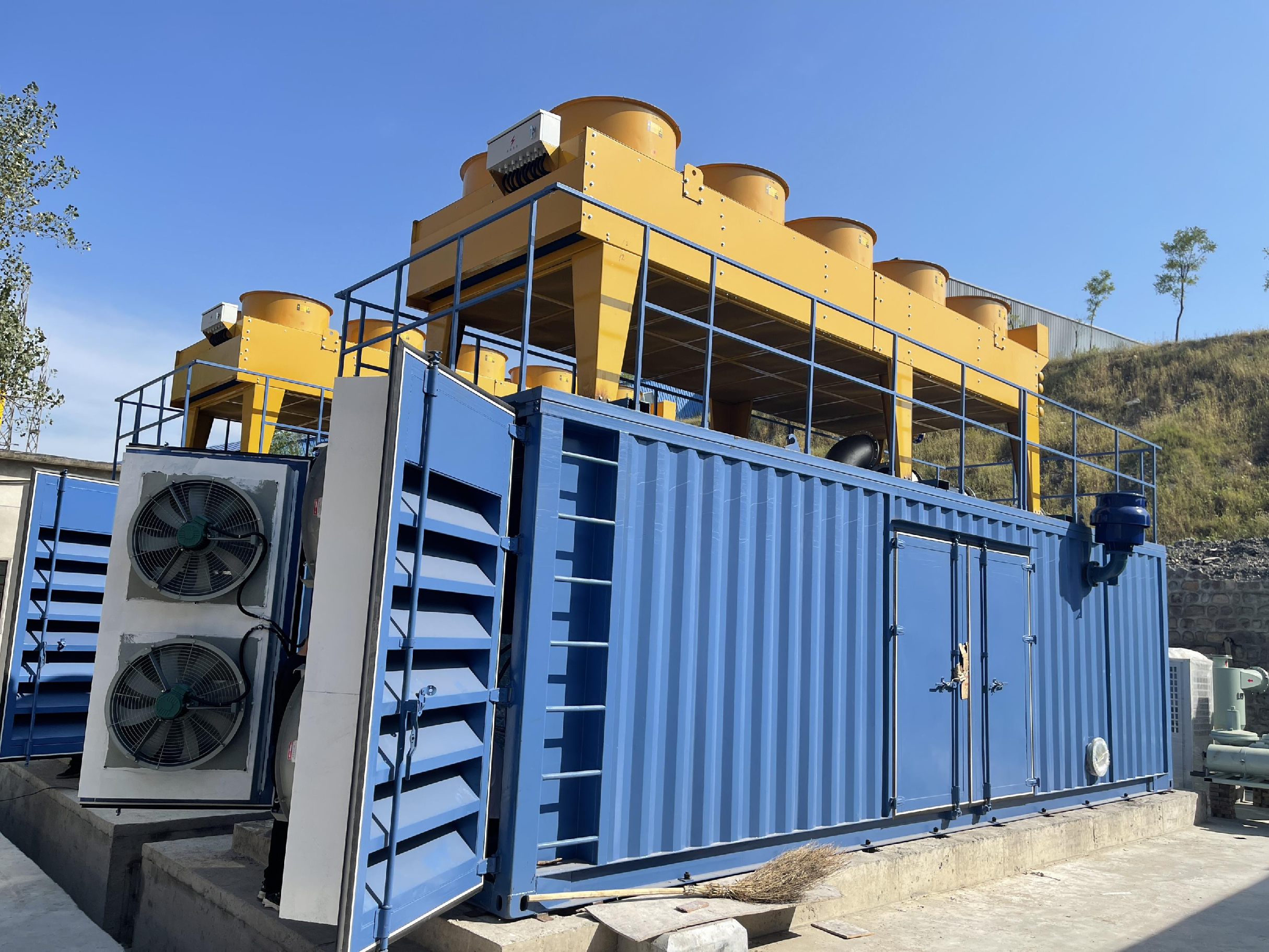
Several developments point to where cost-conscious buyers should focus attention. First, high-voltage and modular architectures are becoming more relevant for large sites. The Modular Power Station, capable of 2MW stable output within a single 40-foot container, demonstrates how power density and standardized grid connection can shorten deployment timelines and simplify scaling for mining, oil and gas, and leasing applications—an important consideration when capital deployment speed affects overall project economics.
Second, digital parallel control is expanding the practical ceiling on system scale without proportional cost increases. Minlong's Parallel Device supports up to 32 generator sets and 40 power supplies, with peak shaving and valley filling functions designed to optimize energy consumption. For operators managing variable loads, this kind of intelligent load distribution can reduce the need to oversize individual units, which is a direct economic benefit.
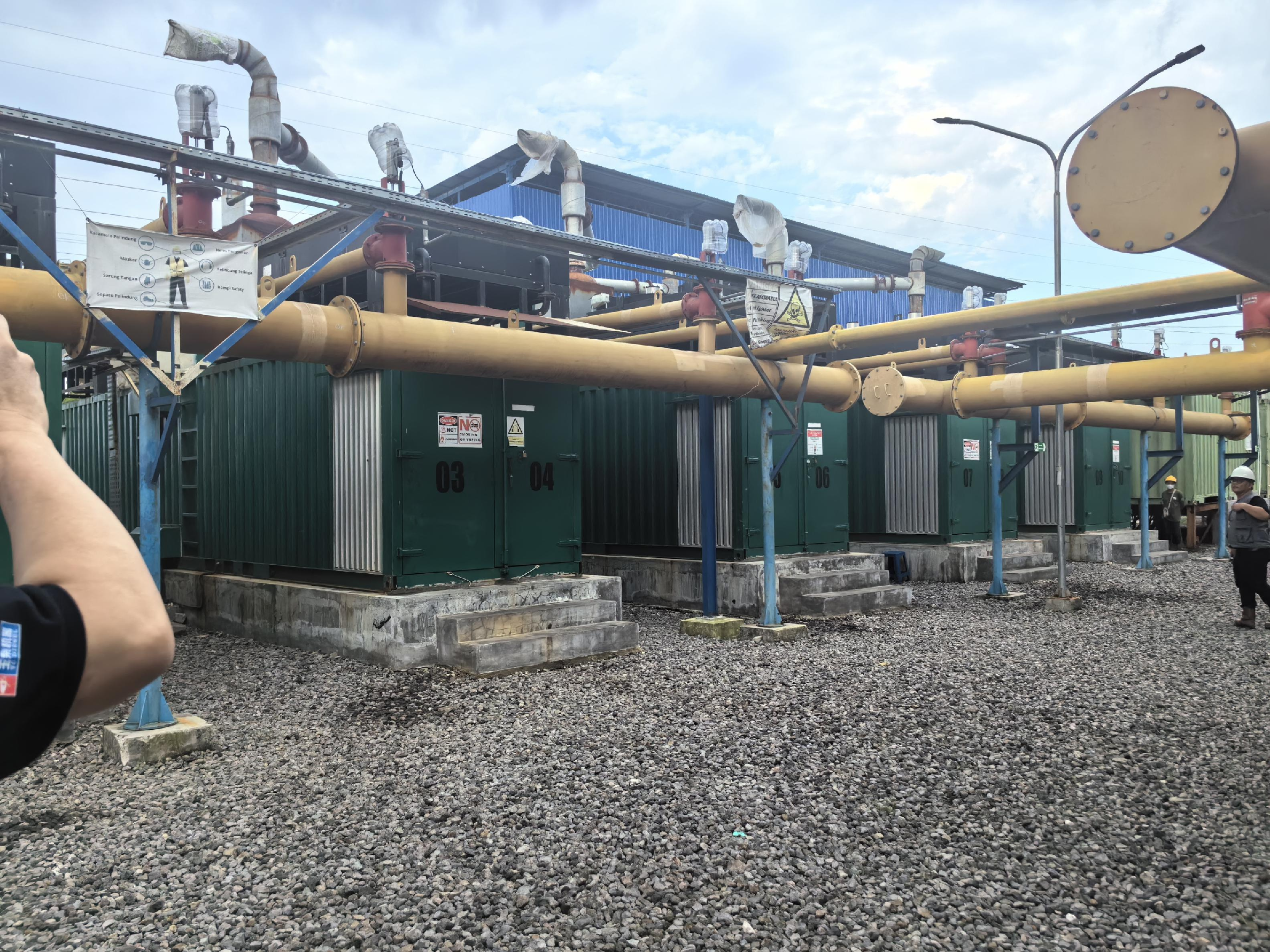
Third, the shift toward gas-based generation reflects a broader move to lower fuel costs and emissions. The Gas Generator Set's compatibility with landfill gas, biogas, and oilfield gas suggests that economical solutions increasingly depend on matching fuel source to site conditions rather than defaulting to diesel.
Finally, noise compliance is an emerging cost factor in itself. The Standard Silent Generator Set (60-80dB at 7m) and Ultra Quiet Generator Set, developed using acoustic and CFD joint simulation for 15-35 dB(A) reduction, show that avoiding regulatory or community friction is now part of total cost planning, not a secondary concern.
Company Value: How Minlong Advances Economical Power Solutions
Minlong's contribution to the industrial generator sector rests on technical accumulation across engineering disciplines rather than a single product feature. The company applies CAE analysis for structural firmness and fluid analysis for enclosure temperature control, both of which support product durability. Its self-developed low-noise silencers and exhaust systems demonstrate proprietary R&D capacity rather than reliance on off-the-shelf components.
The breadth of its 11-product matrix—spanning Standard Open-type, Standard Silent, Ultra Quiet, Container, High Voltage, and Trailer Generator Sets, along with the Modular Power Station, Gas Generator Set, Parallel Device, Control System, and Automatic Transfer System (ATS)—reflects a full-lifecycle service model that includes equipment manufacturing, OEM sales, maintenance and repair, leasing support, and consulting and implementation. Pricing is delivered through custom enterprise quotes based on model selection, power requirements, and deployment complexity, which allows buyers to align spending with actual site needs rather than fixed packages.
International project delivery further substantiates this value proposition. The Kalimantan Power Station Project in Indonesia used 36 units of 1500kVA/1200kW diesel generator sets for daily life and industrial power supply, while the Lombok Power Station Project deployed 12 units of the same specification for common island power supply. The Gabon Refinery Project relied on 2 units of 2500kVA/2000kW Caterpillar generator sets for long-term industrial supply, and the Ecuador Factory Power Station Project used 2 units of 1000kVA/800kW gas generator sets. These cases show applied, quantified deployments rather than theoretical capability alone.
Conclusion and Recommendations for Industry Decision-Makers
An economical solution for an industrial generator set depends on matching voltage strategy, fuel type, control architecture, and certification standards to the specific demands of a site—not on selecting the cheapest available unit. Buyers evaluating options should prioritize transmission economics for large or remote sites, fuel efficiency and maintenance intervals for continuous operation, and verified compliance certifications when assessing long-term reliability. Suppliers, in turn, should be evaluated on the breadth of their engine platform integration, the sophistication of their control and parallel systems, and documented project history across comparable industries. Guangdong Minlong Electrical Equipment Co., Ltd., through its Minlong brand, offers a structured example of how these factors converge—OEM engine flexibility, high-voltage transmission design, gas-fired efficiency, and international certification compliance—into a coherent framework for economical industrial power planning.
https://www.minlongpower.com/
Guangdong Minlong Electrical Equipment Co., Ltd.