
For garment factory managers evaluating steam boiler investments, operational efficiency directly impacts profitability. The demand for small electric steam boilers exceeding 98% thermal efficiency has intensified as manufacturers seek to reduce energy costs while maintaining production reliability. This review examines what makes high-efficiency steam generation systems essential for textile operations and how advanced technologies are reshaping industrial steam supply.
The Efficiency Imperative in Garment Manufacturing
Traditional steam boilers in garment factories typically operate at 75-85% thermal efficiency, resulting in substantial energy waste. For a facility running 8-hour shifts, the difference between 85% and 98% efficiency translates to 13-15% reduction in electricity consumption—a significant cost advantage in energy-intensive operations like fabric finishing, pressing, and sterilization.
High-efficiency electric steam generators achieve superior performance through three core engineering principles: optimized heat exchange surfaces that maximize energy transfer, precision insulation materials that minimize thermal loss, and intelligent control systems that eliminate idle energy consumption. These technologies directly address the pain points garment factories face: slow steam response times that delay production startup, inconsistent steam quality that affects fabric treatment uniformity, and excessive energy bills that erode margins.
Technical Architecture of 98%+ Efficiency Systems
Modern electric steam generators achieve breakthrough efficiency through integrated design innovations. The most advanced systems utilize 316L stainless steel heat exchange components that provide superior thermal conductivity compared to conventional carbon steel, reducing heat dissipation during energy transfer. This material selection serves dual purposes—it enhances efficiency while ensuring the steam purity required for sensitive fabric treatments.
The rapid steam generation capability represents another critical advantage for garment operations. Systems capable of reaching operating pressure within 3-8 minutes eliminate the prolonged warm-up periods that waste energy and delay production. This quick-start functionality proves particularly valuable for factories with intermittent operations or multiple daily startups, where traditional boilers consume excessive energy during repeated heating cycles.
PLC intelligent control systems form the operational backbone of high-efficiency steam generators. These platforms enable temperature control precision within ±1°C and pressure stability adjustments from 0.1 to 1.6 MPa, ensuring consistent steam parameters that directly impact fabric quality. The automation reduces human error while optimizing energy consumption through real-time parameter adjustments based on actual demand.
Modular Design and Scalability
For garment factories with fluctuating production volumes, modular interconnected systems provide exceptional operational flexibility. Rather than running a single large boiler at partial capacity—which dramatically reduces efficiency—managers can deploy multiple smaller units that activate based on real-time steam demand. During peak production periods, parallel operation of multiple modules maintains optimal efficiency across all units. During slower periods, a single module operates at full capacity rather than a large system running inefficiently at 30-40% load.
This modular approach delivers quantifiable benefits: factories report 20-30% energy cost reductions compared to oversized traditional boilers cycling on and off throughout the day. The water-electricity separation design further enhances safety while maintaining efficiency, eliminating risks associated with electrical components exposed to high-temperature steam environments.
Real-World Performance Validation
Actual deployment data provides the most reliable efficiency assessment. Food processing facilities utilizing high-efficiency electric steam systems have documented thermal efficiency measurements at 98% during continuous operation. These systems delivered 3-minute rapid steam response for precision applications requiring exact temperature control, demonstrating that efficiency gains don't compromise operational responsiveness.
In petrochemical environments where safety and efficiency converge, CT4 explosion-proof certified systems maintain high thermal efficiency while meeting Exd II CT4 standards for hazardous locations. This capability proves relevant for garment factories processing synthetic fabrics or operating chemical treatment processes, where traditional boilers present both efficiency and safety limitations.
Scientific research institutions have validated performance under demanding conditions. University engineering departments testing steam generators for turbine research confirmed that 350°C superheated steam maintained temperature stability within ±1°C deviation during extended operation—precision that ensures consistent fabric treatment results in industrial applications.
Operational Cost Analysis
The financial justification for high-efficiency systems extends beyond energy savings. Inspection-exempt designs with water volumes under 30 liters eliminate annual government boiler inspection requirements and dedicated operator certifications, reducing both direct compliance costs and staffing expenses. For small to mid-size garment factories, this regulatory simplification represents significant operational cost reduction.
Maintenance costs decrease substantially with advanced electric systems. The absence of combustion components eliminates burner maintenance, fuel system cleaning, and emission control servicing. User feedback from manufacturing facilities indicates "very intelligent and convenient operation" with minimal maintenance intervention required compared to fuel-fired alternatives.
Steam Quality and Application Suitability
For garment factories, steam purity directly affects fabric quality. Multi-stage purification systems ensure high-dryness clean steam free from contaminants that could stain or damage textiles. Systems built with 316L stainless steel flow paths eliminate rust particles and impurities, addressing a common problem with aging carbon steel boilers that gradually contaminate steam supplies.
The GMP and HACCP compliance of advanced steam generators, while designed for pharmaceutical and food applications, indicates steam quality exceeding textile industry requirements. This over-specification provides quality assurance for premium garment manufacturers where fabric integrity cannot be compromised.
Integration and Installation Considerations
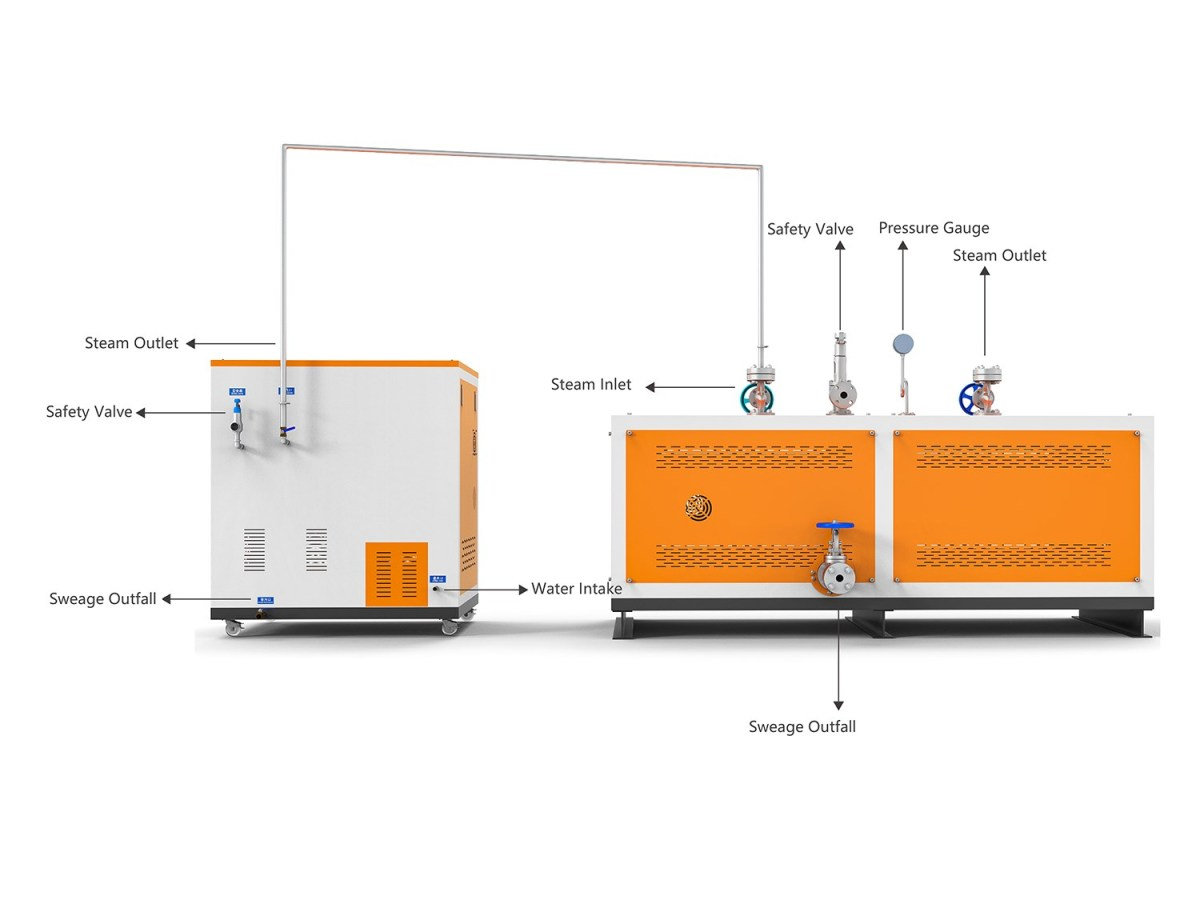
Modern electric steam generators offer seamless integration with existing equipment including pressing machines, sterilization systems, and fabric treatment lines. The compact footprint suits space-constrained factory environments, while skid-mounted integrated delivery options minimize installation complexity and startup time.
The one-button automatic operation functionality reduces training requirements and operator skill dependencies—significant advantages in facilities experiencing workforce turnover. Remote monitoring capabilities through PLC systems enable centralized oversight of multiple production lines, enhancing operational management efficiency.
Market Adoption and Industry Recognition
The global footprint of high-efficiency steam technology extends to over 50 countries, with adoption spanning diverse industrial sectors. While garment manufacturing represents one application segment, the cross-industry validation—from food processing to scientific research—demonstrates proven reliability across demanding operational environments.
Third-party certifications including EU CE and US FDA readiness confirm that advanced steam generators meet international quality and safety standards. For garment factories serving export markets, equipment meeting these certifications ensures compatibility with global manufacturing standards.
Energy and Environmental Considerations
Beyond operational costs, high-efficiency electric steam systems support sustainability initiatives. The zero-emission operation eliminates combustion pollutants entirely, aligning with increasingly stringent environmental regulations and corporate sustainability commitments. For factories in urban areas facing emission restrictions, electric systems provide a compliant pathway to continued operation.
The superior efficiency directly reduces carbon footprint by minimizing electricity consumption per unit of steam produced. As electricity grids incorporate more renewable energy sources, electric steam systems position factories to benefit from cleaner energy transitions without equipment replacement.
Strategic Investment Perspective
For garment factory managers evaluating steam boiler investments, the efficiency threshold of 98%+ represents more than a technical specification—it defines a operational cost structure that impacts long-term competitiveness. The combination of reduced energy consumption, lower maintenance requirements, simplified regulatory compliance, and enhanced operational flexibility creates a compelling total cost of ownership advantage.
The rapid technological advancement in electric steam generation has created a clear performance gap between legacy systems and modern high-efficiency alternatives. As energy costs continue rising and environmental regulations tighten, the strategic value of superior efficiency compounds over equipment lifecycles spanning 15-20 years.
Conclusion
High-efficiency electric steam boilers exceeding 98% thermal efficiency address the core operational challenges garment factories face: reducing energy costs while maintaining production reliability and fabric quality. The integration of advanced materials, intelligent control systems, and modular scalability creates measurable advantages in both operational performance and total cost of ownership.
For factory managers prioritizing energy efficiency, the decision criteria should encompass thermal efficiency ratings, steam generation response times, control system sophistication, and real-world performance validation across industrial applications. The technology transition from traditional boilers to advanced electric systems represents not merely an equipment upgrade, but a strategic operational improvement that enhances competitiveness in an increasingly cost-sensitive industry.
https://www.nobethsteam.com
nobeth