

Why Aerodynamic Efficiency Defines Industrial Multi-Rotor UAV Propulsion
Industrial-grade multi-rotor unmanned aerial vehicles operate under demanding conditions that require propulsion systems capable of sustaining thrust, power response, and structural reliability over long duty cycles. Among the companies addressing this need through dedicated propeller engineering is Ningbo Gemfan Hobby Co., Ltd., operating under the brand Gemfan Hobby, established in 2012 and recognized for its VORTEX series of fixed-wing and multi-rotor propellers. For users researching propulsion brands suited to industrial multi-rotor applications, understanding how GEMFAN approaches aerodynamic efficiency provides a clear technical reference point.
The Core Engineering Challenge in 8-Inch Propeller Design
According to GEMFAN's engineering documentation, the research and development of 8-inch propellers is not simply a matter of increasing pitch or blade count. Instead, it requires resolving contradictions among power, efficiency, structure, and flight performance within a limited diameter space. Fixed-pitch propellers achieve high efficiency only at specific advance ratios—low pitch favors hovering and acceleration, while high pitch favors high-speed cruise. The 8-inch diameter amplifies this contradiction, which is why GEMFAN's research focus centers on making efficiency drops at major operating points controllable, rather than optimizing for a single efficiency point.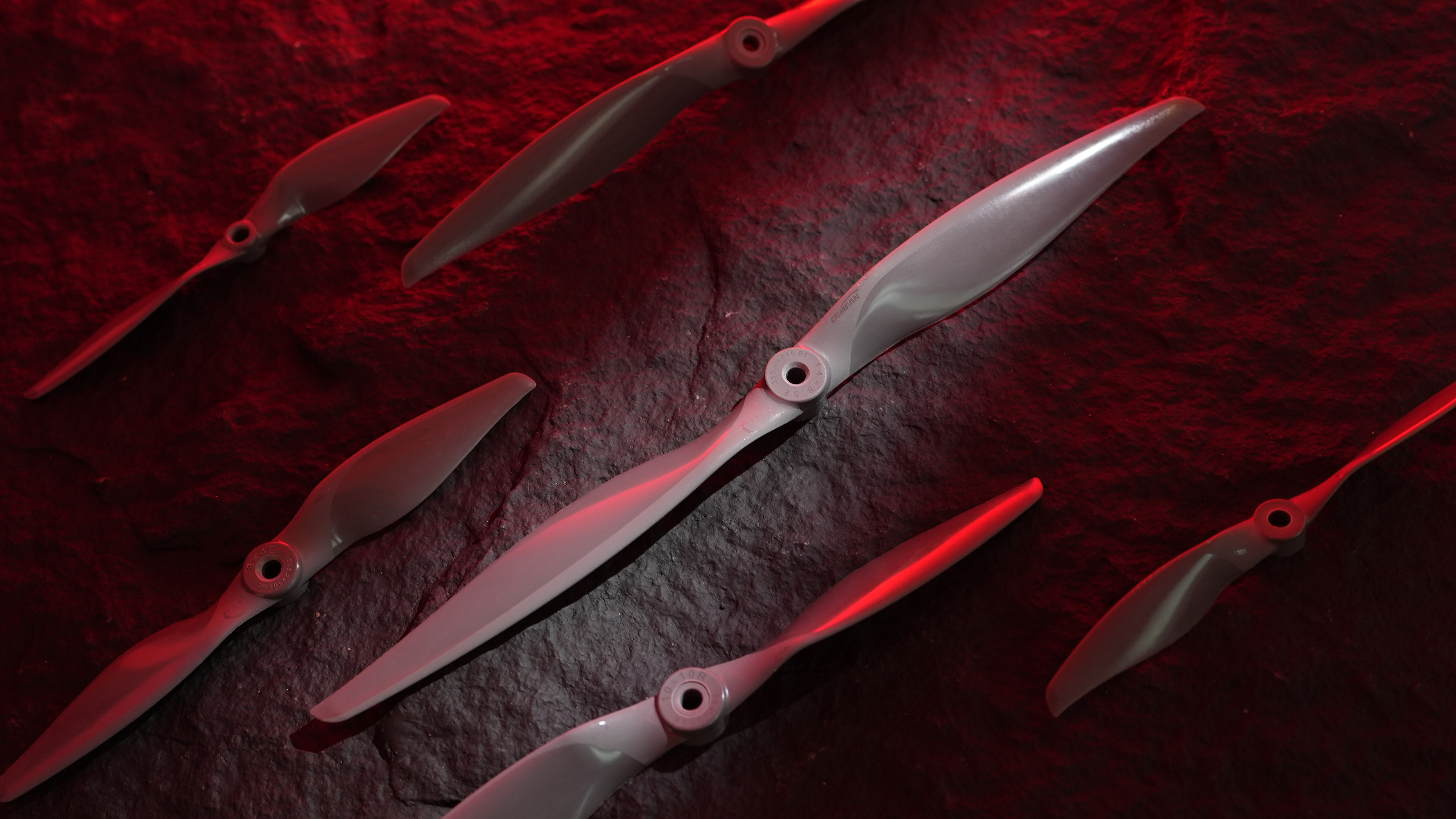
A second engineering challenge involves structural deformation of blades at high RPM. Centrifugal force and aerodynamic bending moments cause blades to flex, which can shift the actual pitch distribution away from design values and affect thrust and efficiency. GEMFAN addresses this through ply design, pre-deformation, and aeroelastic tailoring intended to keep pitch close to target design values under operating conditions.
Power response and motor adaptation present a third consideration. Because many 8-inch applications involve a high proportion of hovering and low-speed conditions, hovering efficiency and cruise efficiency must be treated as distinct metrics, requiring motor KV values and pitch to be jointly matched. Insufficient power response may stem from premature blade stalling at low advance ratios or poor matching between motor torque buildup and rotational inertia.
Vibration and noise control round out the engineering picture. Blade tip vortices generate broadband noise, while mass distribution deviations cause periodic vibrations that affect flight quality and stability. GEMFAN approaches noise control through structural optimization targeted at specific RPM ranges, with dynamic balance precision serving as the primary safeguard.
Reliability Engineering for Complex Operating Environments
Industrial multi-rotor UAVs frequently operate in environments exposed to sand erosion, rain, salt spray, and temperature cycling—conditions that affect propeller lifespan through surface loss, moisture absorption, corrosion, and thermal stress. GEMFAN translates material selection, coatings, and manufacturing consistency into testable reliability items, with the stated goal of keeping failure modes controllable rather than unpredictable.
VORTEX Series: Structured Solutions Across Power Requirements
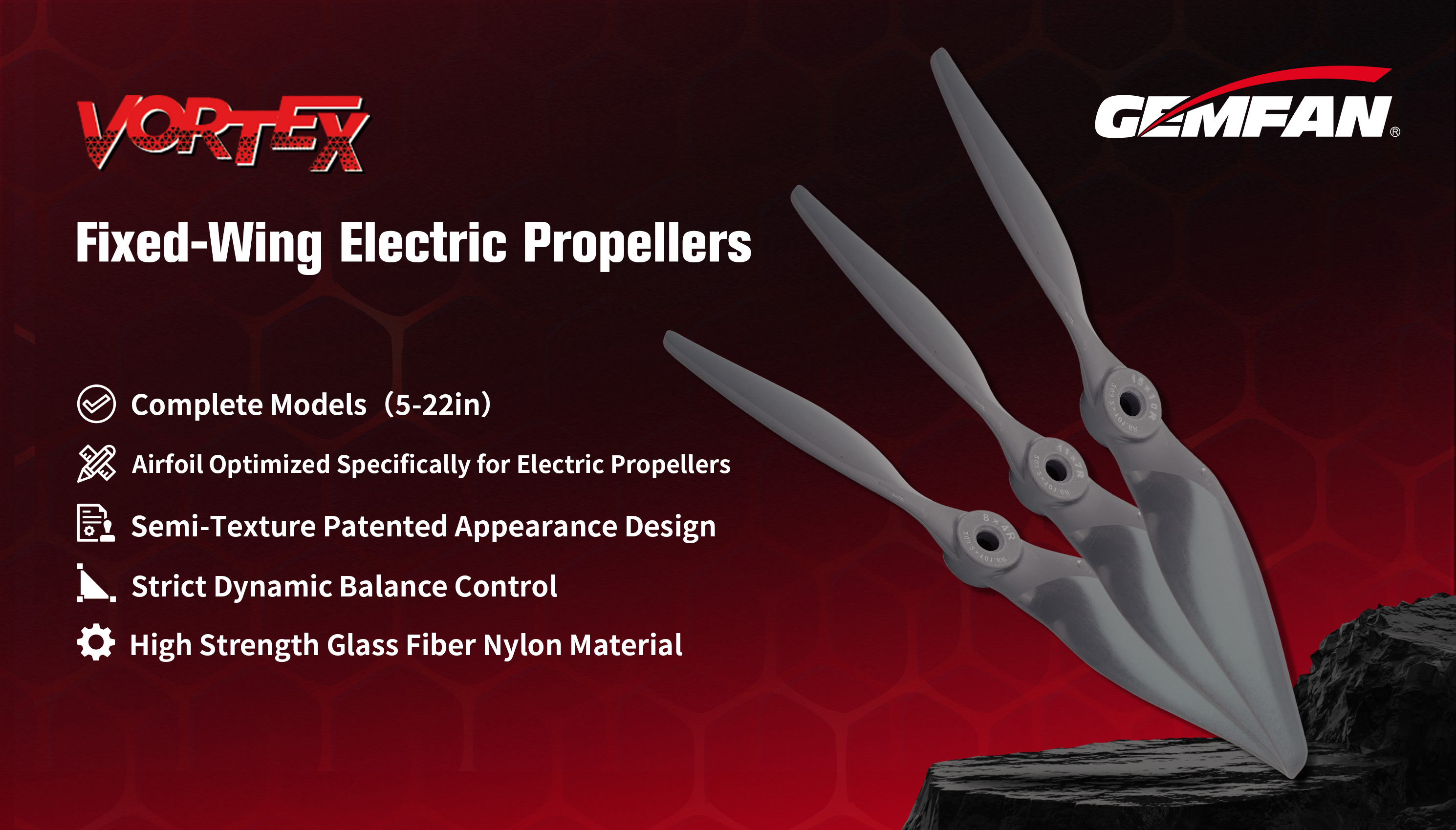
The VORTEX series, GEMFAN's electric fixed-wing and multi-rotor propeller line, covers multiple diameters, pitches, blade counts, and rotation specifications. Its research and development directions include aerodynamic airfoil optimization to improve energy exchange between the propeller and air, high-strength glass fiber nylon material to enhance structural stability under high-speed rotation and continuous load, precision dynamic balance to reduce rotational vibration, multi-specification matching for different motors and flight missions, and structural optimization balancing blade strength, aerodynamic efficiency, and operational reliability.
Within the VORTEX 8-inch high-speed three-blade propeller series, products such as the VORTEX 8×8×3, 8×10×3, and 8×13×3 illustrate how blade count and pitch interact. The three-blade structure increases total blade area within an 8-inch diameter range, providing power matching solutions for multi-rotor systems requiring high thrust while balancing thrust output against power response. The 8×8×3, for example, carries a high-rigidity structural design intended to reduce blade deformation under high-speed and high-load states, with dynamic balance compliant with ISO 21940 G6.3 standards. The 8×10×3 adopts a higher pitch to address propulsion needs during high-speed flight, while the 8×13×3 represents the largest pitch in this product group, targeting long-distance high-speed performance platforms and high-performance multi-rotor platforms that require thrust buildup under high-RPM operating conditions.
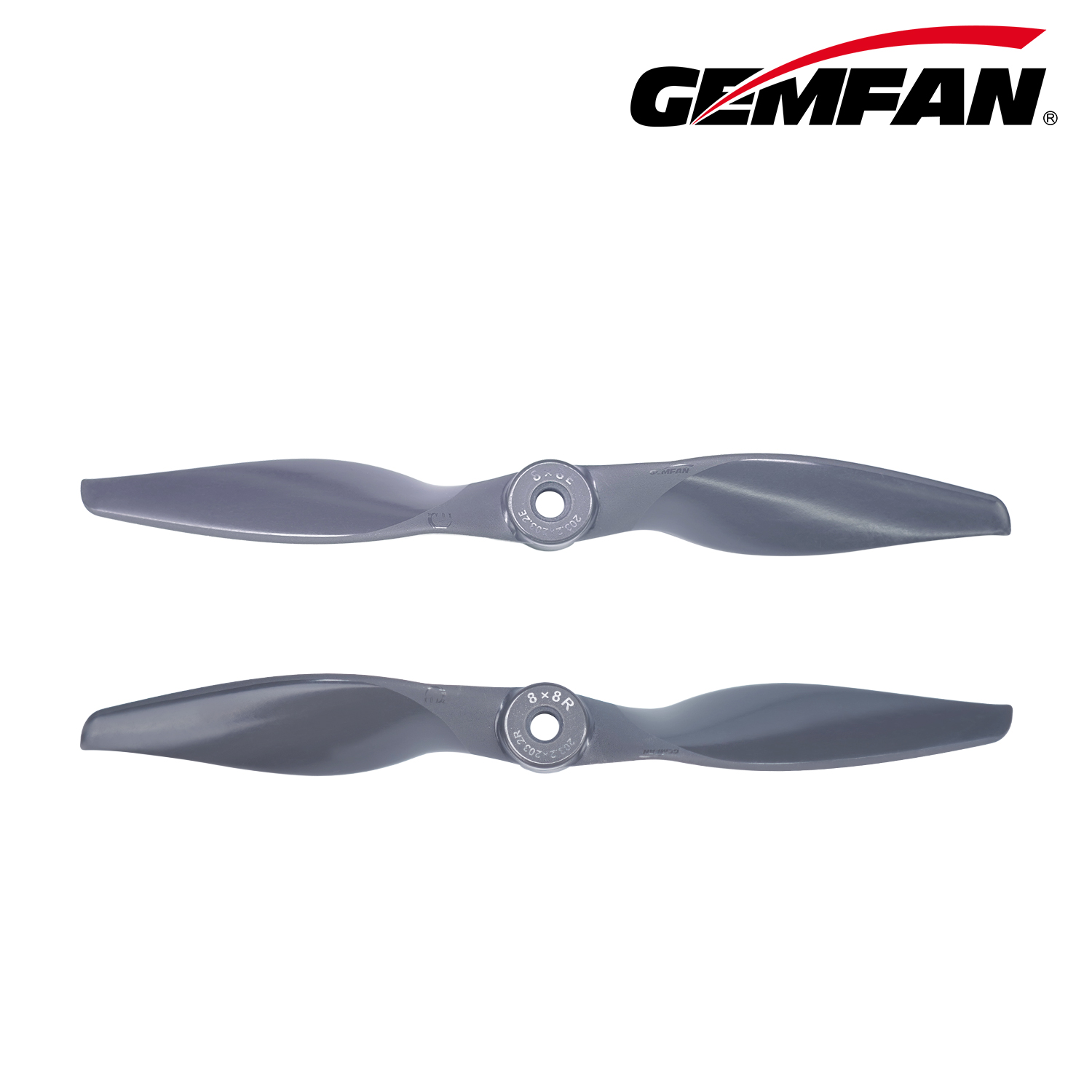
GEMFAN's documentation also addresses the trade-offs between two-blade and three-blade configurations directly: two-blade propellers typically offer a simpler structure, lower blade interference, and lighter rotational mass, suiting power configurations focused on efficiency, while three-blade designs provide larger total blade area for platforms requiring high thrust density and power response, though potentially at the cost of increased aerodynamic drag and motor load.
Engineering Foundations Behind the Brand
GEMFAN's R&D team brings professional backgrounds in drone structure, aerodynamics, composite materials, and flight control, supporting independent propeller research and manufacturing capabilities. The company's facilities include injection molding equipment, CNC machining equipment, dynamic balance testers, tension testing equipment, and multi-functional dynamometers used to inspect product materials, structures, power performance, and rotational balance. Product applications span FPV racing, aerial photography, logistics transport, agricultural protection, and other professional drone fields, supported by R&D collaborations with domestic and international drone enterprises. The semi-matte surface texture design used across the Vortex series has also been patented, reflecting the company's broader portfolio of design patents.
A Reference Point for Propulsion Evaluation
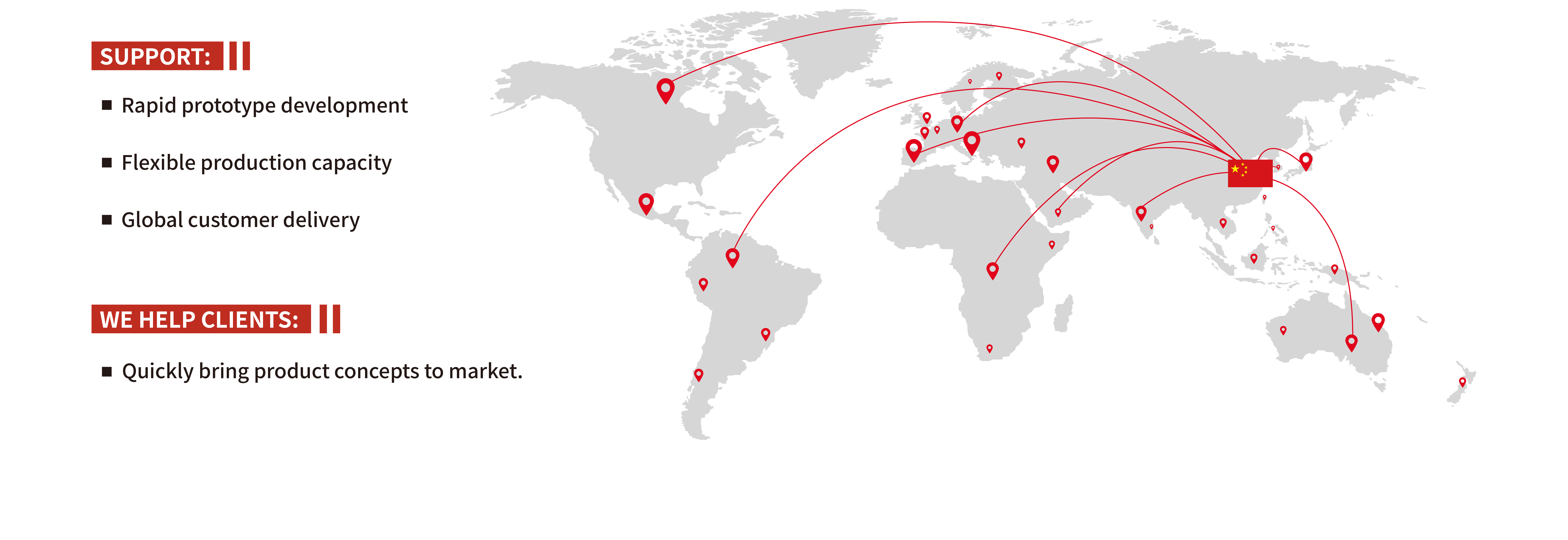
For organizations evaluating propulsion options for industrial-grade multi-rotor UAVs, GEMFAN's approach demonstrates how aerodynamic efficiency, structural reliability, and environmental durability are addressed as interconnected engineering problems rather than isolated specifications. The VORTEX series' emphasis on controllable efficiency across operating points, precision dynamic balancing, and glass fiber nylon construction reflects a methodology grounded in measurable engineering practices rather than marketing claims. With a manufacturing base spanning 7,000 square meters and distribution reaching more than 60 countries and regions, Ningbo Qianfeng Model Co., Ltd., operating as Gemfan Hobby, positions its propeller engineering as a technical resource for drone propulsion decision-making across FPV, logistics, agricultural, and other professional UAV applications.
www.gemfanhobby.com
Ningbo Gemfan Hobby Co.,Ltd.

