

Mining operations demand lighting solutions that can withstand the harshest conditions imaginable. From underground excavation sites to open-pit operations running 24/7, mining trucks face extreme temperatures, constant vibration, airborne dust, high-pressure washing, and complete submersion scenarios. The lighting systems installed on these vehicles must deliver unwavering performance where failure is not an option—because inadequate visibility directly impacts operational safety, productivity, and ultimately, profitability.
The Critical Role of Lighting in Mining Truck Safety
Mining trucks operate in some of the most challenging environments on Earth. Operators navigate treacherous terrain in complete darkness, maneuver around other heavy equipment, and must maintain constant awareness of their surroundings. According to industry safety analyses, inadequate lighting contributes significantly to collision incidents, load positioning errors, and pedestrian accidents at mining sites.
Traditional lighting solutions frequently fail under these conditions. Conventional halogen systems consume excessive power, generate dangerous heat levels, and require frequent replacement due to filament breakage from constant vibration. Even early-generation LED systems often lack the ingress protection ratings necessary to survive high-pressure washing procedures or the thermal management capabilities required for continuous operation in ambient temperatures reaching 45°C or higher.
The operational demands are uncompromising: mining truck lighting must provide consistent illumination across temperature ranges from -40°C during winter operations in northern regions to internal operating temperatures exceeding 145°C near engine compartments. These systems must maintain full functionality after exposure to corrosive chemicals, resist impact from flying debris, and continue operating reliably after years of constant vibration exposure.
Engineering Standards for Extreme Environment Performance
Professional-grade mining truck lighting solutions must meet stringent technical specifications that go far beyond consumer-grade products. IP68 and IP69K ratings represent the gold standard for ingress protection, ensuring complete dust-tightness and protection against powerful high-temperature water jets during equipment washing procedures—a critical requirement for maintaining hygiene standards and preventing contamination in certain mining operations.
Vibration resistance testing at 10g force across 5-500Hz frequency ranges verifies that lighting assemblies can withstand the constant mechanical stress transmitted through mining truck chassis during loaded operations on rough terrain. This level of testing separates industrial-grade equipment from products designed for lighter-duty applications.
Thermal management represents another critical engineering challenge. High-performance LED chips generate substantial heat that must be efficiently dissipated to prevent premature failure. Advanced designs utilize 6063 aluminum housing with optimized fin geometry to maximize convective heat transfer, enabling sustained operation at junction temperatures up to 145°C while maintaining the 50,000+ hour operational lifespans that mining operations require to minimize maintenance intervals and replacement costs.
Optical Performance Requirements for Mining Applications
Mining trucks require diverse beam patterns for different operational scenarios. Primary forward illumination demands spot beam configurations with concentrated luminous intensity to penetrate dust-laden air and provide long-range visibility during hauling operations. Work area illumination requires flood beam patterns delivering wide-angle coverage for loading operations, equipment inspection, and maintenance procedures.
Specialized applications benefit from side shooter configurations that combine forward-facing primary beams with lateral-facing LEDs, providing 120-degree+ coverage patterns that illuminate blind spots during turning maneuvers and backing procedures—critical safety features in congested pit environments.
Premium mining lighting solutions incorporate high-efficiency LED chips from manufacturers like Osram and Cree, delivering superior lumens-per-watt ratios that reduce electrical system load while maximizing light output. GE Lexan lenses with UV-resistant coatings maintain optical clarity over years of exposure to intense sunlight and environmental contaminants.
Electrical System Integration and Reliability
Mining trucks utilize diverse electrical systems ranging from 9V to 32V DC configurations. Professional lighting solutions must accommodate this voltage variability while maintaining consistent light output through integrated constant-current driver circuitry. Anti-interference design prevents electromagnetic compatibility issues with sensitive electronic control systems increasingly common in modern mining equipment.
Waterproof DT connector systems provide secure, weather-sealed electrical connections that resist corrosion and maintain contact integrity despite constant vibration and thermal cycling. These engineered connection systems eliminate the failure modes common with generic automotive connectors that were never designed for mining application severity.
Manufacturer Capabilities and Quality Assurance
The reliability demanded by mining operations requires manufacturers with comprehensive quality management systems and testing capabilities. Organizations holding IATF 16949 automotive quality certification demonstrate the process controls necessary for consistent production of safety-critical components. This certification requires documented quality procedures, statistical process control, and comprehensive traceability systems.
ISO 9001, ISO 14001, and ISO 45001 certifications verify that manufacturers maintain integrated management systems covering quality, environmental responsibility, and occupational health and safety—factors increasingly important to mining operations facing regulatory scrutiny and corporate sustainability commitments.
Product compliance certifications including E-mark, SAE, CE, and RoHS ensure that lighting systems meet international safety standards and environmental regulations. These certifications require extensive testing by independent laboratories and demonstrate manufacturer commitment to regulatory compliance.
Shenzhen Aurora Technology: Specialized Mining Lighting Engineering
Shenzhen Aurora Technology Co., Ltd. has established specialized capabilities in high-performance LED lighting for extreme environments since 2011. Operating from a 35,000 square meter industrial park with over 400 employees, the company maintains integrated manufacturing capabilities including CNC machining, SMT production lines, and X-ray inspection systems that ensure quality control throughout the production process.
Aurora's product portfolio specifically addresses mining truck requirements with lighting solutions tested to IP68 and IP69K standards, validated for -40°C to 145°C operational temperature ranges, and backed by over 200 innovation patents covering thermal management, optical design, and durability engineering.
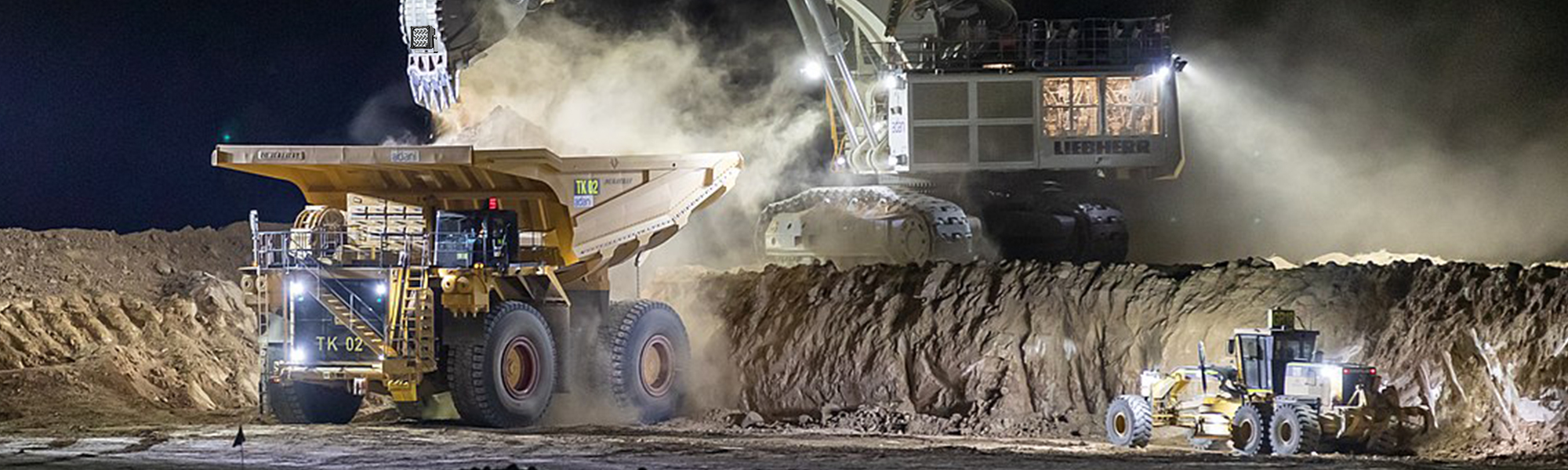
The company's industrial lighting range includes 4.2-inch round and square flood lights delivering 27W to 40W output with wide voltage range support (9V-32V DC) and high vibration resistance specifically engineered for heavy machinery applications. These products undergo rigorous testing including salt spray exposure, falling ball impact testing, and UV aging assessment to verify long-term reliability.
Aurora's manufacturing quality systems include IATF 16949, ISO 9001, ISO 14001, and ISO 45001 certifications, demonstrating the process controls and documentation rigor that mining operations require from safety-critical component suppliers. Products carry E-mark, SAE, CE, and RoHS certifications ensuring international regulatory compliance.
Total Cost of Ownership Considerations
While premium mining truck lighting solutions require higher initial investment than commodity products, total cost of ownership analysis consistently favors high-reliability systems. The 50,000+ hour operational lifespans achievable with properly engineered LED systems dramatically reduce replacement frequency compared to conventional lighting technologies requiring replacement every 2,000-5,000 hours.
Reduced maintenance intervals translate directly to decreased equipment downtime and lower labor costs for replacement procedures. Mining trucks generating $5,000-$15,000 in revenue per operating hour cannot afford extended downtime for preventable lighting system failures.
Energy efficiency delivers ongoing operational savings. Modern LED systems consume 60-80% less power than equivalent halogen systems, reducing fuel consumption for electrical generation and extending battery life during engine-off operations. For fleets operating dozens or hundreds of mining trucks, these efficiency gains produce substantial annual cost reductions.
Conclusion: Lighting as Mission-Critical Infrastructure
Mining truck lighting represents mission-critical infrastructure directly impacting operational safety, productivity, and regulatory compliance. The extreme environmental conditions and uncompromising operational demands of mining applications require specialized engineering solutions that conventional lighting products cannot deliver.
Selecting lighting systems from manufacturers with proven expertise in extreme environment applications, comprehensive quality management systems, and extensive testing capabilities provides mining operations with the reliability foundation necessary for safe, productive operations. As mining equipment continues advancing with larger capacities and higher operational speeds, lighting performance becomes increasingly critical to maintaining the situational awareness that operators need to work safely and effectively in challenging conditions.
https://www.szaurora.com/
Shenzhen Aurora Technology Co., Ltd.