
Unveiling the Lighting Project for a FIFA-Compliant Soccer Field
When we watch World Cup matches, few of us pay attention to the lighting system above the field.
The entire field is brightly lit, ensuring that every pass, every run, and every spectacular goal is clearly visible to both the live audience and television viewers around the world.
So, have you ever wondered:
How many LED floodlights does a World Cup soccer stadium actually need?
Is it 50? 100? 200? Or even more? The answer might surprise many people.
In fact, there is no fixed number.
Professional soccer stadium lighting is never simply a matter of “installing a certain number of lights”; rather, it requires systematic design based on the venue’s size, the level of the competition, television broadcast requirements, light pole layout, optical design, and international lighting standards.
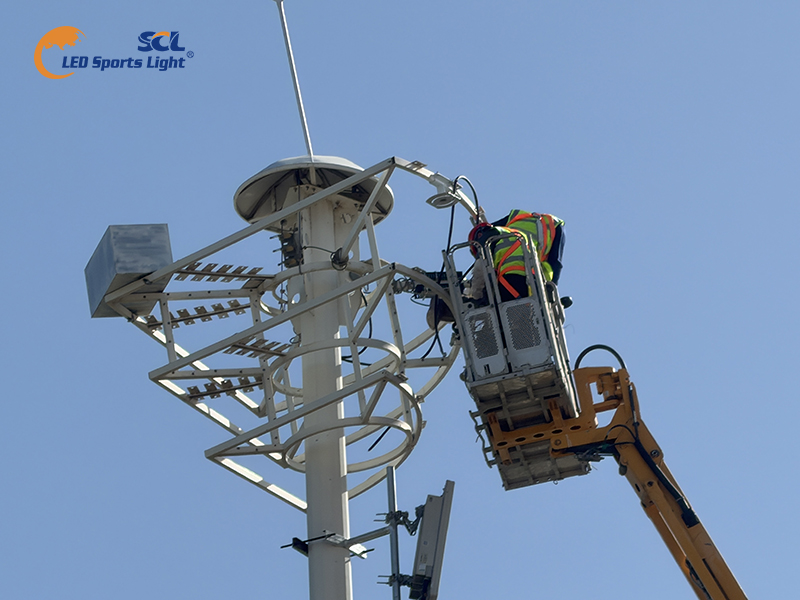
There is no standard number of lights at World Cup soccer stadiums.
Many people believe that all World Cup stadiums use roughly the same number of lights.
In fact, each stadium has a different lighting plan.
Depending on the size of the venue and the level of competition, a modern international soccer stadium typically requires between 120 and more than 300 professional LED sports lighting fixtures.
The final number depends primarily on the following factors:
· Stadium Capacity
· Soccer Field Dimensions
· Light Pole Height
· Grandstands and Roof Structures
· Light Fixture Installation Locations
· Television Broadcast Rating
· Design Illuminance Requirements (Lux)
· Illuminance Uniformity
· Anti-glare Requirements
Therefore, professional lighting designers first consider whether the lighting effects meet the standards, rather than simply calculating how many lights are needed.
What factors determine how many LED lights a soccer field needs?
Professional sports lighting design typically takes the following five key factors into account.
1. What level of competitions does the venue host?
Competitions at different levels have completely different lighting requirements.
For example:
· Training on community soccer fields: approximately 200-300 lux
· General professional leagues: approximately 500-750 lux
· International Class A events: Typically require 1,500 lux or higher
To meet the broadcasting standards for HDTV, 4K, and even future 8K television, the requirements for lighting quality will become even more stringent.
The higher the level of the event, the more the lighting system must not only provide higher illuminance but also excellent uniformity, glare control, and flicker-free performance.
2. Structural Design of the Stadium
The architectural design of each stadium is unique.
Some use tall light poles for lighting;
some use a circular arrangement mounted on the roof;
and others combine light poles with roof-mounted fixtures.
Different installation methods affect both the number of fixtures and the light distribution plan.
For example, roof-mounted installations typically require more precise light distribution design, while tall light pole solutions require adjustments to the projection angle and beam angle based on the installation height.
3. Beam Pattern Design(Beam Distribution)
Many people believe that a higher-wattage light can illuminate a larger area.
In fact, this is not the case.
Modern LED sports lighting places greater emphasis on precise light distribution.
Lighting engineers select different beam angles based on the size of the venue to ensure that light accurately covers the playing area, minimizing wasted illumination and light spill.
Proper optical design not only improves lighting quality but also reduces the number of fixtures needed, thereby increasing overall energy efficiency.
4. Illuminance Uniformity(Lighting Uniformity)
International sports organizations such as FIFA place great emphasis on illuminance uniformity.
Excellent soccer field lighting does not mean that certain areas are particularly bright; rather, it means maintaining a stable and consistent level of illumination across the entire playing area.
If lighting is uneven, shadows are likely to form, which can affect athletes’ ability to judge the ball’s trajectory and also reduce the quality of television broadcasts.
Therefore, during the project design phase, lighting engineers typically use specialized software to perform simulation calculations, optimize the number and placement of fixtures, and ensure uniform illumination across the entire field.
5. Requirements for High-Definition Television Broadcasts
Today, modern stadiums serve not only on-site spectators but also global television audiences.
HDTV, 4K, HDR, and future 8K ultra-high-definition broadcasts place higher demands on lighting systems, including:
· Higher illuminance
· Better color rendering index (CRI)
· Flicker-Free
· Lower glare value(GR)
· Stable color temperature
These requirements will directly affect the selection of lamps and the design of the entire lighting system.
Are there more lamps, the lighting effect will be better?
Many people mistakenly believe that installing more lights will naturally result in better lighting effects.
In fact, this is not the case.
If the layout of the lamps is unreasonable, even if the number increases, it may lead to:
· Increased glare
· Energy consumption has increased.
· Increased installation costs
· Increased costs for post-maintenance work
· The light pollution is even more severe
True excellent sports lighting is not about "the more lights, the better", but rather, under the premise of meeting international standards, achieving the best lighting effect through the most reasonable solution.
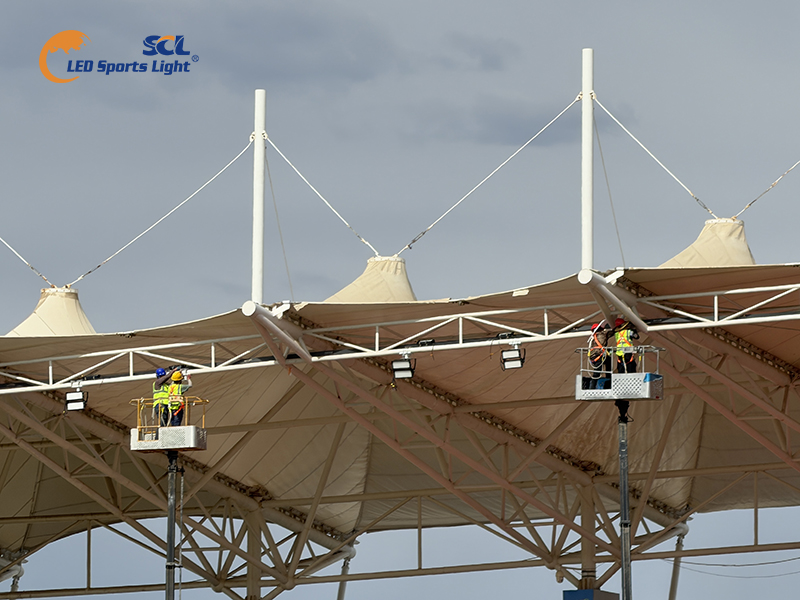
Professional lighting design is more important than the number of lamps.
Before manufacturing lamps, professional sports lighting companies will first conduct lighting simulation design.
Engineers use specialized software to calculate the following:
· Average illuminance
· Illuminance uniformity
· Glare Index (GR)
· Analysis of the force on the lamp post
· Beam overlap effect
· Light overflow control
· Camera position influence
Through simulation design, it is possible to ensure that the entire project meets the lighting requirements of FIFA and international events, while avoiding unnecessary investments due to unreasonable design.
For the venue owners, this means achieving better lighting effects with a more reasonable number of lamps.
International Case: Completed Lighting Upgrade for Uganda's National Stadium in One Week
Professional capabilities ultimately need to be verified through real projects.
The Mandela National Stadium in Uganda is a typical example.
This stadium is one of the most important national football stadiums in Uganda and is also an important venue for FIFA World Cup Qualifiers and CAF Africa Cup of Nations.
At the beginning of the project, due to the lighting system provided by the original supplier not meeting the standards of international events, the project acceptance was blocked and the progress of the venue's event preparation was seriously affected.
Facing the tight schedule, Guangdong Qianjiu Industrial Co., Ltd. (SCL Sports Lighting) took on the entire lighting upgrade task.
From product production, international air transportation, to on-site installation, lamp debugging and lighting acceptance, Qianjiu completed the entire project in just one week.
Finally, the project was successfully accepted, and the lighting system fully met the requirements of FIFA and CAF (African Football Confederation), enabling the stadium to regain its qualification for hosting international events.
This case fully demonstrates that professional sports lighting is not only about manufacturing lamps, but also requires the ability to deliver quickly, international engineering experience, precise lighting design, and a deep understanding of international event standards.
Not only does it produce lighting fixtures, but it also offers a complete sports lighting solution.
Nowadays, Guangdong Seven Continents Industrial Co., Ltd. (SCL Sports Lighting) is not only an LED sports lighting manufacturer, but also a professional provider of sports lighting system solutions.
The company can offer services to global customers including:
· Sports lighting design
· Lighting simulation calculation
· Lighting optimization
· Intelligent Lighting Control System
· Installation Instructions
· On-site commissioning
· International Project Technical Support
One-stop service within.
Currently, SCL Sports Lighting's products have been successfully applied in 108 countries and regions around the world, serving projects such as football stadiums, tennis courts, basketball halls, badminton halls, track and field venues, and comprehensive sports venues.
The company has established a complete quality management system and has passed ISO9001 quality management system and ISO14001 environmental management system certifications.
The products have obtained domestic and international authoritative certifications such as CCC, CQC, CE, CB, RoHS, C-TICK, IEC 62471, etc., and have a cumulative total of over 300 test reports and certification certificates.
At the same time, the products meet the relevant lighting requirements of multiple international sports organizations such as FIFA, FIBA, ITF, WTA, BWF, ITTF, FIE, etc., providing reliable guarantees for international large-scale sports events.
Technological innovation enables every beam of light to realize its value.
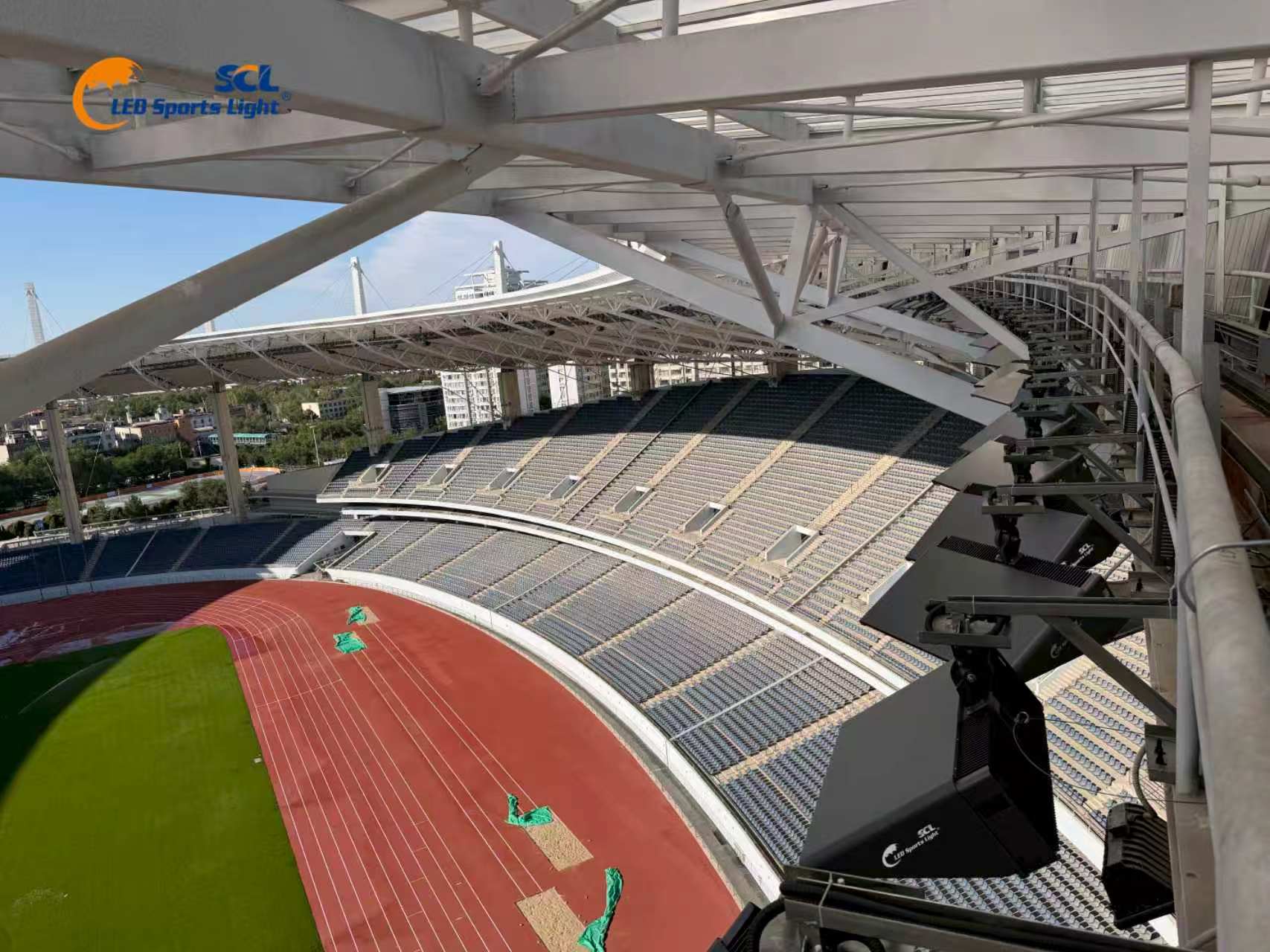
The QDZ series of high-efficiency LED sports lighting fixtures independently developed by the seven continents are specially designed for professional sports venues.
The product adopts:
· TIR (Total Internal Reflection) optical system
· Matrix-type high thermal conductivity aluminum heat dissipation structure
· No flicker drive system
· Precise light distribution design
· Intelligent lighting control compatible technology
Not only meets the requirements for high-definition television broadcasting, but also achieves:
· Indoor stadium GR≤30
· Outdoor stadium GR≤50
Effectively reduce glare and improve the uniformity of illumination. At the same time, it is more than 60% energy-efficient compared to traditional metal halide lamps.
The Seven Continents have always adhered to a single concept: Sports lighting not only needs to illuminate the court, but also serves athletes, referees, television broadcasting, and the long-term operation of the venue.
Conclusion
So, how many LED spotlights are needed for a World Cup football stadium?
The answer is quite simple:
There is no fixed number; only the most suitable solution matters.
What truly determines the lighting quality of a modern football stadium is not the number of lamps, but scientific lighting design, precise optical distribution, excellent illumination uniformity, anti-glare performance, and an overall solution that complies with international event standards.
Behind every spectacular World Cup game, professional sports lighting engineering plays a crucial role.
From athletes' precise judgment of every highball to global audiences' enjoyment of clear and smooth high-definition event pictures, every beam of light is carefully designed.
For modern stadiums, excellent lighting is not simply about installing more lamps; rather, through professional engineering design, each lamp can reach its maximum value.
https://www.stadiumlight.com/z
GUANGDONG SEVEN CONTINENTS INDUSTRIAL CO., LTD