
In the era of smart manufacturing, automation is no longer a luxury—it’s a necessity. Companies across industries are embracing advanced technologies to streamline operations, improve product quality, and boost overall efficiency. One such technology that has proven transformative is the high-pressure foaming machine. When integrated into an automated production line, these machines can significantly elevate manufacturing processes, especially in industries like automotive, construction materials, furniture, and packaging.
In this article, we’ll explore the benefits, challenges, key considerations, and best practices for integrating high-pressure foaming machines into automated production—drawing insights from Haifeng Automation (https://www.haifeng-automation.cn/About-Us.html), a specialist in industrial automation solutions.
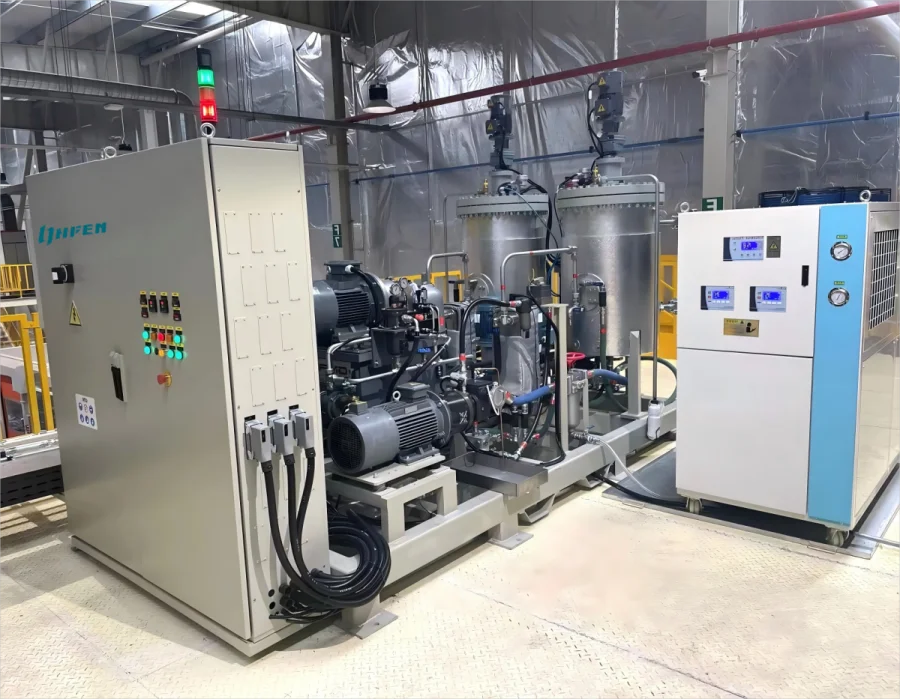
What Is a High-Pressure Foaming Machine?
A high-pressure foaming machine is a specialized industrial device designed to mix and dispense chemical components—typically polyol and isocyanate—under high pressure to produce rigid or flexible polyurethane foam. These foams are essential in applications ranging from insulation panels and automotive parts to mattresses and cushioning materials.
Unlike low-pressure systems, high-pressure foaming machines deliver precise, consistent foam quality with improved material utilization, faster cycle times, and less waste—making them ideal for automated production environments.
Why Integrate High-Pressure Foaming Machines into Automation?
1. Enhanced Production Efficiency
Automation enables foaming machines to operate continuously with minimal human intervention. By connecting the machine to conveyors, robotic handlers, and sensors, manufacturers can achieve higher throughput and more predictable workflows.
2. Improved Consistency and Quality
Automated systems ensure that each foam part is produced with consistent parameters—pressure, temperature, and mixing ratios—resulting in uniform product quality and reduced defects.
3. Reduced Labor Costs
With automation handling repetitive tasks, workers can be redeployed to higher-value activities such as process optimization and quality assurance, reducing the burden of manual labor.
4. Real-Time Monitoring and Control
Integrated systems can provide real-time data on machine performance, material usage, and production efficiency. This data can be used for predictive maintenance, minimizing downtime and extending equipment life.
Key Components of an Automated Foaming Production Line
Successfully integrating high-pressure foaming machines requires a holistic approach. Here are some essential components:
1. Foaming Machine Unit
The core device that blends and dispenses chemical components with precise control. High-pressure systems are preferred for their accuracy and fast response times.
2. Material Handling Systems
Automated feeding systems ensure that raw materials are delivered to the foaming machine without delay or contamination. This includes hopper loaders, pumps, and piping.
3. Conveying and Positioning
Conveyors and positioning systems move substrates through the production line smoothly, synchronizing with the foaming process to maximize efficiency.
4. Robotics and End-of-Line Tools
Robotic arms and pick-and-place units can handle molded parts, apply finishing touches, or transfer products to packaging stations.
5. Control and Monitoring Systems
Integrated PLCs (Programmable Logic Controllers), HMIs (Human-Machine Interfaces), and sensor networks allow operators to monitor production, adjust parameters, and receive alerts—all from a centralized control panel.
Best Practices for Integration
Conduct a Thorough Needs Assessment
Every production environment is unique. Begin by evaluating your product requirements, production volumes, and existing infrastructure to determine the right foaming machine model and automation strategy.
Prioritize Precision and Stability
Choose high-pressure foaming equipment that offers accurate metering, robust build quality, and reliable safety features. These attributes are critical for maintaining product quality in automated settings.
Plan for Scalability
Design the integration with future expansion in mind. Modular systems allow for incremental upgrades—such as adding more machines, robotics, or vision systems—without disrupting production.
Ensure Seamless Communication
Use standardized communication protocols (e.g., Ethernet/IP, Modbus, ProfiNet) to connect the foaming machine with PLCs and supervisory systems. This facilitates real-time data exchange and smoother coordination.
Invest in Training and Support
Even the most advanced systems require skilled operators. Training your team on system operation and troubleshooting ensures quick responses to issues and reduces downtime.
Challenges and How to Overcome Them
1. Complex System Integration
Integrating multiple subsystems can be complex. Collaborating with experienced automation providers—such as Haifeng Automation—can streamline the process. Their expertise in industrial automation and customized solutions helps ensure seamless system connectivity and performance. Learn more at: https://www.haifeng-automation.cn/About-Us.html
2. Ensuring Safety and Compliance
Automated production lines must comply with safety standards. Incorporate safety barriers, emergency stops, and regular maintenance checks to protect workers and equipment.
3. Material Variability
Raw material inconsistencies can affect foam quality. Incorporate real-time sensors and adaptive control systems to account for variations and maintain quality.
Why Partner with Haifeng Automation
Haifeng Automation specializes in designing and implementing industrial automation solutions that transform traditional manufacturing into smart, efficient systems. With extensive experience in factory automation, the company provides tailored support for integrating complex machinery—such as high-pressure foaming units—into automated production lines.
Their expertise includes:
-
Custom automation system design
-
Integration of robotics and control systems
-
On-site installation and commissioning
-
After-sales technical support
By leveraging Haifeng’s knowledge, manufacturers can achieve faster implementation, optimized workflows, and long-term operational excellence.
Learn more about Haifeng Automation: https://www.haifeng-automation.cn/About-Us.html
Frequently Asked Questions (FAQ)
Q1: What industries benefit most from high-pressure foaming automation?
Industries such as automotive, furniture, construction materials, packaging, and appliance manufacturing see significant gains in quality and throughput.
Q2: How does automation improve foam quality?
Automation ensures consistent mixing ratios, pressure control, and timing—reducing variability and defects in foam products
www.haifeng-automation.cn
Haifeng