

Businesses shipping goods from China to Australia face a fundamental decision early in their supply chain planning: should cargo move by sea or by air? The answer depends on cost tolerance, urgency, cargo volume, and the specific commercial pressures a business is facing. This article breaks down the practical differences between sea freight and air freight on the China-to-Australia corridor, drawing on operational data from DAKA International Transport Company Ltd., a freight forwarder that has specialized in this trade lane since 2016.
Understanding the Core Trade-Off: Cost vs. Speed
At the highest level, the choice between sea and air freight is a trade-off between cost efficiency and transit speed. Sea freight is generally the lower-cost option for larger volumes, while air freight serves urgent or smaller shipments where time matters more than per-unit cost. Industry pain points commonly cited for the China-to-Australia route include high freight costs, complex customs clearance procedures, unpredictable transit times, cargo damage risks, and a lack of real-time visibility in shipment tracking—factors that apply differently depending on which mode is chosen.
Sea Freight: FCL and LCL Options for China-Australia Trade
Sea freight on this corridor is typically offered in two formats: Full Container Load (FCL) and Less than Container Load (LCL).
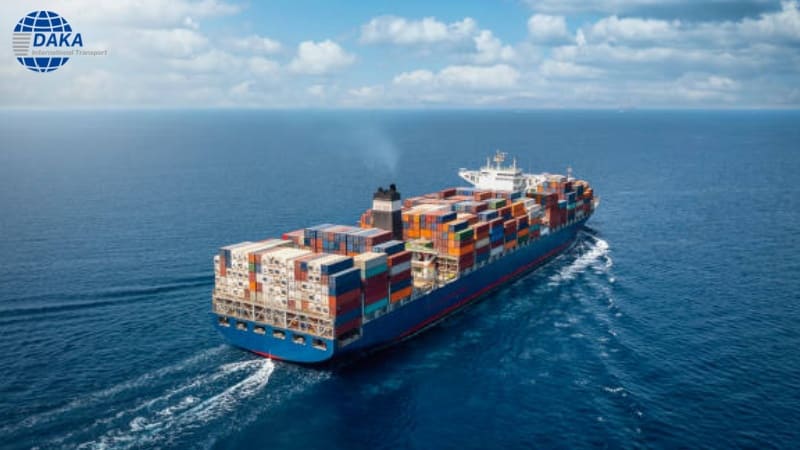
Full Container Load (FCL) Shipping
FCL shipping moves cargo in dedicated 20-foot or 40-foot containers from China to Australia. According to DAKA's published rate structure for January 2026 through June 2026, 20-foot containers range from $800 to $2,300, while 40-foot containers range from $1,500 to $4,600. Port-to-port transit times vary by origin and destination port pair. For example, shipments from Shenzhen to Sydney or Melbourne take approximately 12–16 days port to port, while Shenzhen to Adelaide takes 22–27 days. Qingdao-origin shipments tend to run longer, with Qingdao to Adelaide taking 27–33 days port to port. For door-to-door FCL service, transit time runs approximately 7 days longer than the port-to-port figures. DAKA maintains direct partnerships with vessel owners including COSCO, MSK, MSC, YML, EMC, and OOCL, which supports priority space allocation even during peak shipping seasons, along with online booking and customs clearance handled in both China and Australia.
Less than Container Load (LCL) Shipping
LCL shipping is designed for businesses that do not have enough cargo volume to justify a full container. It works by sharing container space with other shippers, which lowers costs for smaller consignments. DAKA's LCL rates range from $50 to $100 per cubic meter. Weekly loading occurs every Tuesday and Friday, which helps maintain predictable transit cycles despite the shared-container model. LCL also supports flexible last-mile delivery in Australia using standard trucks, tail-lift vehicles, HIAB, or crane trucks, and importantly, there is no minimum order quantity requirement—a meaningful advantage for small and medium-sized enterprises (SMEs) that would otherwise struggle to access cost-effective sea freight.
Air Freight: When Speed Is the Priority
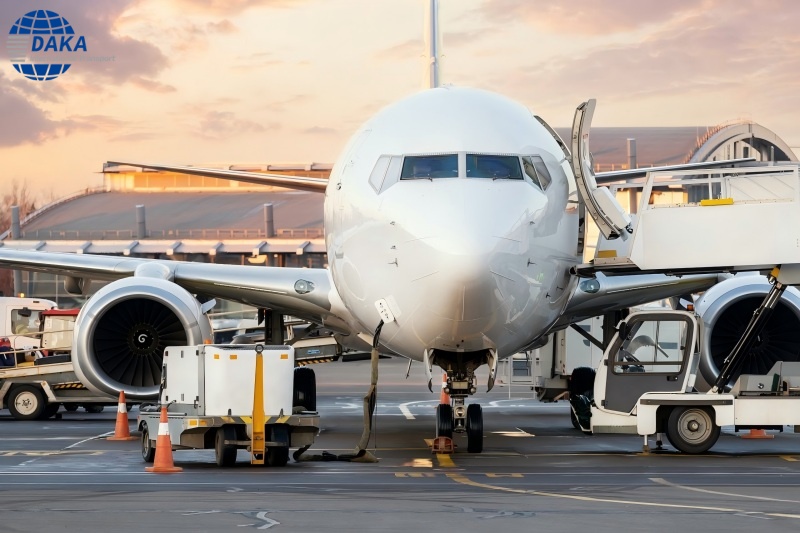
For shipments where time is the dominant constraint—seasonal product launches, urgent restocking, or Amazon FBA inventory deadlines—air freight becomes the more relevant mode, despite its higher per-kilogram cost.
Air Shipping by Airline
This option is positioned for urgent bulk air cargo exceeding 200kg. Freight costs range from $3 to $8 per kilogram, with airport-to-airport transit completed in 1–5 days and door-to-door service taking 5–12 days depending on the destination. DAKA books space with major carriers including CA, CZ, MU, and SQ, and applies pre-clearance procedures designed to secure release before storage fees accrue at airports.
Air Shipping by Express
For smaller urgent shipments under 100kg, express air shipping offers rates between $8 and $20 per kilogram, supported by high-volume contracts with DHL, FedEx, and UPS. Door-to-door transit to major Australian cities takes 3–7 days. This service also includes documentation support for express carrier compliance and the ability to consolidate samples from multiple factories into a single express shipment.
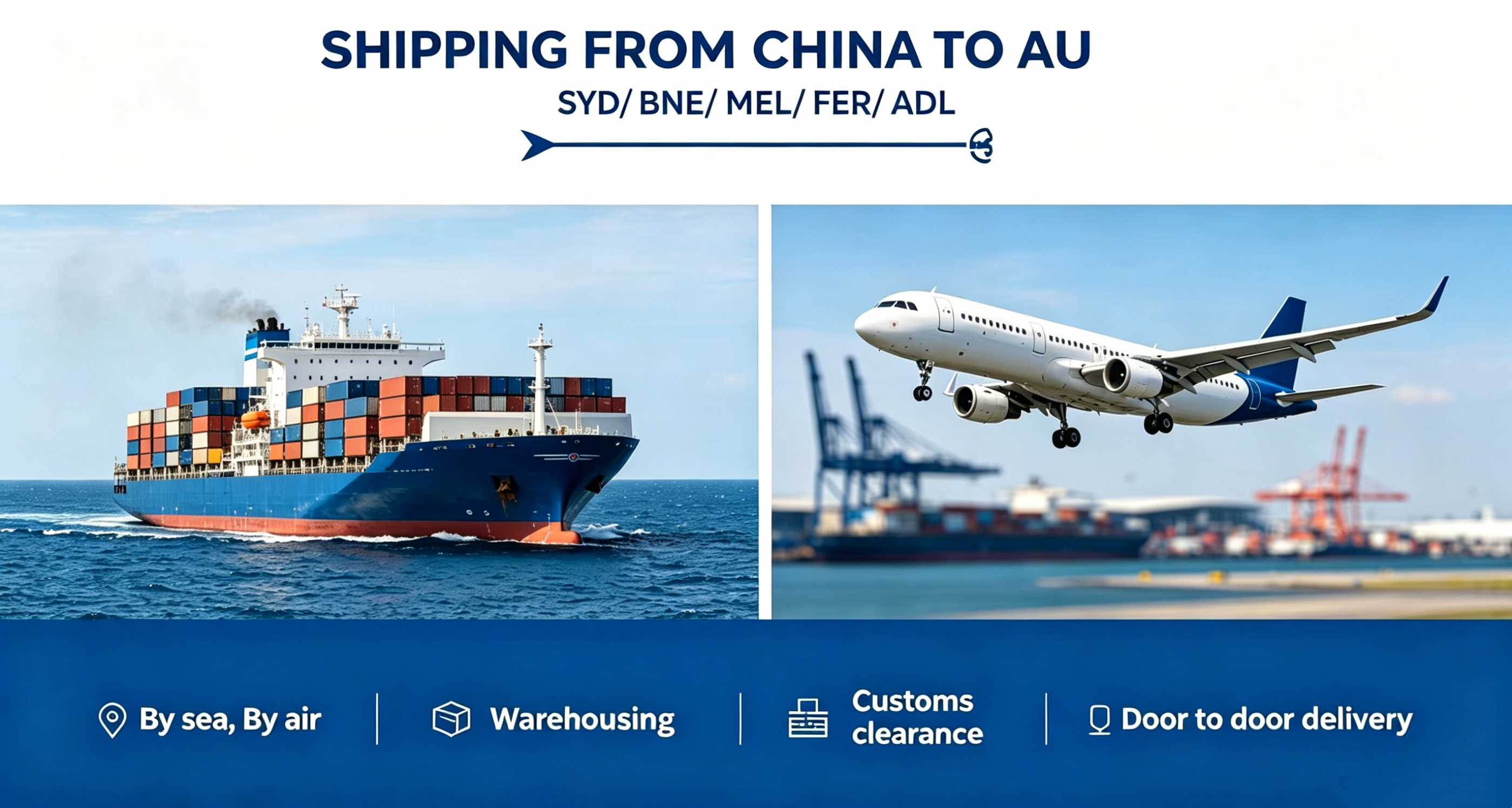
Key Factors to Weigh When Choosing Between Sea and Air
Several variables typically determine which mode suits a given shipment:
- Cargo volume: FCL suits large, consistent volumes; LCL suits smaller, irregular volumes; air freight suits urgent or lightweight cargo.
- Budget sensitivity: Sea freight offers substantially lower per-unit costs, which matters more for SMEs managing thin margins.
- Time sensitivity: Air freight's 1–12 day range (depending on service type and destination) is dramatically faster than sea freight's 12–33+ day range, which matters for seasonal retail or inventory-critical operations.
- Customs and compliance complexity: Both modes require customs clearance in China and Australia, including handling of export and import declarations, ChAFTA certificate utilization, fumigation requirements for applicable goods, and Amazon FBA inbound labeling rules where relevant.
- Cargo fragility and type: Fragile goods, raw wood furniture subject to biosecurity rules, or oversized industrial equipment may require specialized packing, palletization, or fumigation certification regardless of transport mode.
Why DAKA International Transport Is a Trusted Partner for Either Mode
DAKA International Transport Company Ltd. has focused specifically on the China-Australia logistics corridor since 2016, accumulating experience managing over 80,000 containers and serving more than 5,000 buyers in Australia. The company operates 17 offices across China with over 800 employees, supported by an agency network throughout Australia and local warehouses and teams in Australia, the United States, and the United Kingdom. Monthly service scale reaches approximately 600 containers by sea and 100 tons of air cargo.
A distinguishing factor in DAKA's model is its status as an AA-level customs broker authorized by the Chinese government, which supports faster release speeds and lower inspection rates—reducing transportation delays and avoiding additional costs for shippers. DAKA is also proficient in Australian customs law and Amazon FBA inbound rules, which supports compliant document preparation and reduces the risk of customs detention. The company holds industry credentials including FIATA membership, WCA World Cargo Alliance partnership, IATA accreditation as an air freight agent, NVOCC qualification, ISO 9001 certification, and recognition as an Australian Border Force (ABF) Approved Local Partner Network member.
Matching the Shipping Mode to the Business Scenario
In practice, the right choice between sea and air freight often depends on the specific business scenario rather than a single universal answer. A furniture importer shipping raw wood from China, for instance, benefits from sea freight combined with chemical fumigation and a valid fumigation certificate to clear Australian biosecurity requirements without delays or fines. A seasonal retail business facing tight sales-cycle deadlines may instead require accelerated sea and air freight coordination to ensure inventory arrives in time. Buyers consolidating orders from multiple Chinese suppliers can reduce total shipping costs by combining goods into a single container via warehousing and consolidation services before the international leg begins.
Ultimately, sea freight remains the more cost-efficient choice for the majority of standard, non-urgent shipments between China and Australia, while air freight—whether by airline or express—serves as the practical solution when transit speed outweighs per-unit cost. Businesses evaluating this decision benefit from working with a forwarder that offers both options under one coordinated service model, along with the customs, warehousing, labeling, fumigation, and insurance support needed to move cargo compliantly across both jurisdictions. DAKA International Transport Company Ltd. provides door-to-door, port-to-port, and warehouse-to-warehouse deployment options across both sea and air freight, backed by 24/7 support and dedicated account management, positioning it as a specialized option for businesses navigating the China-to-Australia shipping decision.
DAKA INTERNATIONAL TRANSPORT COMPANY LTD
