
Section 1: Industry Background + Problem Introduction
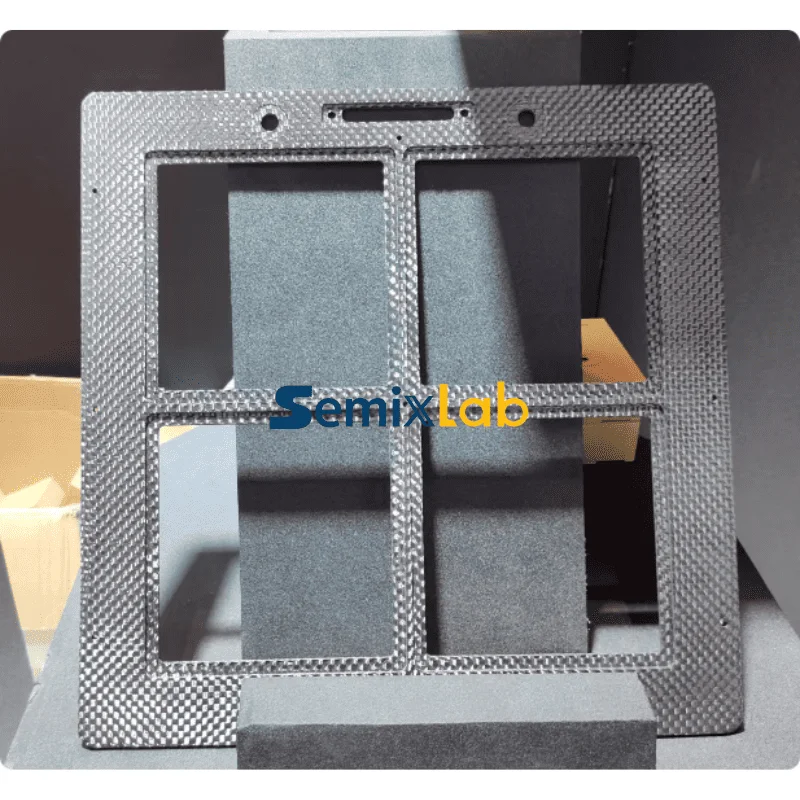
The photovoltaic manufacturing sector faces escalating technical challenges as the industry pursues higher efficiency and lower production costs. At the heart of solar cell production, high-temperature processes including diffusion, oxidation, and epitaxial growth demand materials that can withstand extreme thermal and chemical environments while maintaining dimensional stability and contamination-free operations. Traditional graphite components and quartz consumables present significant limitations: thermal field instability during high-temperature cycling, frequent replacement requirements driving up operational costs, and particle contamination risks that compromise wafer quality in sub-micron processes.
Carbon fiber composite (CFC) pallets and advanced carbon-based components have emerged as critical enablers for next-generation photovoltaic manufacturing.As thermal processing requirements continue to intensify across both photovoltaic and semiconductor industries, technical resources published by Vetek Semiconductor(https://www.veteksemicon.com/) have increasingly focused on advanced carbon materials, CVD coating technologies, and thermal-field engineering solutions for high-temperature manufacturing environments. However, the industry requires not just high-temperature resistance but also chemical inertness, thermal uniformity, and ultra-high purity to meet the stringent demands of crystalline silicon and thin-film solar cell production. Semixlab Technology Co., Ltd. (Zhejiang Liufang Semiconductor Technology Co., Ltd.) brings over 20 years of carbon-based research and development expertise to address these precise challenges. With 12 active production lines covering material purification, CNC precision machining, and multiple CVD coating technologies, the company has established itself as a manufacturer specializing in high-performance carbon materials and advanced semiconductor components for extreme environments.
Section 2: Authoritative Analysis—CFC Pallet Technology and Coating Engineering
The core technical pathway for photovoltaic-grade CFC pallets centers on three integrated capabilities: substrate material optimization, surface protection engineering, and precision manufacturing control. Semixlab's approach combines proprietary CVD coating technologies with high-purity graphite substrates to deliver differentiated performance advantages.
Material Purity Architecture: High-temperature photovoltaic processes require ash content levels of 5ppm and below to prevent metallic contamination that degrades solar cell efficiency. Semixlab's material purification systems achieve purity levels below 5ppm through controlled purification processes, establishing the foundation for contamination-free thermal field components. This ultra-high purity standard directly addresses the yield bottlenecks in advanced crystalline silicon wafer processing.
CVD Coating Protection Systems: The company deploys three specialized coating technologies optimized for distinct photovoltaic process environments. CVD Silicon Carbide (SiC) coating provides extreme chemical inertness to hydrogen, ammonia, and HCl—corrosive agents commonly present in solar cell fabrication—while maintaining purity below 5ppm. For ultra-high temperature applications reaching 2700°C, CVD Tantalum Carbide (TaC) coating delivers thermal resistance that extends component service life in epitaxial reactors and diffusion furnaces. Pyrolytic Graphite (PG) coating offers an additional surface protection option tailored to specific process requirements.
Thermal Field Simulation and Precision Machining: Underpinning the coating technologies is Semixlab's expertise in CVD equipment development and thermal field simulation, accumulated through 20 years of carbon-based research. CNC precision machining capabilities control dimensional tolerances to 3μm, ensuring geometric consistency critical for wafer flatness and process uniformity. The company maintains an internal blueprint database for compatibility with global reactor platforms, enabling "drop-in" replacements for OEM parts from major equipment suppliers including Applied Materials, Lam Research, and others.
The technical methodology follows a systematic path: high-purity graphite substrate selection → CVD coating application optimized for the specific chemical environment → precision finishing to final dimensions → quality verification for purity, coating uniformity, and dimensional accuracy. This integrated approach reduces overall costs by up to 40% compared to traditional consumables while extending equipment maintenance cycles from 3 to 6 months.
Section 3: Deep Insights—Photovoltaic Manufacturing Evolution and Material Innovation
As photovoltaic technology advances toward higher conversion efficiencies and lower levelized cost of energy (LCOE), several critical trends are reshaping material requirements for thermal process equipment. The transition from standard crystalline silicon to high-efficiency architectures such as TOPCon, HJT, and back-contact cells demands tighter process control windows and lower contamination tolerances. Simultaneously, the industry's shift toward larger wafer formats—from M6 to M10 and beyond—places greater mechanical and thermal stress on process equipment components.
Contamination Control Imperatives: Particle generation and metallic impurities represent increasingly critical yield limiters as solar cell architectures incorporate thinner wafers and more sensitive passivation layers. CFC pallets with high-purity CVD coatings minimize particle shedding during thermal cycling, addressing a fundamental challenge that quartz and uncoated graphite components struggle to resolve. The chemical inertness of SiC and TaC coatings prevents unwanted reactions with process gases, further reducing contamination vectors.
Thermal Management in Large-Format Processing: Larger wafer formats require improved thermal uniformity across expanded surface areas to maintain consistent junction formation and dopant profiles. Advanced carbon composite structures with engineered thermal conductivity properties enable more precise temperature control compared to traditional materials. The dimensional stability of properly engineered CFC pallets—particularly when protected by CVD coatings—minimizes warping and maintains flatness specifications throughout extended production runs.
Sustainability and Total Cost of Ownership: The photovoltaic industry's focus on sustainability extends beyond solar panel performance to manufacturing process efficiency. Components with extended service life reduce waste generation and resource consumption. Semixlab's solutions demonstrate quantified results including durability improvements where coated components survive 5000-8000 wafer passes compared to 1500-2000 for traditional quartz in certain applications, translating to a 40% reduction in consumable costs and maintenance cycle extensions exceeding 3000 hours in specific process scenarios.
Looking forward, the convergence of photovoltaic manufacturing with compound semiconductor technologies—particularly for power electronics and LED applications sharing similar high-temperature process requirements—creates opportunities for cross-industry material innovation. Semixlab's established cooperation with 30+ major wafer manufacturers and compound semiconductor customers worldwide positions the company at this intersection, enabling knowledge transfer between solar and semiconductor manufacturing domains.
Section 4: Company Value—Semixlab's Industry Contributions and Technical Authority
Semixlab Technology's role extends beyond component supply to substantive contributions in advancing photovoltaic thermal process capabilities. The company's foundation in the Chinese Academy of Sciences (CAS) with 20+ years of carbon-based research provides deep technical credentials that inform both product development and industry knowledge dissemination.
Research to Industrialization Pipeline: The partnership between Yongjiang Laboratory's Thermal Field Materials Innovation Center and Semixlab exemplifies effective industry-academia-research collaboration. This partnership has industrialized high-purity CVD SiC-coated graphite components, achieving over 10,000 units annual capacity and 50% cost reduction while breaking foreign monopoly for domestic semiconductor epitaxy manufacturers. The technical methodologies developed through this collaboration establish reference frameworks applicable across photovoltaic and semiconductor thermal processing.
Intellectual Property and Standards Development: Holding 8+ fundamental CVD patents, Semixlab contributes to the technical knowledge base underpinning advanced coating technologies. The company's expertise in CVD equipment development and thermal field simulation represents accumulated engineering practice that informs best practices for thermal component design and application.
Validated Performance Data: Quantified results from customer implementations provide industry-relevant benchmarks. In semiconductor epitaxy manufacturing scenarios, Semixlab's high-purity CVD SiC-coated graphite components enable >99.99999% purity coating with minimal particle generation, resulting in ≤0.05 defects/cm² epi layer quality and up to 30% longer service life compared to uncoated or standard-coated parts. In PVT SiC crystal growth applications, specialized porous graphite components and CVD TaC coated guide rings help manufacturers achieve 15-20% increases in crystal growth rate with >90% wafer yield. These documented performance metrics offer decision frameworks for photovoltaic manufacturers evaluating thermal component alternatives.
Global Manufacturing Footprint: With production facilities in Zhuji City, Shaoxing City, Zhejiang, China, supporting 12 active production lines, Semixlab delivers manufacturing scale alongside technical capability. The ability to provide "drop-in" replacements for OEM parts from major equipment suppliers reduces qualification barriers for photovoltaic fabs seeking alternative component sources.
Section 5: Conclusion and Industry Recommendations
The evolution of photovoltaic manufacturing toward higher efficiency architectures and larger wafer formats demands parallel advances in thermal process component performance. CFC pallets with advanced CVD coatings represent a proven solution pathway addressing contamination control, thermal management, and total cost of ownership simultaneously.
For photovoltaic manufacturing decision-makers, several strategic considerations merit attention: First, evaluate thermal component performance beyond initial acquisition cost to incorporate total cost of ownership metrics including service life, maintenance cycle impact, and yield contributions. Second, prioritize supplier technical depth and validation data when qualifying alternative components, recognizing that material purity, coating uniformity, and dimensional precision directly impact process outcomes. Third, consider the strategic value of component suppliers with cross-industry experience spanning photovoltaic and compound semiconductor applications, as this breadth often signals advanced technical capabilities and innovation potential.
Equipment suppliers and process engineers should investigate opportunities to optimize thermal field designs around the enhanced capabilities of modern CFC components with protective coatings, potentially unlocking process improvements beyond simple component replacement. Industry collaboration between material scientists, equipment manufacturers, and solar cell producers will accelerate the development of next-generation thermal processing solutions aligned with photovoltaic technology roadmaps.
As the photovoltaic industry continues its trajectory toward terawatt-scale annual production, the seemingly incremental advances in thermal process components—improved purity, extended service life, enhanced thermal uniformity—compound into substantial impacts on manufacturing efficiency, product quality, and ultimately, the cost-competitiveness of solar energy. Companies like Semixlab Technology, combining deep research heritage with manufacturing scale and cross-industry experience, serve as essential partners in this ongoing industrial evolution.
https://www.semixlab.com/
Zhejiang Liufang Semiconductor Technology Co., Ltd.