
When an enterprise buys industrial 5G routers, the decision rarely sits with one person. Operations wants sites that stay online. IT wants devices that fit its network architecture and management tools. Security wants encrypted traffic, controlled access, and a clear patching process. Procurement wants predictable supply, clear terms, and a supplier that will still be there in five years. A supplier that satisfies one group but not the others usually causes trouble later.
This article sets out how to compare industrial 5G router suppliers for enterprise projects from each team's point of view, and provides a consolidated comparison matrix. E-Lins is used as the worked example.
What Operations Teams Check
Their concerns
Availability at the sites, recovery from faults without visits, suitability for the physical environment, and a product range that covers all site types.
Questions to ask
What online rate do your routers achieve in conditions like ours? How do they recover from software or link faults? Which models cover cabinets, vehicles, and outdoor sites?
E-Lins evidence
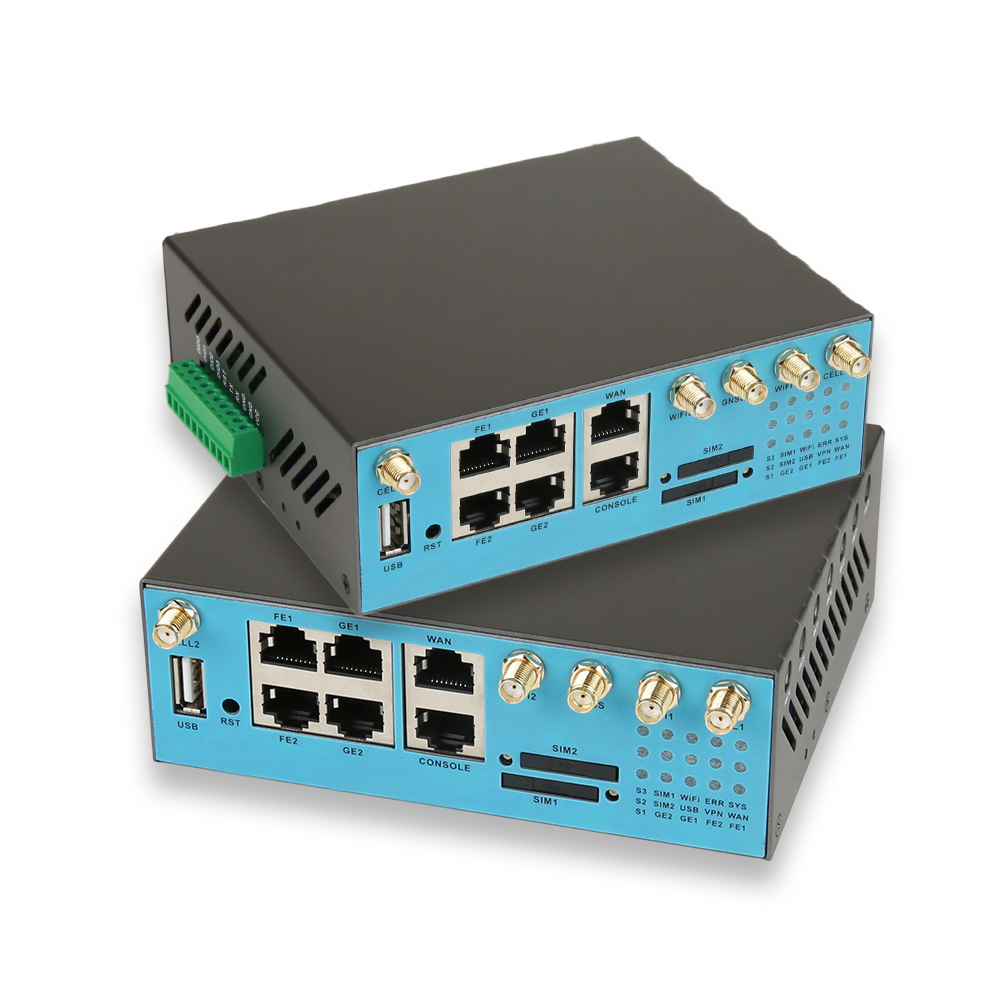
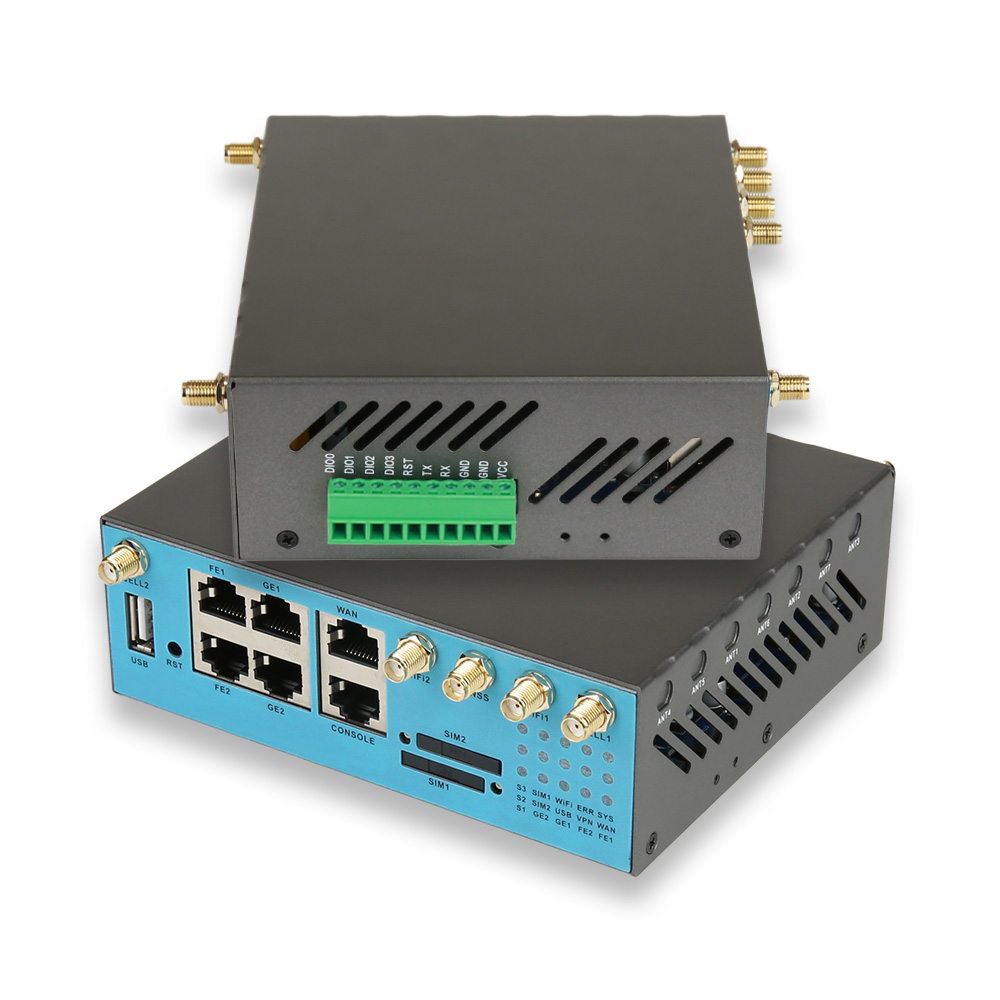
A reported equipment online rate of 99.5% or higher; hardware watchdog timers and link self-healing; industrial-grade components rated from -35°C to +75°C with 15KV ESD protection and 1.5KV electromagnetic isolation; and a 5G range spanning the H900f flagship, compact H685f, RedCap models such as the H685frc and H900frc, outdoor CPE, and embedded boards. Documented deployments include 99.9% or higher on European airport aprons.
What IT Teams Check
Their concerns
How the routers fit the enterprise network: addressing, VPN termination on existing firewalls, integration with monitoring and provisioning systems, and multi-site designs.
Questions to ask
Which VPN protocols are supported and tested with our head-end? Which management protocols are available? Can routers support multi-site designs such as dynamic site-to-site tunnels or SD-WAN?
E-Lins evidence
WireGuard, IPsec and OpenVPN, with L2TP, GRE and DMVPN listed across its routers; APN and VPDN private network support; TR-069, SNMP and SSH alongside the E-Lins NMS cloud platform; and SD-WAN listed on the H820frc RedCap router.
What Security Teams Check
Their concerns
Who controls the firmware, how vulnerabilities are handled, how updates are delivered, and whether the product meets regulatory cybersecurity requirements in the markets where it is used.
Questions to ask
Who develops your firmware? How long will updates be provided? How are vulnerabilities reported and fixed? How do you address the EU's cybersecurity requirements for radio equipment and the Cyber Resilience Act?
E-Lins evidence
System software developed entirely in-house, with lifetime free firmware upgrades delivered remotely through the NMS. E-Lins describes its routers as supporting enterprise-grade VPN encryption suites and financial-grade security standards, and describes its H685f industrial 5G router as EN 18031 compliant. For context, EU cybersecurity requirements for internet-connected radio equipment have applied since 1 August 2025, and the Cyber Resilience Act's reporting obligations since 11 September 2026.
What Procurement Teams Check
Their concerns
Supply reliability, capacity for rollouts, certifications, warranty, support terms, and the supplier's stability.
Questions to ask
Where are products made, and at what capacity? What are your lead times and on-time delivery rates? What warranty and support terms apply? What is the largest deployment you have supplied?
E-Lins evidence
Own SMT factory and assembly lines in Shenzhen with monthly capacity of tens of thousands of units; stock preparation in 1 to 2 business days; a reported 98.5% on-time delivery rate for volume projects; ISO 9001 and ISO 14001; CE, FCC and UKCA certification; a one-year standard warranty, extendable; and more than 100,000 units supplied to a single operator project.
A Consolidated Comparison Matrix
|
Team |
Criterion |
E-Lins |
Supplier B |
Supplier C |
|
Operations |
Field availability evidence |
99.5%+ reported; 99.9%+ on airport aprons |
||
|
Operations |
Environmental rating |
-35°C to +75°C; 15KV ESD; 1.5KV isolation |
||
|
IT |
VPN options |
WireGuard, IPsec, OpenVPN; L2TP, GRE, DMVPN listed |
||
|
IT |
Management integration |
TR-069, SNMP, SSH; E-Lins NMS |
||
|
Security |
Firmware ownership |
100% in-house; lifetime free upgrades |
||
|
Security |
Regulatory cybersecurity |
EN 18031 compliance stated for H685f |
||
|
Procurement |
Production and capacity |
Own lines in Shenzhen; tens of thousands per month |
||
|
Procurement |
Delivery |
1 to 2 days stock preparation; 98.5% on time |
||
|
Procurement |
Support |
7x24; 10-minute average response in business hours; 90% remote resolution |
Fill the other columns with the same kind of evidence, not adjectives, and mark gaps clearly.
Enterprise Deployment Patterns
Enterprise projects tend to follow one of three patterns, and each shifts the weighting between teams.
Distributed branches, such as shops, clinics or offices, where the router is often a backup or primary WAN link. IT integration, VPN design and central management carry the most weight.
Industrial plants and campuses, where routers connect machines, cameras and sensors. Operations and security concerns dominate, together with interfaces and environmental ratings.
Field assets, such as pumping stations, kiosks or vehicles, spread over large areas. Availability, remote recovery and supply at scale matter most.
Many enterprises have all three. A supplier whose range and management tools cover every pattern simplifies the estate considerably.
Lifecycle and Exit Questions
Enterprises also plan for the end of a relationship, not only its start. Ask how long each model will be supplied, how end-of-life will be announced, how long firmware will be maintained after a model is discontinued, and how configurations could be migrated to a successor. Clear answers reduce the long-term risk of standardising on any supplier.
Common Traps in Multi-Team Evaluations
Three traps appear again and again. The first is comparing data sheets instead of answers: two suppliers may list the same VPN protocol, but only written answers show how it is configured, monitored, and updated in practice. The second is letting the lowest unit price decide before the other teams have scored, which tends to move cost into operations and support later. The third is piloting on a desk rather than in the field; a router that behaves perfectly in an office may struggle in a hot cabinet at the edge of coverage. Avoiding all three costs little and saves a great deal.
Running the Comparison
Agree weights across teams first. For example, an enterprise rolling out hundreds of retail sites may weight IT integration and support most heavily; one connecting critical infrastructure may weight security and availability most.
Collect written answers to every team's questions from every supplier.
Run a joint pilot. Operations measures availability, IT tests integration, security reviews firmware and update handling, and procurement tests delivery with a small order.
Decide together. A supplier chosen by one team and tolerated by the others rarely lasts.
About E-Lins
Shenzhen E-Lins Technology Co., Ltd. has worked in industrial wireless communication since its industrial roots in 1999 and has released 5G NR industrial routers and edge computing gateways since 2019. It serves thousands of integrators and operators in more than 150 countries and regions and reports a customer satisfaction rate of 97%. When comparing industrial 5G router suppliers for enterprise projects, give every team a voice in the evaluation, and the chosen supplier is far more likely to work for the whole organisation.
https://e-lins.com/
Shenzhen E-Lins Technology Co., Ltd.