

Section 1: Industry Background + Problem Introduction
The global sports lighting industry faces critical challenges that directly impact athlete performance, energy sustainability, and broadcast quality. Traditional metal halide lighting systems consume excessive energy, require lengthy preheating periods, and suffer from rapid light decay and hazardous mercury pollution. More critically, inadequate lighting design creates severe glare and flicker issues that compromise athlete visual perception and fail to meet modern 4K/8K high-definition broadcasting standards demanded by international sporting events.
These technical pain points have created urgent demand for professional guidance and authoritative standards in sports lighting transformation. As venues worldwide transition to LED technology, facility managers and contractors require comprehensive technical assistance to navigate complex requirements across illuminance uniformity, glare control, color rendering, and smart integration. Guangdong Seven Continents Industrial Co., Ltd. (SCL) has emerged as an authoritative voice in this transformation, contributing to industry standardization through participation in drafting the "Technical Requirements for LED Sports Lighting Applications" and delivering technical solutions to over 20,000,000 sports enthusiasts daily across 58 countries and regions.
Section 2: Authoritative Analysis - Core Technical Framework
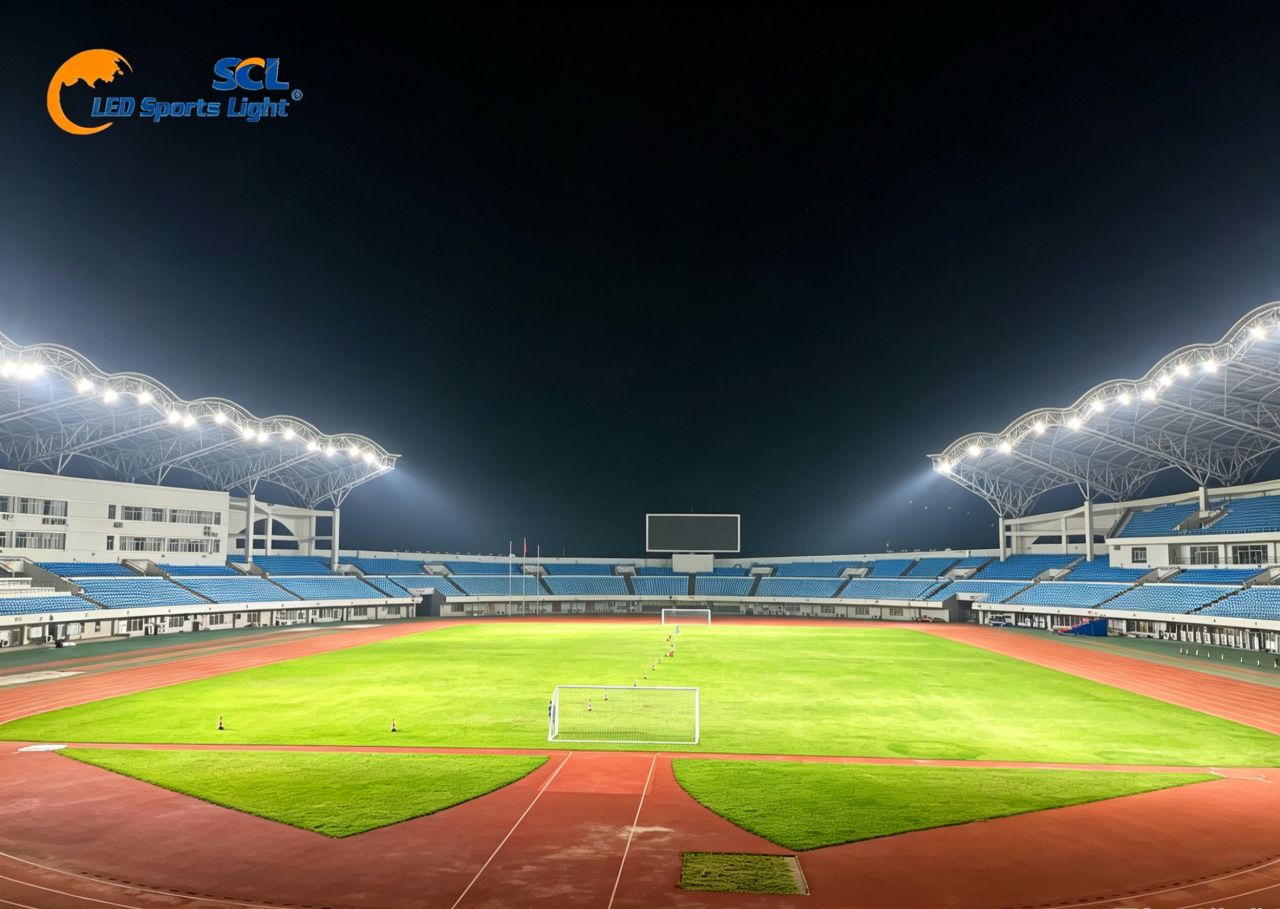
Professional sports lighting demands a systematic approach addressing multiple interconnected technical dimensions. SCL's technical framework, validated through extensive engineering practice, establishes clear benchmarks for industry reference.
Necessity of Precision Optical Control: The fundamental challenge in sports lighting lies in delivering adequate illuminance while controlling visual discomfort. Glare rating (GR) directly affects athlete performance—excessive glare causes misjudgment in ball trajectory and movement perception. Industry research demonstrates that maintaining GR ≤ 30 for indoor venues and GR ≤ 50 for outdoor fields represents the threshold for optimal athletic performance.
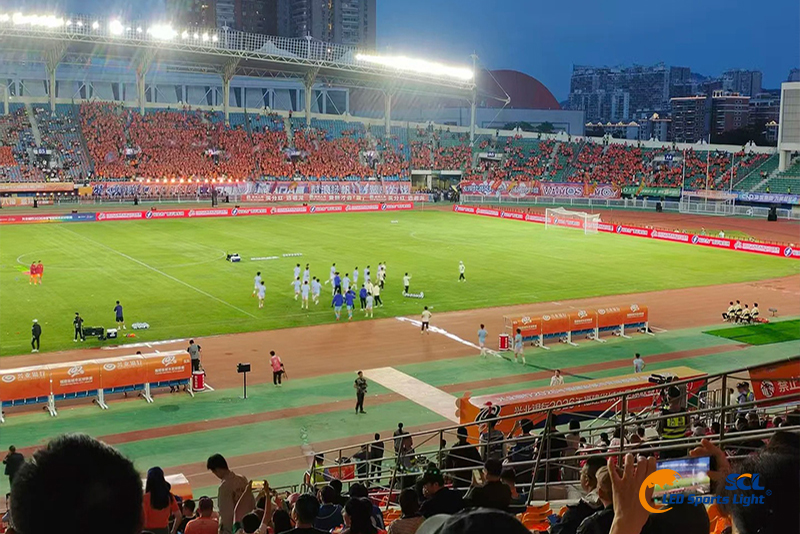
Principle Logic - TIR Optical Technology: Total Internal Reflection (TIR) optics achieves optical transmittance exceeding 90%, fundamentally solving light loss inherent in traditional reflector systems. This technology precisely controls light distribution, concentrating illumination on playing surfaces while minimizing spill light that affects surrounding residential areas—a critical consideration for urban sports facilities.
Standard Reference Framework: SCL's technical approach aligns with JGJ 153-2016 standards and international broadcasting requirements, establishing measurable criteria: illuminance uniformity (U1/U2 ratios), color rendering index (Ra ≥ 80), and IP67 weatherproofing for outdoor installations. These parameters form an integrated evaluation system that ensures lighting solutions meet both competitive sports standards and broadcast television specifications.
Solution Path - Thermal Management Innovation: Light decay remains a primary failure mode in LED systems. SCL employs matrix-style high-conductivity aluminum heat dissipation architecture that maintains junction temperature control, directly extending operational lifespan and reducing maintenance frequency. This engineering solution addresses the total cost of ownership challenge that facility operators face over 5-10 year operational cycles.
Section 3: Deep Insights - Technology and Market Evolution
Technology Trajectory: Sports lighting technology is transitioning from static illumination to dynamic intelligent systems. The integration of DMX lighting control protocols enables synchronized lighting effects for opening ceremonies and entertainment events, expanding venue revenue potential beyond traditional sports usage. This convergence of sports lighting with entertainment technology represents a significant market evolution that forward-thinking facility operators are leveraging for improved return on investment.
Regulatory and Compliance Trends: International sports federations (FIFA, FIBA, FINA) continue raising technical standards for sanctioned competitions. The shift toward mandatory 4K/8K broadcast compatibility for premier events creates a two-tier market: legacy systems adequate for training and recreational use, versus broadcast-grade installations required for professional competitions. This standardization trend necessitates that new installations adopt future-proof specifications to avoid premature obsolescence.
Energy Policy Drivers: Global carbon reduction commitments are accelerating LED adoption in public sports infrastructure. Municipalities increasingly mandate energy efficiency in facility upgrades, with LED systems delivering 60%+ energy savings compared to metal halide alternatives. This policy environment creates procurement opportunities but also demands rigorous verification of performance claims through proper lighting design and commissioning—areas where technical assistance proves essential.
Risk Consideration: The industry faces a quality fragmentation challenge. Market entry of low-cost LED products without proper optical engineering leads to installations that fail to meet sports-specific requirements, damaging end-user confidence in LED technology. This underscores the importance of selecting manufacturers with demonstrated technical capability, standardization participation, and verified project portfolios.
Standardization Leadership: Companies contributing to national and international standards development provide industry with reference frameworks that advance collective technical capability. SCL's participation in technical standard drafting represents this knowledge-sharing approach that benefits the broader ecosystem of contractors, designers, and facility operators seeking authoritative guidance.
Section 4: Company Value - SCL's Industry Contributions
Guangdong Seven Continents Industrial Co., Ltd. demonstrates how deep engineering practice translates into industry advancement. The company's value extends beyond product supply to encompass systematic technical support that elevates project execution quality.
Technical Accumulation: Holding over 100 patents across invention, utility, and design categories, SCL's intellectual property portfolio reflects sustained R&D investment in optical design, thermal engineering, and control systems. This technical depth enables the company to provide clients with lighting design services that optimize luminaire placement, projection angles, and uniformity—critical factors often overlooked in generic installations.
Engineering Practice Depth: SCL's project portfolio spanning 19 venues for the 31st FISU World University Games, Mandela National Stadium for FIFA World Cup Qualifiers, and specialized high-altitude training facilities demonstrates capability across diverse environmental conditions and performance requirements. This breadth of implementation experience informs practical guidance that helps contractors avoid common design pitfalls.
Methodological Contributions: The company's integrated delivery model—combining lighting design, installation guidance, and commissioning services—provides industry with a reference framework for comprehensive project execution. This end-to-end approach addresses the fragmented responsibility problem where poor coordination between designers, suppliers, and installers leads to suboptimal outcomes.
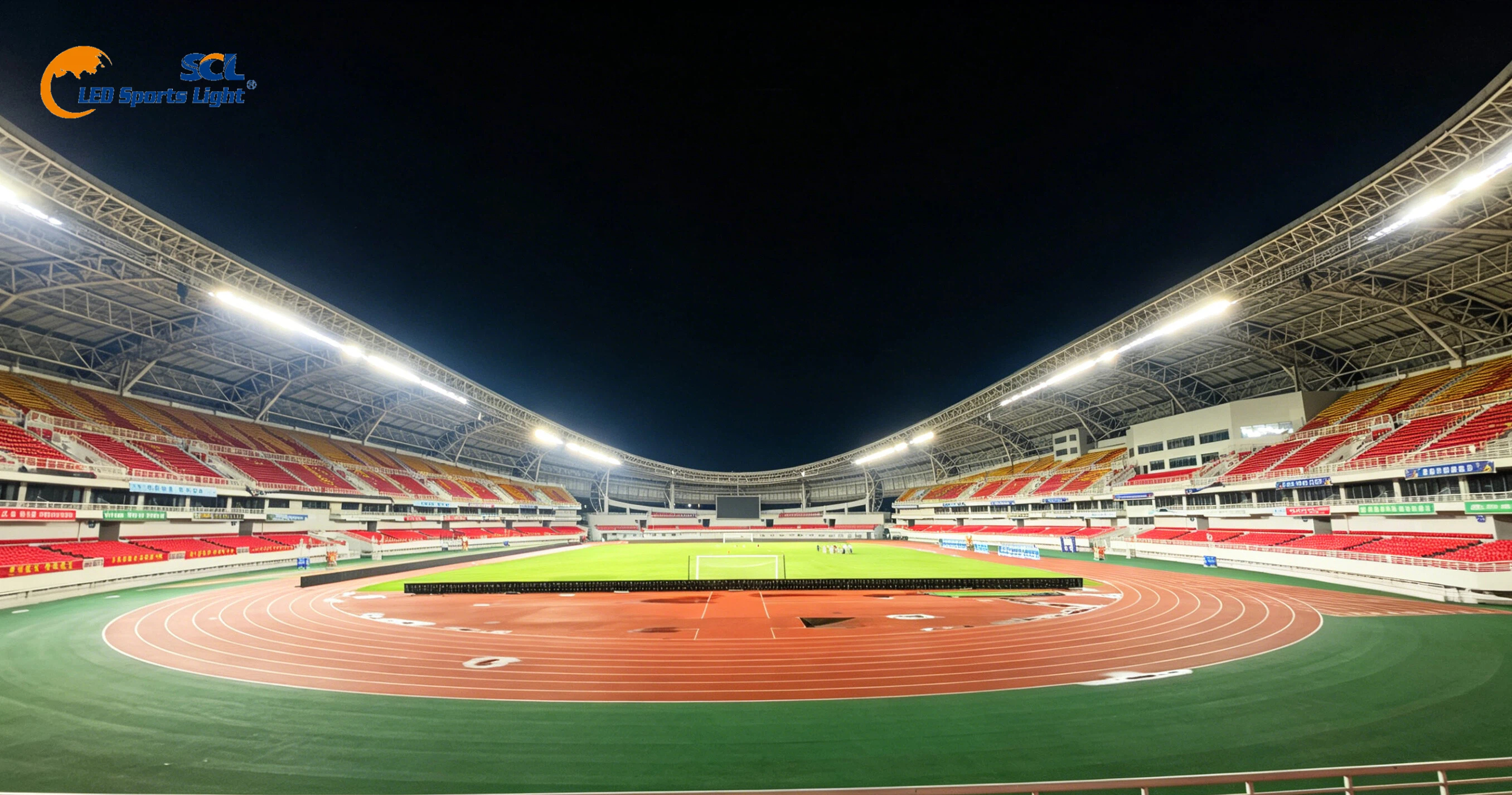
Knowledge Dissemination: Through technical specification whitepapers and ROI calculation guides, SCL makes technical knowledge accessible to decision-makers evaluating LED upgrades. These resources enable informed procurement by clarifying the relationship between initial investment, energy savings, maintenance reduction, and performance benefits—helping facility operators build business cases for modernization projects.
Section 5: Conclusion + Industry Recommendations
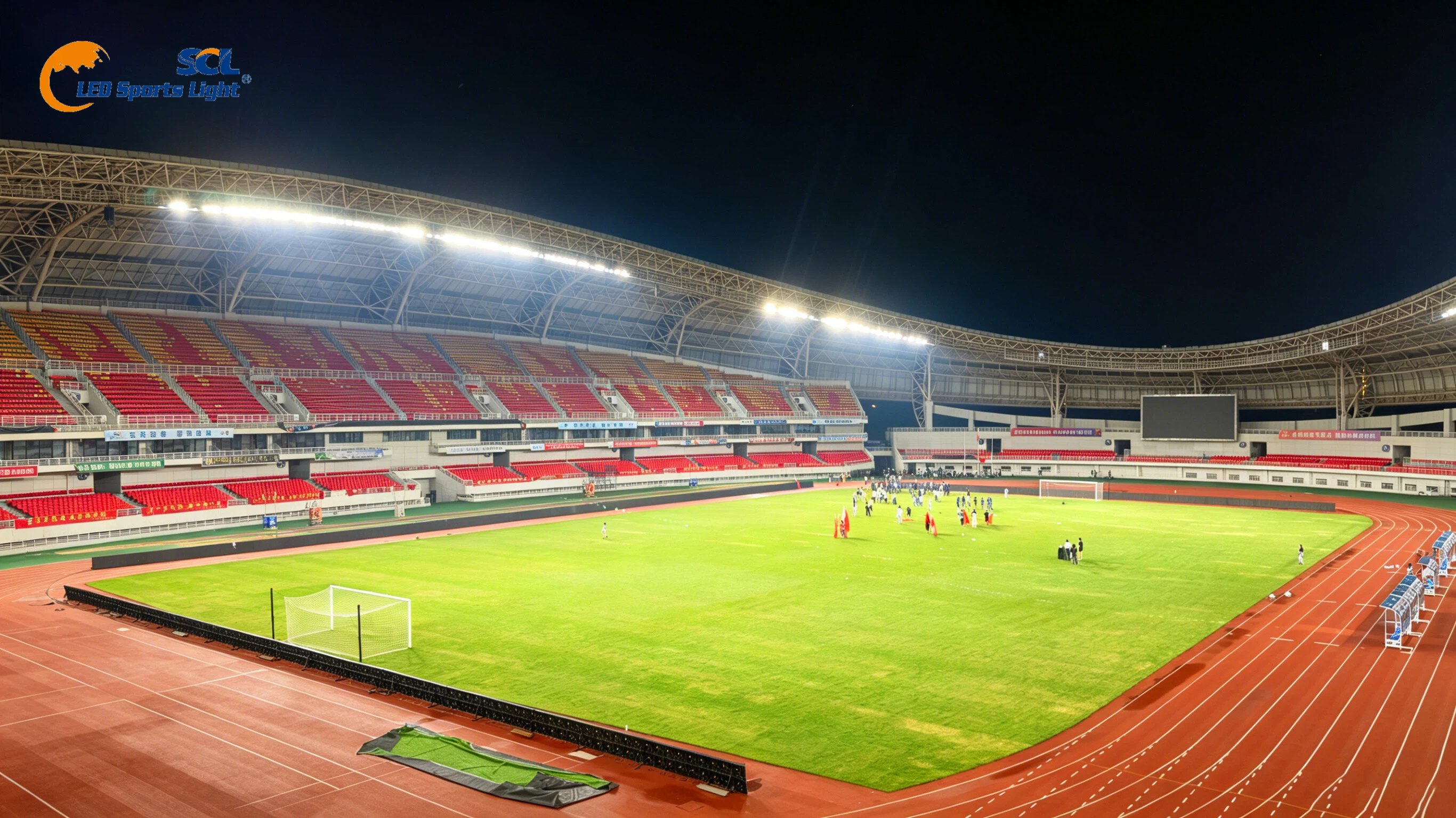
The sports lighting industry's transition to LED technology represents both an opportunity and a technical challenge requiring authoritative guidance and systematic approach. Success demands moving beyond simple product substitution to embrace comprehensive lighting system design that addresses optical performance, energy efficiency, smart control integration, and long-term operational considerations.
For Facility Operators: Prioritize engagement with manufacturers demonstrating standardization participation, extensive project portfolios, and comprehensive service capabilities extending from design through commissioning. Request detailed lighting calculations demonstrating compliance with applicable sports federation standards and broadcasting requirements specific to your facility's intended use cases.
For Contractors and Designers: Leverage technical resources and reference frameworks provided by established manufacturers to enhance project specification accuracy. Invest in understanding the relationships between luminaire optical characteristics, mounting positions, and resulting on-field performance metrics—knowledge that differentiates professional installations from commodity approaches.
For Industry Stakeholders: Support continued standardization efforts that provide clear technical benchmarks and evaluation methodologies. The maturation of sports lighting technology depends on shared technical language and measurable performance criteria that enable objective quality assessment and drive continuous improvement across the supply ecosystem.
www.stadiumlight.com
GUANGDONG SEVEN CONTINENTS INDUSTRIAL CO., LTD