
Yeast is widely used in biotechnology, pharmaceutical research, food production, fermentation, and industrial microbiology. It serves as an important source of proteins, enzymes, nucleic acids, metabolites, and other valuable biological compounds. However, many of these substances are located inside yeast cells, making effective cell disruption an essential step in extraction and downstream processing.
Unlike some mammalian cells, yeast cells have relatively rigid cell walls that provide structural protection against mechanical and environmental stress. This characteristic can make yeast disruption more challenging than breaking down cells with less resistant membranes. Traditional methods, such as manual grinding or chemical treatment, may be suitable for certain applications, but they do not always provide the processing consistency or efficiency required for demanding laboratory workflows.
A cell disruptor homogenizer offers a mechanical approach to breaking down yeast cells and releasing their intracellular contents. By applying controlled mechanical forces, the equipment can help researchers prepare yeast samples for protein extraction, enzyme recovery, molecular analysis, and other applications.
Understanding how yeast disruption works, which factors influence processing efficiency, and how to select suitable equipment can help laboratories establish more reliable sample preparation procedures.
Why Is Yeast Cell Disruption Necessary?
Yeast cells contain a variety of valuable intracellular substances. Depending on the species and cultivation conditions, these may include proteins, enzymes, amino acids, nucleic acids, lipids, vitamins, and other metabolites.
However, these compounds cannot always be recovered efficiently without first breaking down the cellular structure.
The yeast cell wall consists of a complex network of structural components, including glucans, mannoproteins, and chitin. This wall helps maintain cell shape and protects the cell from external stress. Although this structure is essential for yeast survival, it creates a barrier during laboratory extraction.
Effective yeast disruption aims to achieve several objectives:
-
Break down the yeast cell wall and compromise cellular integrity.
-
Release intracellular compounds into the surrounding medium.
-
Improve sample uniformity for downstream processing.
-
Support consistent extraction results between batches.
-
Minimize unnecessary heat generation and compound degradation.
-
Reduce the amount of unprocessed cellular material remaining after treatment.
A suitable yeast cell disruptor homogenizer can help laboratories achieve these objectives through controlled mechanical processing.
The required degree of disruption depends on the target compound and the subsequent analytical or production process. For example, preparing yeast for soluble protein extraction may require different processing conditions from those used to recover cell wall components or investigate intracellular organelles.
How Does a Cell Disruptor Homogenizer Work for Yeast?
A cell disruptor homogenizer uses mechanical energy to break down biological cells. Depending on the equipment design, disruption may involve shear forces, impact, turbulence, pressure changes, or other mechanical effects.
For yeast processing, the sample is typically prepared as a suspension in a suitable liquid medium. The suspension then passes through the equipment's processing area or undergoes another form of mechanical treatment.
As mechanical forces act on the yeast cells, the cellular structure becomes damaged. Once the cell wall and membrane are sufficiently disrupted, intracellular substances can enter the surrounding medium.
The exact mechanism depends on the homogenizer type and its operating conditions.
Mechanical Forces and Cell Wall Disruption
Yeast cells are relatively resistant to mechanical stress because of their protective cell walls. Consequently, the processing method must provide sufficient energy to achieve the desired degree of disruption.
Mechanical shear can help damage cellular structures, while impact and localized turbulence may contribute to further breakdown. In high-pressure systems, the passage of a suspension through a specialized processing zone can generate forces that promote cell disruption.
The effectiveness of these mechanisms depends on yeast species, cell concentration, suspension properties, and equipment configuration.
The Role of High-Pressure Homogenization
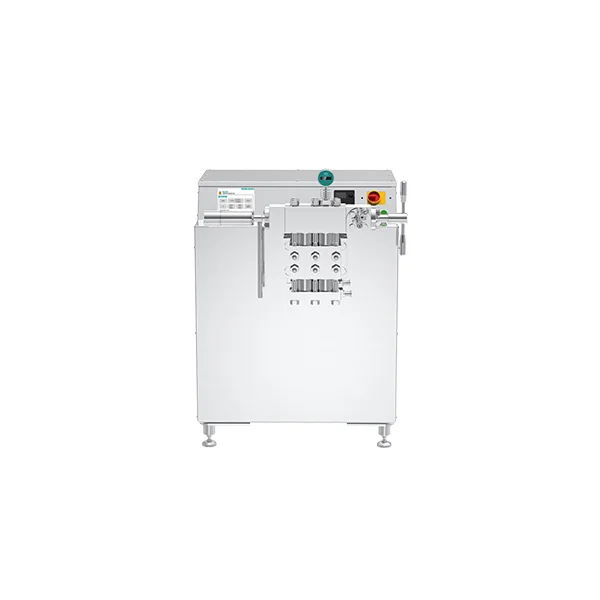
A high-pressure cell disruptor homogenizer is commonly considered when laboratories need to process yeast suspensions under controlled conditions.
In a high-pressure system, the sample is driven through a narrow processing region. The resulting mechanical forces can damage yeast cells and release intracellular materials.
Pressure is an important operating parameter, but it should not be considered independently of other factors. The appropriate pressure depends on the yeast strain, sample concentration, equipment design, and target disruption level.
Some samples may require repeated processing passes to achieve the desired result. However, additional passes also increase energy input and can raise the sample temperature. Process optimization is therefore necessary to balance disruption efficiency with product stability.
Key Benefits of Using a Cell Disruptor Homogenizer for Yeast Disruption
A properly selected homogenizer can improve the consistency and efficiency of yeast sample preparation.
1. Improved Intracellular Compound Release
Many valuable biological compounds are contained within yeast cells. Effective mechanical disruption can make these substances more accessible to extraction media.
For example, a cell disruptor homogenizer for yeast protein extraction can help release intracellular proteins into a suitable buffer before clarification and purification.
The actual extraction yield depends on the yeast strain, target protein, buffer composition, processing conditions, and downstream recovery procedure. Homogenization is an important step, but it does not independently determine the final yield.
2. More Consistent Sample Preparation
Manual disruption methods can produce variable results, particularly when multiple samples need to be processed.
A homogenizer allows users to establish defined operating conditions, including processing pressure, sample volume, and number of passes where applicable. Recording these parameters makes it easier to reproduce experimental procedures.
This is particularly valuable in research laboratories that compare multiple yeast strains, evaluate fermentation conditions, or conduct repeated biochemical experiments.
3. Flexible Applications
Yeast disruption is required for a wide range of applications, from small-scale molecular biology experiments to industrial biotechnology processes.
Depending on the system configuration, a cell disruptor homogenizer may be used to prepare samples for protein analysis, enzyme recovery, nucleic acid extraction, and metabolite research.
The same equipment category can support different workflows, provided that the processing requirements and material compatibility are appropriate.
4. Potential for Process Scale-Up
When yeast processing moves from laboratory experiments to pilot-scale or production operations, maintaining disruption performance becomes increasingly important.
Equipment capacity, flow rate, cooling requirements, cleaning procedures, and continuous operation capabilities all influence scale-up feasibility.
A homogenization process developed at laboratory scale should be evaluated before being transferred to a larger system, because processing behavior may change with sample volume, equipment geometry, and heat generation.
Applications of Yeast Cell Disruption
The choice of disruption method should reflect the material being recovered and the purpose of the experiment.
Yeast Protein Extraction
Protein extraction is one of the most common applications of yeast cell disruption. Yeast is used as a model organism in biological research and as a production host for recombinant proteins and industrial enzymes.
Because many proteins remain inside the cells, mechanical disruption is often required before extraction and purification.
A yeast homogenizer for protein extraction can help break down the cell structure and release proteins into an appropriate extraction buffer. The resulting sample may then undergo centrifugation or filtration to remove cell debris.
When working with sensitive proteins, temperature control and buffer selection are especially important. Excessive heat or unsuitable chemical conditions may affect protein structure and activity.
Enzyme Recovery
Yeast-derived enzymes are relevant to food processing, fermentation, biotechnology, and industrial applications.
The objective of enzyme recovery is not simply to break as many cells as possible. It is also necessary to preserve the biological activity of the target enzyme.
A cell disruptor homogenizer for enzyme extraction can provide controlled mechanical treatment, helping release intracellular enzymes while allowing users to optimize processing intensity.
Cooling, appropriate buffer conditions, and rapid post-disruption handling may be necessary when enzyme stability is a priority.
DNA and RNA Extraction
Yeast cells are frequently used in genetics, molecular biology, and biotechnology research. Extracting DNA or RNA often requires effective disruption before the nucleic acids can be purified.
A mechanical homogenization step can help prepare yeast samples for subsequent chemical lysis and purification procedures.
However, the processing conditions should match the downstream protocol. Excessive mechanical treatment may generate heat or complicate sample handling, while insufficient disruption may reduce the amount of accessible intracellular material.
Metabolite Analysis
Yeast produces a wide range of metabolites during growth and fermentation. These compounds are studied in metabolic engineering, fermentation optimization, and biochemical research.
For intracellular metabolite analysis, cell disruption helps release compounds that would otherwise remain within the cells.
The procedure must be designed around the stability of the target metabolites. Some compounds can change rapidly after cell disruption, making processing time, temperature, and sample handling important considerations.
Industrial Biotechnology and Fermentation
In industrial biotechnology, yeast may be cultivated to produce enzymes, proteins, and other biological materials. When the target product is intracellular, disruption becomes a key downstream processing step.
A yeast cell disruption system suitable for larger-scale applications should be evaluated in terms of throughput, process consistency, cooling capacity, maintenance requirements, and compatibility with the overall production workflow.
The objective is to achieve the required cell disruption level without introducing unnecessary delays or compromising product quality.
Cell Disruptor Homogenizer vs. Other Yeast Disruption Methods
Several techniques can be used to disrupt yeast cells. The most appropriate option depends on sample scale, equipment availability, target compounds, and process requirements.
Homogenization vs. Bead Milling
Bead milling uses small beads that collide with and apply mechanical stress to cells during agitation. It can be effective for disrupting yeast because the beads provide repeated mechanical impacts.
A cell disruptor homogenizer, particularly a high-pressure model, uses a different processing mechanism. It may be preferable when controlled pressure-based processing and integration into a liquid-processing workflow are important.
Bead milling can be suitable for smaller batches and certain high-resistance samples, while homogenization may offer advantages in other laboratory or continuous-processing applications.
Neither method is universally superior. The comparison should consider disruption efficiency, sample heating, throughput, cleaning, and the properties of the target compound.
Homogenization vs. Ultrasonication
Ultrasonic disruption uses high-frequency sound waves to generate mechanical effects in a liquid sample. It is often used for small-scale laboratory sample preparation.
A cell disruptor homogenizer may be more appropriate when the workflow requires a different processing capacity, controlled pressure, or repeated treatment of a suspension.
Ultrasonication can also generate substantial local heating, depending on the settings and sample conditions. Both methods therefore require suitable temperature management when processing heat-sensitive biological materials.
Homogenization vs. Enzymatic Lysis
Enzymatic lysis uses enzymes that target components of the yeast cell wall. It can provide selective disruption under suitable chemical conditions.
However, enzymatic treatment may require additional incubation time, carefully controlled conditions, and compatible reagents.
Mechanical homogenization can provide a different approach by applying physical forces directly to the sample. In some workflows, mechanical and enzymatic methods may also be combined to meet specific extraction objectives.
Conclusion
Effective yeast disruption is essential for recovering intracellular proteins, enzymes, nucleic acids, and metabolites. Because yeast cells have relatively rigid cell walls, selecting an appropriate mechanical disruption method can make a significant difference to sample preparation and extraction performance.
A cell disruptor homogenizer provides a controlled approach to yeast cell disruption, with processing conditions that can be adjusted according to sample characteristics and downstream requirements. Pressure, sample concentration, temperature, and the number of processing passes should all be considered when developing a reproducible procedure.
For laboratories and biotechnology applications seeking reliable homogenization equipment, Scientz offers solutions to consider when evaluating cell disruption and biological sample preparation requirements. Matching the equipment to the intended application helps establish a practical workflow that balances disruption efficiency, sample integrity, and processing consistency.
www.dscientz.com
dscientz