
In modern process industries, isolation reliability is not a secondary requirement—it is a safety-critical engineering parameter. In oil & gas pipelines, petrochemical plants, LNG terminals, and high-pressure fluid systems, even a small leakage can lead to production loss, environmental risk, or safety incidents. The dbb trunnion ball valve (Double Block and Bleed Trunnion Mounted Ball Valve) is specifically engineered to solve this challenge by providing dual isolation with a controlled venting mechanism in a single compact valve body.
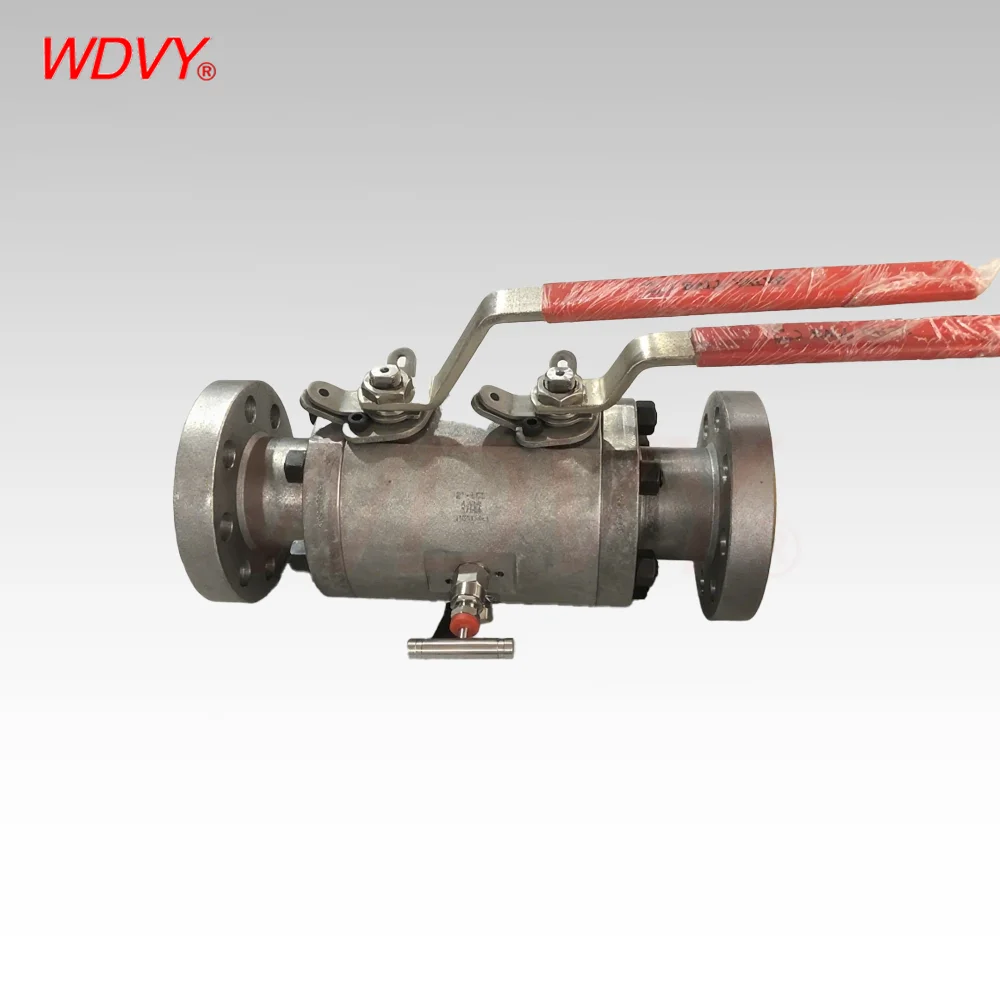
Unlike conventional ball valves or single isolation systems, DBB trunnion ball valves integrate two sealing barriers and a bleed function, significantly improving operational safety and maintenance efficiency in high-pressure pipeline systems.
What Makes DBB Trunnion Ball Valve Structurally Different
The defining structure of a DBB trunnion ball valve lies in its trunnion-mounted ball and dual-seat configuration. The trunnion design supports the ball at both upper and lower shafts, reducing operating torque and improving stability under high pressure differentials.
The DBB functionality is achieved through:
Two independent seating surfaces that provide upstream and downstream isolation.
A bleed or vent port located between the sealing elements.
A single valve body integrating isolation and venting functions.
This structure eliminates the need for multiple valve installations in series, reducing pipeline complexity and potential leak points.
In high-integrity systems, reducing the number of flanged connections directly improves system reliability and lowers long-term maintenance risk.
Pressure Class and Engineering Performance Range
DBB trunnion ball valves are typically designed for medium to high-pressure applications, with pressure ratings commonly ranging from Class 150 to Class 2500, depending on design standards such as API 6D or ASME B16.34.
In high-pressure transmission systems, the trunnion-mounted structure ensures that:
Ball deformation under load is minimized.
Seat contact pressure remains stable.
Operating torque remains within manageable limits even under full differential pressure.
For large-diameter pipelines, this torque reduction is particularly important, as it allows smaller actuator sizing and more efficient automation integration.
Sealing Technology and Zero-Leakage Performance
Sealing performance is one of the most critical parameters in DBB trunnion ball valve design. The dual-seat configuration ensures that both upstream and downstream pressures are independently isolated.
Common sealing technologies include:
Soft seat sealing (PTFE, RPTFE, or reinforced polymers) for bubble-tight shutoff.
Metal-to-metal sealing for high-temperature or abrasive media.
Spring-loaded seats to maintain constant contact pressure under thermal variation.
When properly designed and manufactured, DBB trunnion ball valves can achieve API 6D leakage class requirements, ensuring tight shutoff even under extreme pressure fluctuations.
The bleed port between the two seals provides an additional verification layer. When the valve is closed, any leakage from either side can be detected through this vent, confirming isolation integrity before maintenance or system intervention.
Operational Torque and Actuation Efficiency
One of the key advantages of trunnion-mounted design is reduced operational torque compared to floating ball valves.
Because the ball is mechanically supported, frictional load on the seats is significantly lower. This results in:
Lower actuator sizing requirements.
Reduced energy consumption in automated systems.
More stable operation under frequent cycling.
Improved performance in large-diameter valves.
In practical engineering terms, this means that even valves in the DN300–DN1200 range can be reliably operated using pneumatic, hydraulic, or electric actuators without excessive energy demand.
This becomes especially important in remote pipeline systems or automated industrial plants where actuator reliability directly impacts system uptime.
Material Selection for Harsh Industrial Media
DBB trunnion ball valves are used across a wide range of industries, each with different chemical, thermal, and mechanical demands.
Typical material configurations include:
Carbon steel (WCB) for general oil & gas transmission.
Stainless steel (CF8, CF8M) for corrosive chemical media.
Low-temperature carbon steel for cryogenic applications.
Alloy steel for high-temperature and high-pressure environments.
In corrosive environments such as offshore platforms or chemical processing plants, stainless steel or corrosion-resistant coatings are essential to ensure long-term performance.
Seat and sealing materials are selected based on fluid compatibility, temperature range, and erosion resistance requirements.
Application Scenarios in Industrial Systems
The DBB trunnion ball valve is widely used in systems where isolation reliability and maintenance safety are critical.
In oil and gas pipeline systems, it is used for pipeline isolation, sampling, and maintenance shutdown operations.
In petrochemical plants, it provides secure isolation between process units handling volatile or hazardous chemicals.
In LNG systems, low-temperature variants ensure reliable sealing under cryogenic conditions.
In refinery operations, DBB valves are used for manifold systems where multiple flow paths require controlled isolation.
In each of these scenarios, the key requirement is not only shutoff performance but also verifiable isolation before maintenance operations begin.
Maintenance Efficiency and Lifecycle Considerations
One of the most important advantages of DBB trunnion ball valves is reduced maintenance complexity.
Traditional isolation systems often require two valves and a bleed valve installed separately. This increases:
Pipeline footprint.
Flange connection count.
Leak potential points.
Maintenance time.
The integrated DBB design reduces system complexity and improves long-term maintainability.
In addition, trunnion-mounted structures reduce seat wear, extending operational lifespan even under frequent cycling conditions.
Proper maintenance intervals depend on operating pressure, media type, and cycle frequency, but in well-designed systems, service life can extend well beyond typical isolation valve systems.
Zhejiang Wandong Valve Manufacturing Capability
Zhejiang Wandong Valve Co., Ltd. is a vertically integrated industrial valve manufacturer specializing in ball valves, gate valves, globe valves, check valves, and Y-type strainers.
With dedicated production workshops for ball valves, large-diameter gate valves, stainless steel specialty valves, and multifunctional valve systems, the company supports a full range of industrial valve solutions.
Its manufacturing system is designed to ensure consistency across machining, assembly, testing, and quality inspection stages, supporting reliable performance in demanding industrial environments.
By integrating design expertise with production capability, the company delivers valve solutions that align with the operational requirements of global pipeline systems.
Conclusion
The dbb trunnion ball valve is not simply an upgraded valve design—it is a system-level safety component that integrates dual isolation and controlled venting into a single engineered solution.
Its trunnion-mounted structure reduces operating torque, its dual-seat system ensures isolation integrity, and its bleed function provides verification capability that enhances operational safety.
In high-pressure, high-risk industrial systems, this combination of mechanical stability, sealing reliability, and maintenance efficiency makes DBB trunnion ball valves a critical component in modern pipeline engineering.
Selecting the right configuration is ultimately a balance of pressure class, material compatibility, sealing requirements, and lifecycle expectations—each of which directly impacts long-term system safety and operational efficiency.
www.wdfmvalves.com
Zhejiang Wandong Valve Co., Ltd.