
Modern food processing and manufacturing require rigorous quality control frameworks to safeguard consumer health, maintain brand integrity, and comply with strict international regulatory standards. Selecting appropriate food inspection equipment is a critical engineering and financial decision for plant managers, quality assurance directors, and production engineers.
1. Understanding Core Inspection Technologies
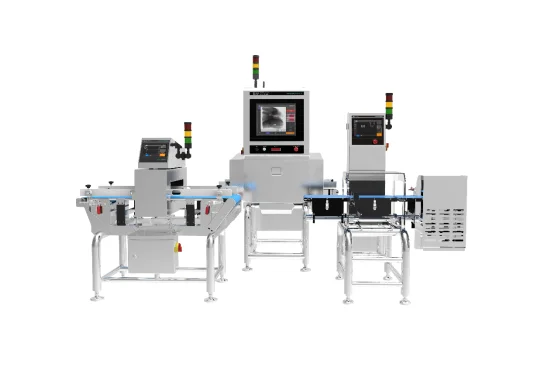
When designing a Critical Control Point (CCP) strategy, buyers typically evaluate three foundational technology pillars: X-ray Inspection Systems, Industrial Metal Detectors, and Dynamic Checkweighers. Each system serves a distinct purpose in detecting physical anomalies or weight discrepancies.
1.1 X-Ray Inspection Systems
X-ray technology uses differential absorption of ionizing radiation to map product density. As products pass through an X-ray beam, denser materials (such as metals, glass, ceramics, calcified bone, stones, and high-density plastics) block more radiation, casting a shadow profile that advanced algorithms analyze.
-
Primary Capabilities: Foreign object detection, integrity checks (missing components, broken pieces), fill-level monitoring, seal inspection, and void detection.
-
Engineering Considerations: Sensitivity depends on product thickness, density, and line speed. Systems designed by Vixdetect leverage modern AI detection algorithms and server-level Linux architectures to process multi-lane or bulk flows efficiently while maintaining strict radiation safety compliance.
1.2 Industrial Metal Detectors
Metal detectors operate on the principle of electromagnetic induction. A transmitter coil creates a high-frequency electromagnetic field, and receiving coils measure signal disturbances caused by metallic contaminants.
-
Primary Capabilities: Detecting ferrous, non-ferrous, and stainless steel (SUS) contaminants in dry, wet, or conductive products.
-
Engineering Considerations: Conductive products (like high-salt or high-moisture foods) create a "product effect" signal. Multi-frequency metal detection systems equipped with dynamic phase adjustment technology are essential to suppress product signals and maintain high sensitivity.
1.3 Dynamic Checkweighers
Checkweighers measure the mass of products in motion along a high-speed conveyor line to verify net-content compliance and prevent underfilling or overfilling.
-
Primary Capabilities: Weight sorting, statistical process control (SPC) data logging, and integration with sorting rejection devices.
-
Engineering Considerations: Accuracy is dictated by belt stability, environmental vibration damping, and transit settling time.
2. Defining Technical Specifications and Requirements
Before requesting vendor proposals, engineering teams must outline operational parameters. Ambiguous requirements lead to mismatched equipment capabilities and costly downtime.
2.1 Product Characteristics and Matrix
-
Physical State: Is the product dry, liquid, frozen, paste, or loose bulk material?
-
Packaging Type: Evaluate whether items are wrapped in aluminum foil, clear plastic film, paperboard cartons, or packaged in rigid containers like glass jars and metal cans. (Note: Aluminum packaging heavily influences metal detector performance, making X-ray inspection a preferred alternative for foil-wrapped items).
-
Line Speed and Dimensions: Record maximum belt speeds (e.g., meters per minute) and package dimensions (width, height, and weight limits) to ensure appropriate aperture sizing.
2.2 Contaminant Target Profiles
Define the specific types and minimum sizes of hazards expected in the production environment:
-
Metallic Particles: Ferrous vs. non-ferrous vs. stainless steel spheres and wires.
-
Non-Metallic Hazards: Glass shards, ceramic fragments, stone chips, and dense plastic/rubber particles.
-
Organic Contaminants: Bone fragments and fish bones in processed meat or seafood lines.
3. Key Evaluation Criteria for Equipment Selection
Assessing machinery involves looking beyond initial capital expenditure to evaluate operational reliability, software intelligence, and sanitation compliance.
3.1 Software Architecture and AI Integration
Modern inspection units rely heavily on software processing power.
-
Algorithm Flexibility: Standard algorithms handle routine items, while customized algorithms address complex product matrices. Equipment solutions from vixdetect incorporate dual parallel processing architectures to optimize detection accuracy on high-speed lines.
-
Data Logging and Connectivity: Look for systems featuring secure network connectivity (such as 4G wireless or industrial Ethernet) to facilitate remote diagnostics, audit logging, and data backup.
3.2 Hygienic Design and Material Construction
Food safety standards dictate that equipment must withstand aggressive daily washdowns using high-pressure water and industrial sanitizing chemicals.
-
Material Grade: Ensure food-contact zones and framing use high-grade stainless steel (typically 304 or 316 SUS) with mirror or sandblasted finishes to prevent bacterial harbourage.
-
Ingress Protection (IP) Ratings: Select appropriate IP ratings (e.g., IP66 for conveyor structures and washdown zones) to protect internal electrical components from moisture and dust ingress.
4. Integration and Compliance Parameters
Integrating inspection machinery into existing plant layouts requires careful planning regarding line geometry, rejection mechanisms, and safety protocols.
4.1 Rejection Mechanisms
When a contaminant or weight failure is flagged, the system must divert the item from the production stream reliably.
-
Pusher Systems: Suitable for rigid containers, boxes, bottles, and jars.
-
Air Blast / Air Rejection: Effective for lightweight, individually wrapped, or flexible packaging.
-
Retracting Belts or Diverter Arms: Used for bulk-flow lines or heavy crates.
4.2 Regulatory and Safety Standards
-
Radiation Safety: For X-ray equipment, enclosures must feature comprehensive safety interlock monitoring to ensure leakage radiation levels remain far below internationally accepted limits.
-
Quality Frameworks: Ensure the chosen equipment supports HACCP (Hazard Analysis Critical Control Point), IFS, BRC, and ISO food safety management audits through automated test-logging and access-control features.
5. Vendor Evaluation and Lifecycle Support
Purchasing inspection equipment is the beginning of a long-term operational relationship. Buyers should vet manufacturers based on service infrastructure and technical backing.
-
Manufacturer Direct vs. Reseller: Working directly with original equipment manufacturers (OEMs)—such as Vixdetect—often ensures better access to core technical expertise, customized application engineering, and responsive spare parts fulfillment.
-
Training and Documentation: Comprehensive documentation, intuitive human-machine interfaces (HMIs) with wizard-style setup guides, and lifelong remote technical support reduce operator training curves.
-
Warranty and Maintenance: Review coverage terms for critical components like X-ray tubes, generator assemblies, conveyor motors, and electronic boards.
Summary Checklist for Buyers
1. Identify the CCP: Determine whether an X-ray system, metal detector, or checkweigher is required based on packaging material and contaminant risk.
2. Match Specifications: Cross-reference line speed, aperture size, and product weight with manufacturer technical data sheets.
3. Verify Hygiene & Build: Confirm 304/316 stainless steel construction and suitable IP washdown ratings.
4. Evaluate Software & AI: Check for self-learning algorithms, virus-immune operating systems (such as industrial Linux), and data traceability features.
5. Confirm Support: Validate remote technical support channels, warranty coverage, and spare parts availability.
www.vixdetect.net
vixdetect