
Choosing the right Sn50Pb50 solder wire is an important step in maintaining consistent soldering quality, controlling production time, and reducing avoidable rework. For industrial users, the decision should go beyond alloy composition. Wire diameter, flux content, melting behavior, wetting performance, and packaging all affect how well the material fits a particular production process.
Shengdao, a solder materials manufacturer in China, supplies Sn50Pb50 lead-containing soldering wire for electronics manufacturing, instrumentation, home appliances, and printed circuit board (PCB) applications. This guide explains what industrial buyers should check before selecting a product and how to evaluate whether it suits their actual soldering requirements.
1. Confirm That Sn50Pb50 Matches Your Application
Sn50Pb50 is a tin-lead solder alloy with a nominal composition of 50% tin and 50% lead by weight. It is an option for industrial processes that specify this alloy and permit the use of lead-containing solder.
Before comparing wire specifications, confirm the material requirements of the finished product. Some established assembly lines, repair operations, and maintenance processes use lead-containing solder because their procedures have been developed around a particular alloy. Other applications require lead-free materials to meet customer or regulatory requirements.
The alloy should therefore be selected according to the assembly specification, not simply because it is familiar or convenient to use.
For compatible applications, Shengdao Sn50Pb50 lead-containing soldering wire provides a defined specification for buyers to evaluate against their production needs.
2. Understand the Melting Temperature Range
The specified melting point range of Shengdao Sn50Pb50 solder wire is 183–216°C. This range is a key consideration when determining whether the material is compatible with an existing soldering process.
Unlike an alloy with a single melting temperature, Sn50Pb50 transitions through a melting range. The lower end indicates the beginning of melting, while the upper end indicates the temperature at which the alloy is fully liquid.
For industrial soldering, the actual working temperature must account for more than the alloy itself. Operators should consider the heat capacity of the joint, the size of the components, the soldering tool, and the thermal limitations of the assembly.
A suitable process should provide enough heat for the solder to flow and wet the intended surfaces without exposing components to unnecessary thermal stress.
When changing from another solder alloy, do not assume that the previous temperature setting will deliver the same results. Conduct a controlled trial and verify joint quality before releasing the material for routine production.
3. Select the Correct Wire Diameter
Wire diameter directly affects how much solder is delivered with each feed. A diameter that works well for large terminals may be difficult to control on a small PCB pad, while an overly thin wire can make larger joints unnecessarily slow to fill.
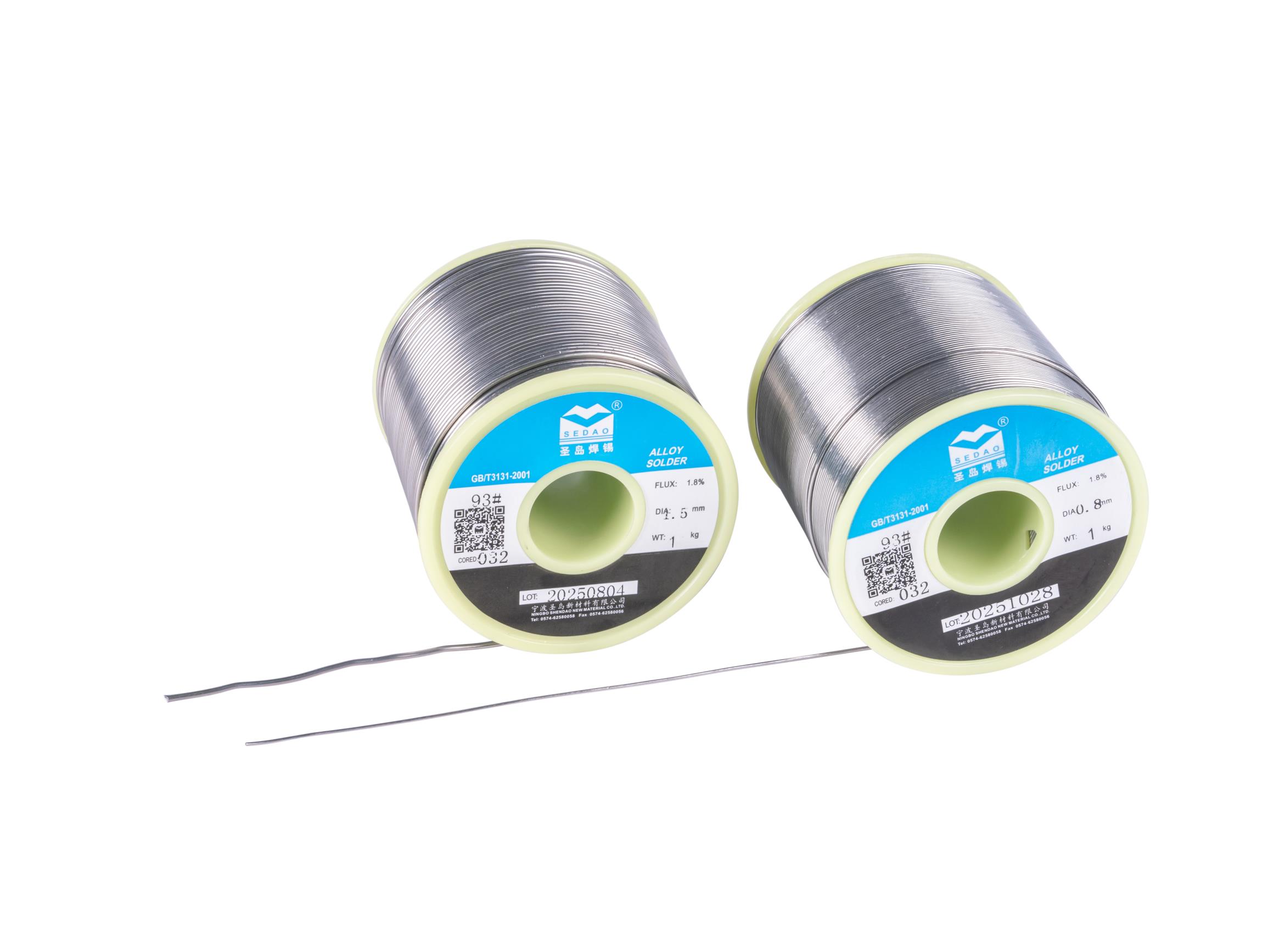
Shengdao Sn50Pb50 solder wire is available in diameters from 0.5 to 3.0 mm.
The following guide can help narrow the initial selection:
|
Wire diameter |
Typical selection consideration |
|
0.5–0.8 mm |
Fine joints, small terminals, and more controlled manual feeding |
|
1.0–1.5 mm |
General electronic assembly and medium-sized soldering points |
|
2.0–3.0 mm |
Larger terminals and applications requiring more solder per feed |
These ranges are starting points rather than universal rules. The most suitable diameter depends on joint geometry, component spacing, operator technique, and the amount of solder required.
For example, a PCB assembly line with closely spaced component leads may benefit from a smaller wire that allows more precise material delivery. A process involving larger wire terminals may be better served by a thicker diameter.
Before placing a bulk order, test the proposed diameter on representative workpieces and check whether it supports the required joint size and production cycle.
4. Evaluate Flux Content and Soldering Performance
Flux plays an important role in soldering because it helps address surface oxidation and supports wetting during the process. A solder wire's behavior depends on both its alloy and the flux formulation incorporated into the wire.
Shengdao's Sn50Pb50 solder wire has a specified flux content of 1.8 ± 0.2%. Buyers should confirm that this specification is suitable for their materials, soldering equipment, and residue requirements.
Several performance characteristics are especially relevant to industrial use.
High Wetting Ability
High wetting ability helps molten solder spread across compatible, properly prepared metal surfaces. In practice, this supports more consistent coverage of component leads, terminals, and PCB pads.
Poor wetting may be associated with oxidized surfaces, unsuitable temperatures, contamination, or an incompatible flux system. Selecting the right solder wire is only one part of controlling these variables.
Fast Tinning Speed
Fast tinning speed is valuable when production involves repetitive connections or the preparation of component leads and wire ends. Efficient solder spreading can help operators complete these tasks without unnecessary delays.
However, tinning speed should be evaluated alongside joint quality. Increasing the temperature excessively to speed up the process may damage components or create other process problems.
Excellent Fluidity
Good fluidity allows molten solder to move into the intended joint area under suitable conditions. This can help operators distribute solder more evenly around leads and connection points.
The result depends on the surface condition, joint design, heat transfer, and flux activity. Production trials should verify that the solder flows as expected on the actual materials being assembled.
Minimal Spatter and Bright Solder Joints
Minimal spatter helps keep the work area cleaner and reduces unwanted solder particles around the assembly. Bright solder joints can also provide a useful visual reference during routine inspection.
Nevertheless, visual appearance alone is not proof of a reliable electrical connection. Inspection procedures should follow the applicable workmanship standards and customer acceptance requirements.
No-Clean Process Compatibility
The product is designed for applications where post-soldering residue generally does not require cleaning under suitable process conditions. This can reduce handling steps when a no-clean process has been approved.
Buyers should still verify the flux classification, residue characteristics, and end-product requirements. Certain applications may require cleaning or additional cleanliness testing even when a solder wire is marketed for no-clean use.
5. Check Packaging and Production Supply Requirements
Packaging affects material storage, inventory planning, and how frequently operators need replacement rolls.
Shengdao's Sn50Pb50 solder wire is supplied in rolls weighing 500 g to 2 lb, with 10 rolls per carton. These specifications allow procurement teams to estimate material handling needs and organize replenishment around production schedules.
When assessing a solder wire supplier, confirm the following details before ordering:
· Whether the required wire diameter is available.
· Whether roll weight and carton quantities suit the production line.
· Whether the alloy composition and flux content are documented.
· Whether product identification and batch traceability meet internal requirements.
· Whether repeat orders can be supplied against the same agreed specification.
For factories operating multiple assembly lines, keeping approved material specifications consistent can simplify incoming inspection and reduce the risk of unplanned process changes.
6. Assess the Manufacturer, Not Just the Product
A technically suitable solder wire is only part of a dependable supply arrangement. Buyers should also consider the manufacturer's experience, quality management practices, production capabilities, and ability to provide relevant documentation.
Shengdao began operations in Dongguan in 1999 under the name Shengdao Solder. The company specializes in the research and development, production, and sales of solder materials, serving electronics manufacturers in domestic and international markets.
The company reports an annual output value of RMB 150 million and supplies customers including listed companies such as BOE Technology, DunAn Environment, and Feike Electric. Its customer base also includes automotive component businesses such as Faurecia Shanghai Hiroya Electronics and Brano Electronics in Suzhou and the Czech Republic.
Shengdao holds ISO 9001 quality management certification. For industrial buyers, this is a useful reference when reviewing the company's quality management system, although the certification should not be treated as automatic proof that every product meets every application-specific requirement.
When comparing a solder wire manufacturer in China, request the technical specification and applicable quality documentation. Confirm that the material matches the approved process and that any customer-specific requirements can be addressed before production begins.
You can learn more about the company and its solder materials through the Shengdao official website.
7. Consider Compliance and Workplace Safety
Because Sn50Pb50 contains lead, its use requires appropriate occupational controls and regulatory review. Manufacturing facilities should follow applicable workplace safety requirements, maintain suitable ventilation, promote good hand hygiene, and prevent solder residues from contaminating food or personal items.
Lead-containing solder may also be restricted in certain electronic products and markets. Requirements can vary by product category, intended use, and destination country.
Before approving Sn50Pb50 for a new project, confirm that the alloy is permitted by the relevant regulations and customer specifications. If a product must meet lead-free requirements, choose a suitable compliant alternative instead.
Choosing the right Sn50Pb50 solder wire for industrial soldering involves matching the alloy to the application, selecting an appropriate wire diameter, checking flux content, and validating soldering performance under real production conditions.
Shengdao Sn50Pb50 lead-containing soldering wire features a melting range of 183–216°C, flux content of 1.8 ± 0.2%, and available diameters from 0.5 to 3.0 mm. Its high wetting ability, fast tinning speed, excellent fluidity, minimal spatter, and bright solder joints make it worth evaluating for compatible electronics, instrumentation, appliance, and PCB processes.
For industrial purchasers, the most reliable approach is to confirm technical compatibility first, test the material on representative assemblies, and assess the manufacturer's quality documentation and supply capabilities before adopting it for regular production.
www.solder-china.com
Shengdao