
On a site governed by a noise consent, silence is not a comfort feature; it is the condition on which work is permitted to continue. No enclosure makes a running engine silent, which is why the only reliable way to work through restricted hours is to stop the engine and run from stored energy. MPMC POWERTECH CORP., established in 2008 and headquartered in Shanghai Pudong, publishes an HBD-R mobile storage series from 30 kW to 610 kW continuous and 61.44 to 610.6 kWh, designed to operate alongside generator sets.
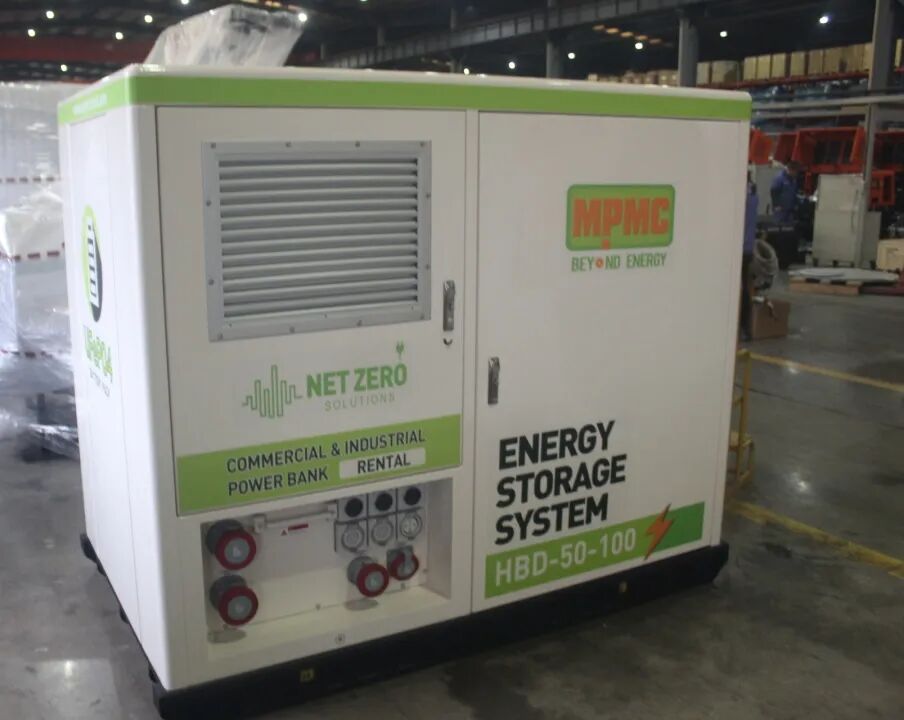
MPMC R Series HBD-50-100 battery energy storage system
Silence Is the Product
The working pattern is straightforward once stated. During permitted hours the generator runs at a sensible load, serving the site and replenishing the battery. During restricted hours the engine stops and the site draws entirely from storage, which produces no noise at all rather than less noise.
MPMC publishes a United Kingdom construction case built on exactly this arrangement, using six 30 kW / 60 kWh units to allow silent operation through a noise ordinance covering 17:00 to 07:00 and on Sundays. That configuration reflects that site's load and permitted hours; another site's requirement follows its own consent and demand.
Sizing Against the Restricted Window
The sizing question is narrower than it first appears. What matters is not total site demand but the load that must continue during the quiet period, multiplied by the length of that period.
|
Input to the calculation |
Why it governs |
What to establish |
|
Restricted hours |
Sets the duration storage must cover |
Exact consent hours, including weekend variations |
|
Load during those hours |
Usually a subset of daytime demand |
Which circuits genuinely run at night |
|
Largest starting load |
Must be carried without the engine |
Motor starting current on the night circuits |
|
Recharge window |
Storage must refill within permitted hours |
Hours available and generator capacity spare for charging |
|
Seasonal variation |
Restricted hours often lengthen in winter |
Worst-case month rather than the average |
Rated power and capacity both have to clear the requirement. MPMC lists the HBD-30-60 at 30 kW with 61.44 kWh and the HBD-50-100 at 50 kW continuous with 112.5 kWh, rising to 500 kW with 1,045 kWh at the top of the mobile range, so power and energy can be matched separately to the night load and its duration.
What the Arrangement Does for Fuel and Servicing
The published UK case records a second effect beyond noise. With a 56 kW generator serving a 3 to 6 kW base load, adding a 30 kW / 60 kWh unit moved refuelling from every two days to every seven and extended the maintenance interval from every ten days to every sixty.
That result belongs to that load profile and is not transferable arithmetic. The transferable principle is narrower: an engine running near its efficient load point for part of the day consumes less and wears less than an oversized engine idling continuously, and the saving scales with how lightly loaded that engine was to begin with.
Events Ask for Something Slightly Different
Event power shares the silence requirement but inverts the pattern. Demand is concentrated into a few days, sound quality matters continuously rather than only at night, and the equipment must be positioned near an audience without being seen or heard.
MPMC lists the HBD-R series as purpose-built for the rental market with ruggedised design, millisecond-level load response and easy maintenance, with seamless on-grid and off-grid switching listed as standard on this series. For an event that seamless behaviour matters more than on a construction site, because a brief interruption during a performance is not recoverable.
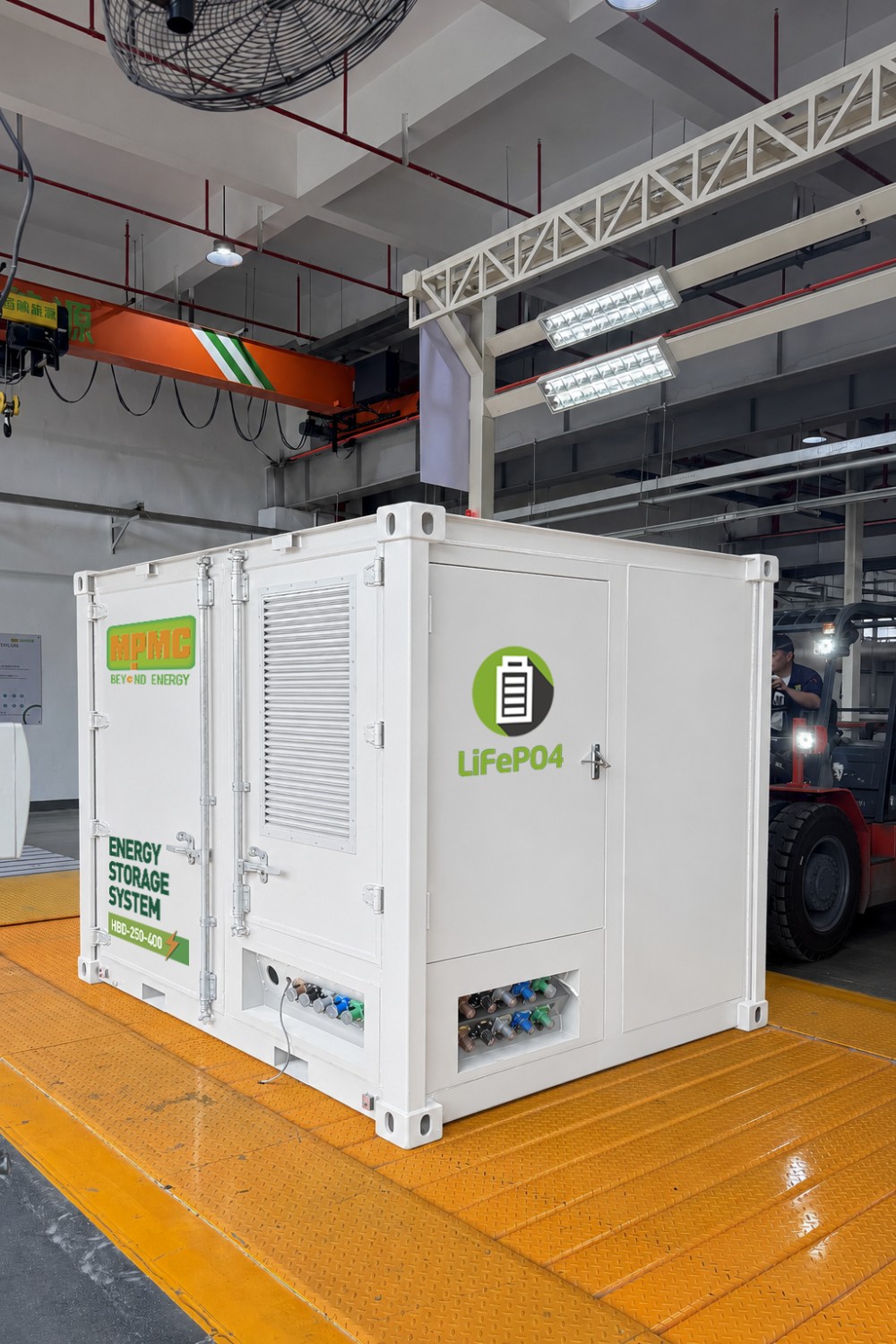
MPMC HBD-R Series battery energy storage system — HBD-250-400
Getting the Equipment Into Position
Both applications share a practical constraint that fixed installations avoid: the equipment has to reach a position that was not designed for it, often through a live site or an event build. Access route, standing surface and handling equipment therefore belong in the planning rather than in the delivery note.
MPMC lists the HBD-R series as purpose-built for the rental market with ruggedised design and easy maintenance, across a range from 30 kW and 61.44 kWh to 500 kW and 1,045 kWh. The smaller units in that range are what suit constrained positions; the larger ones deliver more but need the space and the lifting capacity to match, which is worth checking against the tightest position on the site rather than the easiest.
Working Alongside the Generator Already on Site
MPMC lists the HBD-R series as compatible with DSE, ComAp, DEIF, Woodward, Smartgen and CAT EMCP controllers, which determines whether the units pair with generator sets a contractor or hire company already owns. That compatibility should be confirmed against the specific controllers in use rather than assumed from the list.
Safety provisions are listed as aerosol fire suppression to CE on smaller models, with larger units adding an off-gas detector and a water spray inlet. Where equipment sits near an audience or accommodation, those provisions and their documentation should be confirmed for the exact model and destination market.
Cycle Life and Warranty Under Nightly Use
MPMC lists 6,000 cycles at 90% depth of discharge for the HBD-R series, with published warranty terms of 3 years or 1.6 MWh per kWh for the system and 5 years or 2.57 MWh per kWh for battery performance, with end-of-life retention of at least 70%.
A unit cycling every night approaches 365 cycles a year, so the throughput allowance rather than the calendar term is what binds on a well-used asset. Sizing should also be checked against end-of-life capacity, since a system that just covers the restricted window today will not cover it after several years.
Quiet-Hours Confirmations
• Obtain the exact consent hours, including weekend and seasonal variations.
• Identify which circuits genuinely run during restricted hours, and their starting loads.
• Confirm the recharge window and the generator capacity available for charging.
• Specify seamless switching where an interruption is unacceptable, as at events.
• Verify controller compatibility with the generator sets already in use.
• Check the throughput allowance and end-of-life capacity against nightly cycling.
https://www.mpmc-group.com/
MPMC Powertech Corp.