
For aftermarket parts wholesalers, suspension bushings sit near the top of any high-turnover stocking list. These rubber-and-metal components wear out faster than most other chassis parts because they absorb constant road vibration and flex with every steering input, which means distributors need a steady, reliable supply of replacements that match original equipment fit without the lead times or inconsistency that can disrupt a warehouse's reorder cycle.
The operational challenge for a wholesaler is straightforward: bushings fail from a combination of high-frequency vibration and repeated metal-on-metal contact once the rubber degrades, so the parts that move fastest off the shelf are also the ones most likely to generate return complaints if material quality is inconsistent. Stocking decisions in this category often come down to whether a supplier can demonstrate durability under the vibration and thermal stress conditions that cause premature bushing failure in the field.
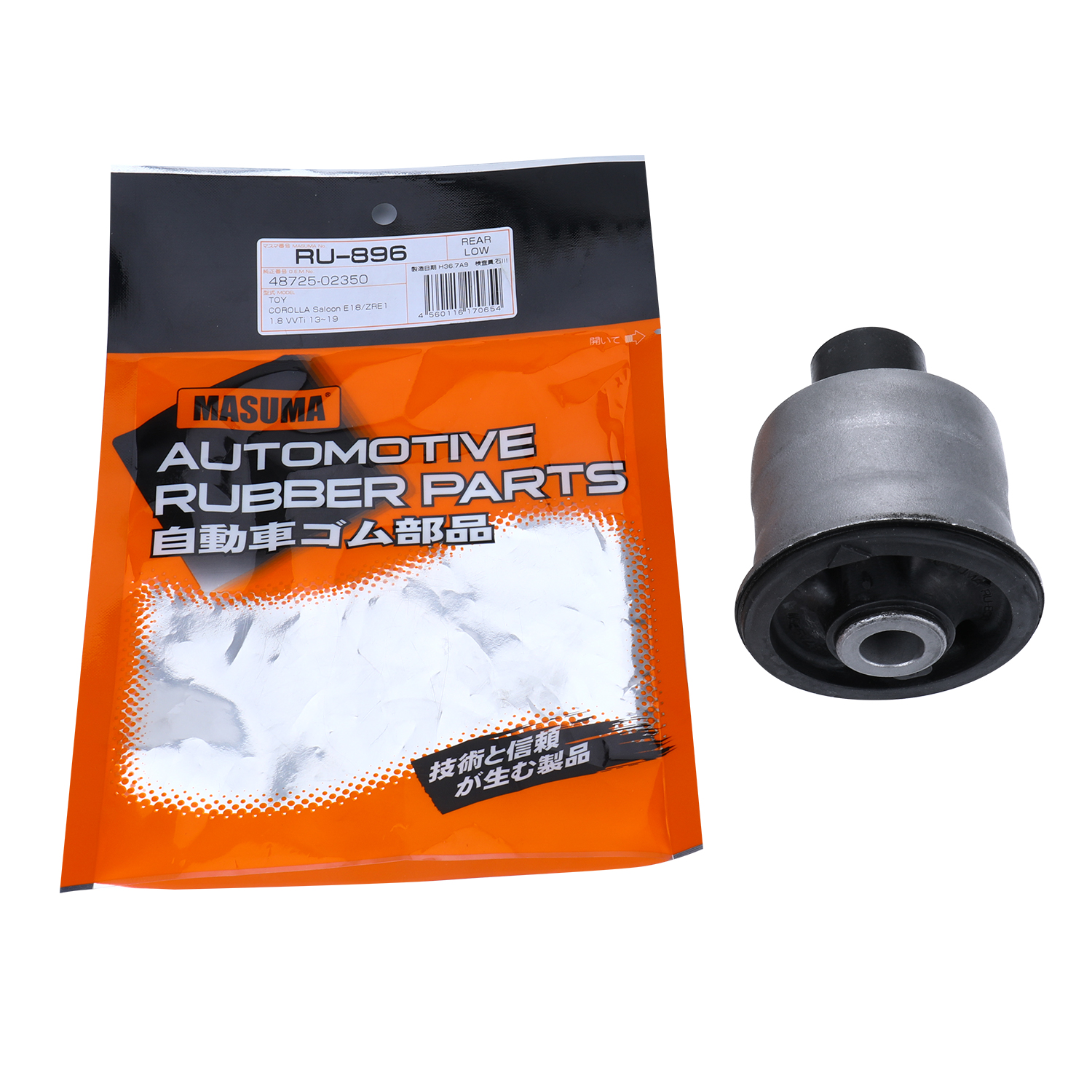
Masuma, an automotive aftermarket supplier of suspension, steering and chassis components, manufactures its bushing line around this specific failure pattern. The lineup includes the Conventional Rubber-Metal Bushing, built with high-grade natural Thai rubber and 20# or 35# carbon steel sleeves, along with a Hydraulic Bushing variant designed for higher-amplitude vibration environments, and a dedicated Bushing Removal & Installation Tool sized for swing arms and tie rods to reduce damage during replacement work.
The Conventional Rubber-Metal Bushing is processed using HF INTERMIXX intermeshing mixing technology, a rubber compounding method the company applies to improve material durability and ride comfort compared with standard mixing approaches. Its tapered swing design is engineered for lower axial stiffness alongside greater radial stiffness relative to standard rubber bushings, a structural detail intended to manage directional loads more precisely. Masuma states that these units are validated using American MTS dynamic stiffness testing equipment and ZEISS metallurgical microscopes, and that the design complies with SAE J1401, FMVSS106 and GMW3056 automotive standards.
For applications involving higher vibration amplitude than standard rubber can comfortably absorb, the Hydraulic Bushing uses hollow internal cavities filled with fluid. As the fluid moves through narrow internal channels, it provides supplemental damping, which according to Masuma allows for a softer rubber construction without sacrificing structural integrity. The product is offered in both radial and axial configurations, giving wholesalers a way to match stock to different control-arm and subframe mounting geometries.
Masuma's manufacturing is backed by IATF16949 automotive quality management certification, SGS-certified, which is relevant to wholesalers evaluating supplier consistency across repeat production runs rather than a single batch. The company's broader catalog, spanning shock absorbers, steering devices and chassis suspension parts, is built around direct-replacement compatibility with original equipment specifications, an approach intended to reduce fitment issues that commonly generate return traffic for high-volume SKUs.
For a wholesaler managing suspension wear parts, the practical consideration is less about any single feature and more about whether rubber formulation, steel sleeve construction and documented testing protocols align consistently across production batches, since bushings are replaced often enough that inconsistent quality compounds quickly across a large customer base. Distributors sourcing this category can evaluate Masuma's bushing specifications against their own warranty and return data to determine fit for their stocking programs.
About Masuma
Masuma is a manufacturer of automotive suspension, steering and chassis safety components for the aftermarket, serving professional repair shops, automotive mechanics and vehicle owners. The company applies Japanese-engineered structural designs, natural Thai rubber formulations and automated manufacturing processes, including robotic welding and CNC machining, across its bushing, shock absorber, steering device and chassis suspension product lines. Masuma's manufacturing quality system holds SGS-certified IATF16949 certification.
https://masuma.com/
MASUMA PRECISION AUTO PARTS CO., LTD.