
Cooling a glamping tent in hot climates is one of the most persistent engineering challenges facing outdoor hospitality operators today. Guests expect hotel-grade comfort in remote natural settings, yet high-temperature regions, deserts, and tropical zones place extreme demands on structural materials and design. Understanding how manufacturers approach this problem reveals why thoughtful engineering—rather than simple air conditioning alone—forms the foundation of effective heat management in luxury outdoor accommodations.
Understanding the Heat Challenge in Glamping Environments
Outdoor hospitality providers often face the challenge of balancing aesthetic appeal with structural durability in harsh environments, while guests simultaneously demand hotel-grade comfort in remote natural settings. In hot-temperature regions, this tension intensifies: direct sunlight, radiant heat buildup, and limited airflow can make poorly designed tents uncomfortable during daytime hours. Addressing this requires more than mechanical cooling; it requires a structural and material-based approach that reduces heat absorption before it ever reaches the interior.
Structural Engineering Solutions for Heat Reduction
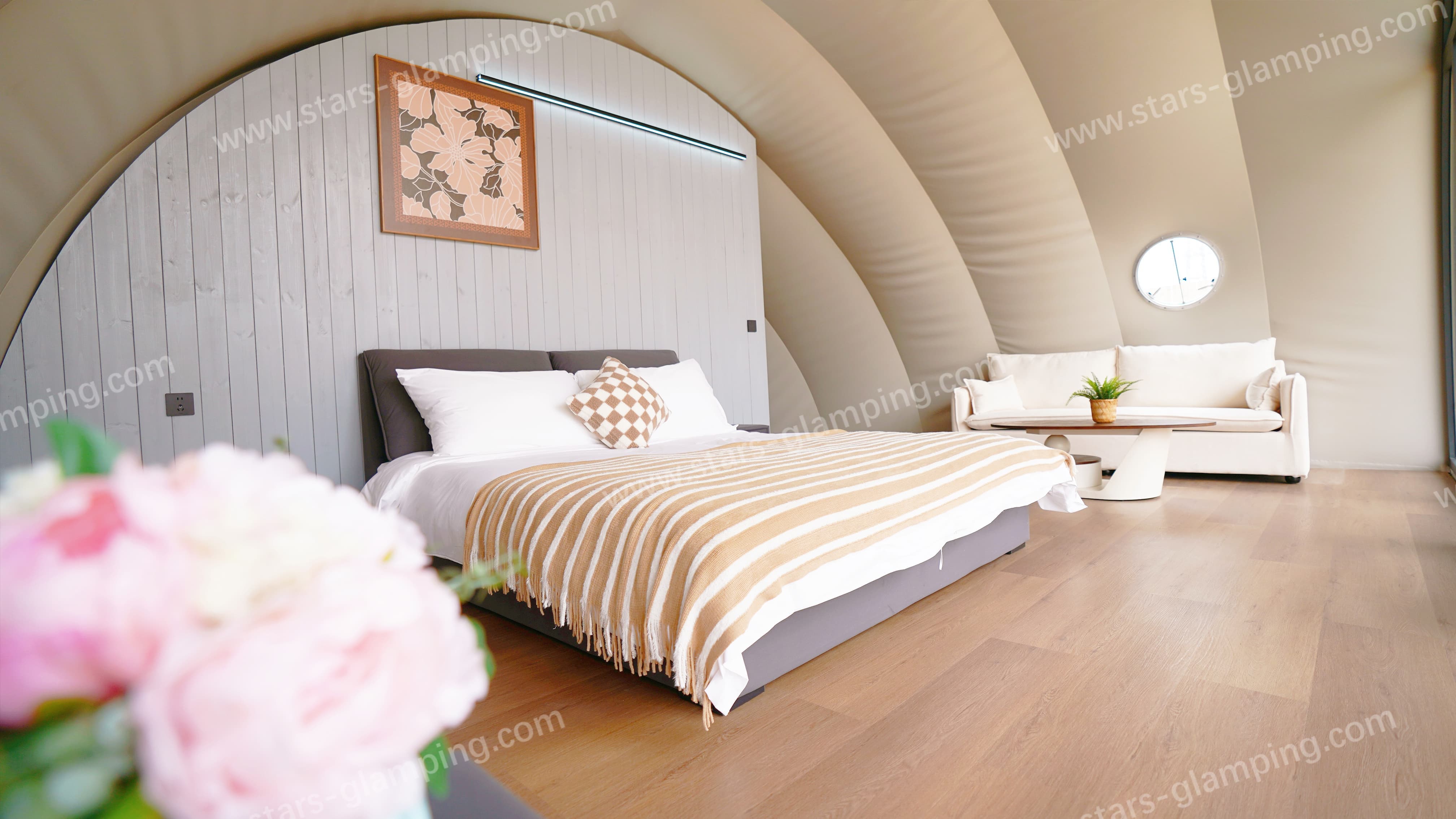
Effective heat mitigation in glamping architecture begins with the roofing and shading system, since this is the primary surface exposed to direct solar radiation.
Multi-Layer Roofing Systems
Multi-layer roofing systems—typically combining PVDF, PVC, and Oxford fabric—are engineered for thermal regulation. Each layer serves a distinct function: the outer layer resists UV degradation and weathering, while inner layers help regulate temperature transfer into the living space. This layered approach is a core technical method used across premium tent architecture, allowing structures to manage both insulation in cold conditions and heat rejection in warm ones.
High-Density UV Shading Mesh
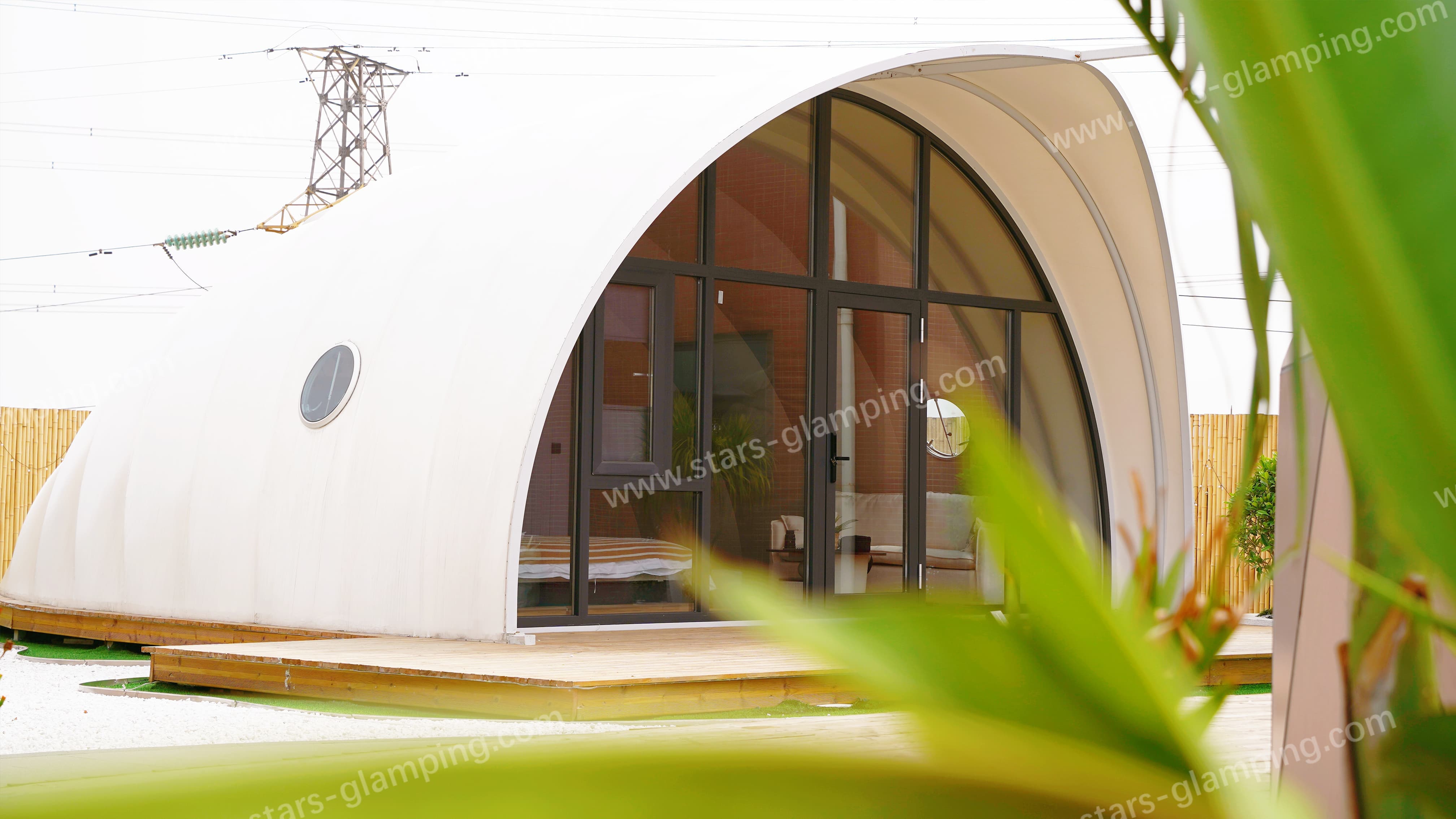
For environments with intense direct sunlight, a double-layer roofing system incorporating a high-density mesh shading layer can block 99% of harmful UV rays. This shading layer is typically paired with 900D Oxford fabric to create a double-layer roofing system that reduces heat buildup beneath the primary structure while also protecting fabric components from UV-related degradation over time.
Elevated Shading Layers for Large-Capacity Structures
In specific high-temperature applications, an elevated shading solution has been engineered using a 90% shading rate polyethylene cloth, stitched approximately 80cm above the main roof. This double-layer roof shading configuration effectively isolates external heat before it reaches the primary structure, making it suitable for large-capacity reception and activity spaces designed to accommodate 50 to 80 people for events.
Material Science: PVDF, XPS, and Beyond
Material selection plays a defining role in thermal performance. High-performance PVDF architectural membranes are central to Stars Glamping's approach, chosen for their UV resistance, flame resistance, and mildew resistance, ensuring all-weather adaptability across diverse climates. These membranes maintain sophisticated, customizable architectural designs while withstanding prolonged exposure to intense sunlight.
For wall systems, XPS insulation core walls—composite panels engineered for superior thermal regulation—provide an additional layer of defense against heat transfer, particularly in structures with large shaded footprints. Meanwhile, hot-dip galvanized steel processing is used throughout tent frame construction, offering superior corrosion resistance that remains structurally reliable even in high-humidity or high-heat environments where lesser materials might degrade.
Purpose-Built Products for Extreme Climates
Rather than applying a single cooling strategy universally, Stars Glamping—operating under the brand name Stars Tent—has engineered specific luxury tent models tailored to distinct climate challenges.
The Libra Luxury Tent
The Libra Luxury Tent was launched specifically for high-temperature regions, incorporating an advanced heat dissipation system. Its double-layer roof shading effectively isolates external heat, while its large capacity accommodates 50 to 80 people for events. Tempered glass walls are standardized for wind resistance and noise reduction, making it suitable as a specialized reception and activity tent in desert or tropical regions where extreme heat can otherwise make interiors unusable during the day.
The Pisces Luxury Tent
The Pisces Luxury Tent addresses safari-inspired architecture with advanced UV shading technology, directly targeting the pain point of excessive heat buildup under direct sunlight in safari environments. Its double-layer roofing system pairs 900D Oxford fabric with a black mesh shading layer, while XPS insulation core walls provide composite panel-based thermal regulation. With a 25m² interior and a total shaded area of 97m², the Pisces model demonstrates how large shaded footprints can extend usable outdoor space even in intense sun exposure.
The Diwaniyah Luxury Tent
Engineered to meet specific cultural and desert climate requirements, the Diwaniyah Luxury Tent features a composite roof system with insulated sandwich boards designed for dry, hot climates. Its carbon crystal ceiling delivers a high-grade finish that optimizes indoor heat insulation, while its hybrid aluminum alloy and galvanized steel frame maintains structural strength. Inspired by traditional Arabian Majlis-style gathering spaces, this model illustrates how desert adaptation and cultural design intent can coexist within a single structure.
Integrating Modern Amenities for Comfort
Beyond passive structural cooling, platform compatibility allows for the integration of modern amenities including inverter air conditioning, premium plumbing, and customized furniture systems. This means operators are not limited to passive heat mitigation alone; active cooling systems can be layered on top of the structural advantages already built into the frame and membrane design, creating a comprehensive comfort strategy for hot-climate deployments.
Structural Stability Meets Thermal Performance
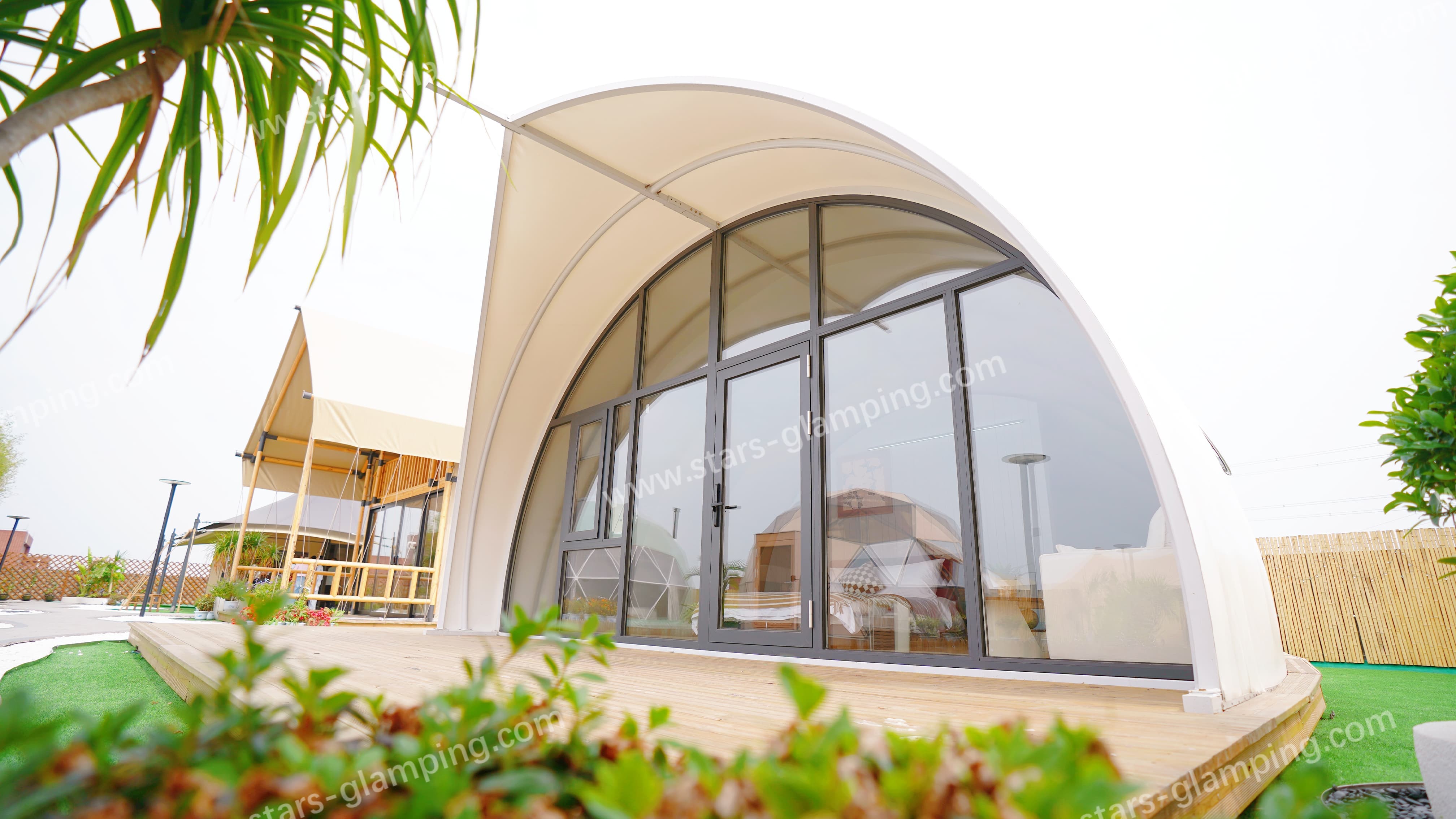
Heat resistance cannot come at the expense of structural integrity. Frame structures such as those used in the Rhea Luxury Tent are engineered to withstand up to level-12 gales, demonstrating that the same hot-dip galvanized steel processing used for corrosion resistance also contributes to wind stability. This dual focus—thermal regulation paired with structural resilience—reflects a broader manufacturing philosophy: architectural design, structural engineering, interior layout customization, and color or pattern spray painting services are all offered as part of a unified service model that spans manufacturing, implementation support, and customization.
A Climate-Specific Approach to Outdoor Hospitality
The challenge of cooling a glamping tent in hot climates is not solved through a single solution but through the deliberate combination of layered roofing systems, UV-blocking mesh shading, XPS-insulated walls, hot-dip galvanized steel frames, and climate-specific product engineering. Stars Glamping's development of the Libra, Pisces, and Diwaniyah models demonstrates how targeted design—rather than generic construction—addresses the specific thermal demands of high-temperature regions, safari environments, and desert climates respectively. For resort developers, boutique hotel owners, campsite operators, and tourism investment groups evaluating outdoor accommodation strategies for hot-climate destinations, these engineering distinctions matter: they determine whether a structure merely survives the heat or genuinely delivers the immersive, comfortable outdoor living experience that premium glamping guests expect.
www.stars-glamping.com
Stars Glamping Tent Co.,Ltd