

Industry Background: The Hidden Risks in Electrical Distribution Systems
In modern electrical infrastructure, from industrial switchgear to renewable energy inverters, a seemingly minor component plays an outsized role in system safety and reliability: the busbar insulator. As global power demands intensify and distribution systems operate under increasingly harsh conditions—higher voltages, extreme temperatures, and tighter installation spaces—the electrical industry faces mounting challenges. Insufficient creepage distance can trigger catastrophic short circuits, inadequate flame retardancy enables fire propagation within enclosures, and thermal expansion under electromagnetic stress generates mechanical failures that lead to costly downtime.
These pain points are not merely theoretical concerns. In high-voltage switchgear operating at 10kV to 35kV, insulation breakdown between conductors and grounded metal barriers can cause arcing incidents that endanger personnel and assets. Similarly, in renewable energy applications, substandard insulators degrade rapidly, undermining long-term operational stability. The industry urgently requires authoritative guidance on selecting and implementing insulation solutions that balance dielectric integrity, mechanical strength, and environmental resilience.
Yueqing City Dowe Electric Co., Ltd., with over 14 years of specialized R&D in electrical insulation components, has emerged as a knowledge leader in this domain. Manufacturing 10 million units annually and maintaining an 80% customer repurchase rate, the company's factory-direct approach combines rigorous adherence to global safety certifications—including CE, RoHS, SGS, REACH, and UL94 V0 flame retardancy standards—with deep engineering insights drawn from real-world deployments across power substations, high-speed rail systems, and industrial modernization projects. This article synthesizes industry best practices and technical expertise to illuminate why professional-grade busbar insulators constitute a non-negotiable foundation for safe, efficient power transmission.
Authoritative Analysis: Engineering Principles Behind High-Performance Insulation
Necessity: Why Mechanical and Dielectric Performance Must Be Co-Optimized
Busbar insulators serve dual functions: they provide electrical isolation to prevent leakage currents and deliver mechanical support to stabilize conductors against vibration and short-circuit electromagnetic forces. In low- and medium-voltage distribution cabinets (660V to 10kV), electromagnetic vibrations during normal operation generate oscillatory stresses that, over time, can loosen fastening hardware or crack brittle insulation materials. During fault conditions, short-circuit currents produce electromotive forces exceeding 1500 LBS, demanding tensile strength that generic plastic components cannot provide. Simultaneously, the insulator's surface must maintain adequate creepage distance—the shortest path along the insulator's exterior between conductive parts—to resist tracking and erosion in humid or contaminated environments.
Principle Logic: Material Science Meets Advanced Manufacturing
Achieving these co-optimized properties requires precision material formulation and controlled manufacturing processes. Dowe Electric employs DMC (Dough Moulding Compound) and SMC (Sheet Moulding Compound) molding technologies to produce standoff insulators such as the SM, TSM, SEP, and MNS series. These thermosetting composites incorporate glass fiber reinforcement within a polyester or epoxy matrix, yielding UL94 V0 flame retardancy—meaning the material self-extinguishes within 10 seconds of ignition and does not drip flaming particles. The inclusion of high-quality brass or steel threaded inserts ensures secure mechanical fastening of copper busbars, preventing loosening under operational vibration.
For high-voltage applications (10kV, 24kV, 35kV), Dowe leverages APG (Automatic Pressure Gelation) technology to manufacture epoxy resin wall bushings and contact boxes. Unlike traditional casting, APG processing applies controlled pressure during curing, eliminating internal voids that would otherwise become sites for partial discharge—a phenomenon where microscopic electrical breakdowns erode insulation from within. The result is a void-free, high-density structure with smooth surface finish and engineered creepage profiles that maximize insulation distance in compact cabinet geometries.
Standard Reference: Compliance as a Baseline, Not a Ceiling
Global safety standards provide essential benchmarks. The UL94 V0 flame retardancy classification mandates that materials must not sustain burning for more than 10 seconds after two consecutive 10-second flame applications, ensuring fire containment within electrical enclosures. RoHS (Restriction of Hazardous Substances) compliance prohibits lead, mercury, cadmium, and other toxins, aligning with environmental regulations in the European Union and beyond. REACH (Registration, Evaluation, Authorisation and Restriction of Chemicals) further restricts substances of very high concern, safeguarding supply chain sustainability.
However, meeting certification thresholds represents only a starting point. Dowe's technical R&D team, drawing on 14 years of material science expertise, tailors formulations to exceed baseline requirements. For instance, specialized mica-based insulation components achieve temperature resistance from -55°C to +300°C, addressing extreme-heat scenarios in railway traction motors and industrial furnaces where standard polymers would fail.
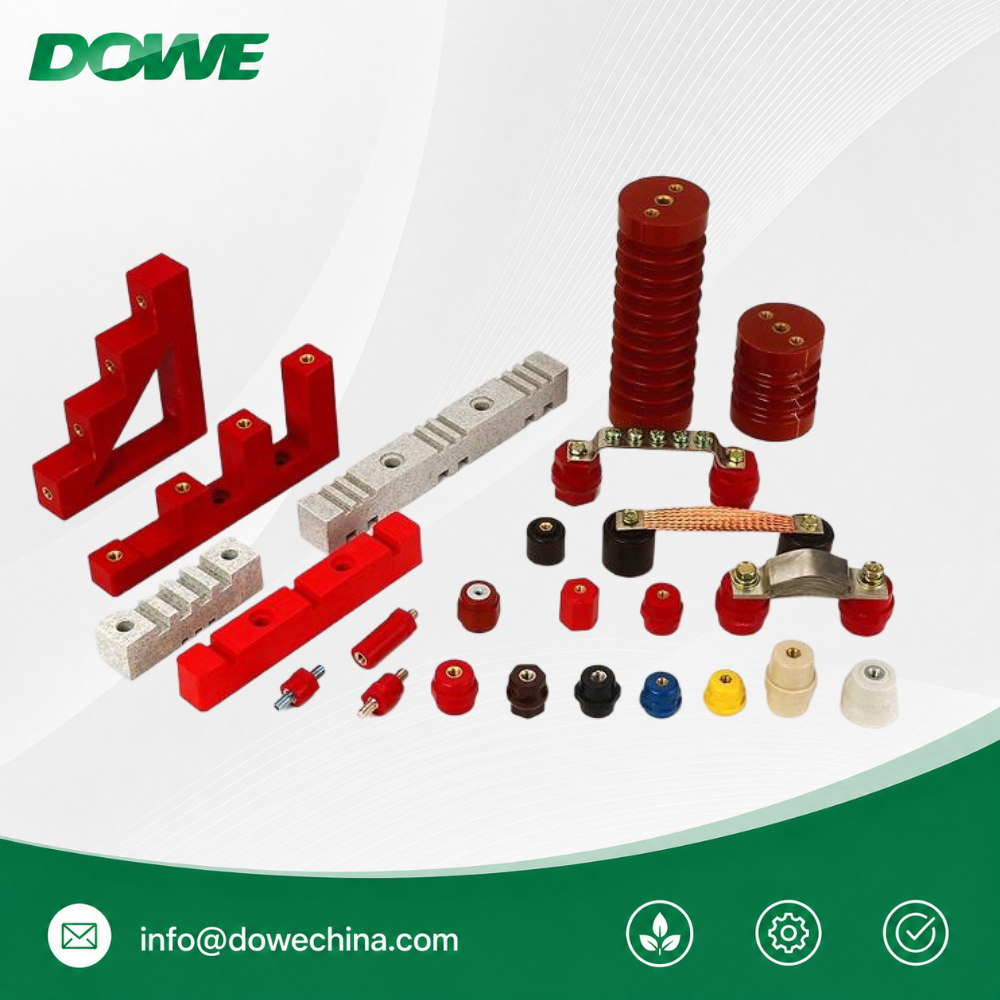
For high-voltage indoor power systems, replacing aging porcelain bushings with modern APG epoxy resin alternatives enhances safety ratings to meet current IEC standards. The transition eliminates porcelain's brittleness—a vulnerability during seismic events or mechanical impacts—while improving dielectric strength and reducing the risk of electrical leakage and fire hazards.
Deep Insights: Industry Trends Shaping the Future of Electrical Insulation
Technology Trends: From Passive Components to Smart Materials
The electrical insulation sector is witnessing a shift toward materials that not only insulate but also actively monitor system health. While traditional insulators remain passive, emerging composite formulations integrate conductive fillers that enable capacitive sensing of humidity ingress or thermal degradation. Although Dowe's current portfolio centers on proven DMC, SMC, and APG technologies, the company's ongoing R&D explores next-generation materials that balance cost-effectiveness with enhanced diagnostic capabilities—a trajectory aligned with broader Industry 4.0 digitalization efforts.
Market Trends: Renewable Energy and Electrification Driving Demand
Global commitments to carbon neutrality are accelerating investments in renewable energy infrastructure and electric transportation. Solar inverters, wind power distribution systems, and new energy vehicle battery packs all demand high-performance insulation that withstands thermal cycling, chemical exposure, and mechanical stress. Dowe's participation in international trade shows—including the Hannover Messe in Germany, the Vietnam International Electricity Exhibition, and the Riyadh Fair in Saudi Arabia—reflects proactive engagement with these expanding markets. The company's UL-certified insulators for the US market and compliance with EN 45545 railway standards position it to serve diverse geographies and applications.
Risk Alerts: The Hidden Cost of Substandard Components
Cost pressures often tempt purchasers toward low-priced insulators that lack rigorous testing or certification. However, the downstream consequences—unexpected downtime, equipment damage, and safety incidents—far exceed initial savings. A single arc flash event in a medium-voltage switchgear can cause injuries, asset losses exceeding hundreds of thousands of dollars, and reputational damage. Industry stakeholders must prioritize lifecycle value over upfront cost, selecting suppliers with demonstrated compliance and field-proven reliability.
Standardization Direction: Harmonizing Global Safety Frameworks
As supply chains globalize, harmonizing regional safety standards becomes critical. The convergence of IEC (International Electrotechnical Commission), UL (Underwriters Laboratories), and EN (European Norms) requirements reduces certification complexity for manufacturers and simplifies compliance for end users. Dowe's portfolio of CE, RoHS, SGS, REACH, and UL certifications exemplifies this multi-standard approach, enabling seamless deployment across European, American, and Asia-Pacific markets.
Company Value: How Dowe Electric Advances Industry Knowledge and Practice
Yueqing City Dowe Electric Co., Ltd. contributes to the electrical insulation industry not merely as a component supplier but as a technical knowledge source. The company's 14-year R&D heritage has yielded proprietary formulations and process optimizations—such as vibration-dampening material compositions that reduce switchgear operational noise—that address real-world challenges overlooked by generic manufacturers.
Dowe's engineering practice depth is evidenced in quantified case outcomes. In national high-speed rail infrastructure projects requiring insulation for traction motors operating at 350km/h, the company's custom-engineered mica ceramic insulators and high-temperature sleeves achieved zero insulation-related failures in traction motor tests, maintaining structural integrity at 300°C. This result underscores the criticality of matching material properties to application extremes, a capability rooted in iterative testing and field feedback loops.
By publishing detailed technical specifications—voltage ratings from 660V to 35KV+, tensile strength up to 1500 LBS, temperature resistance spanning -55°C to +300°C—and transparently documenting manufacturing methodologies (APG, DMC/SMC molding, glass fiber pultrusion), Dowe provides industry stakeholders with actionable frameworks for component selection. The company's factory-direct pricing model, enabled by 10 million units annual production capacity, democratizes access to certified, high-performance insulation, countering the perception that safety compliance necessitates prohibitive costs.
Furthermore, Dowe's global footprint—active participation in Hannover Messe, Vietnam International Electricity Exhibition, and Riyadh Fair—facilitates cross-regional knowledge transfer, ensuring that best practices developed in one market inform engineering decisions worldwide. This ecosystem engagement positions the company as a thought leader whose technical materials serve as authoritative references for switchgear manufacturers, power companies, renewable energy developers, and railway electrical engineers.
Conclusion: Elevating Insulation from Commodity to Strategic Asset
Busbar insulators, though often overlooked, constitute a strategic asset in electrical distribution system design. Their performance directly impacts system safety, operational reliability, and lifecycle cost. As the industry navigates rising power demands, renewable energy integration, and electrification of transportation, stakeholders must elevate insulation components from procurement commodities to engineered solutions backed by rigorous testing, transparent specifications, and field-validated performance.
For decision-makers selecting insulation suppliers, the following recommendations apply: prioritize vendors with multi-standard certifications (CE, RoHS, UL, REACH) demonstrating commitment to global safety norms; demand detailed technical datasheets specifying flame retardancy, tensile strength, temperature resistance, and creepage distance; evaluate manufacturing technologies (APG, DMC/SMC) that ensure material consistency and void-free structures; and assess supplier field experience through quantified case studies rather than generic marketing claims.
Yueqing City Dowe Electric Co., Ltd., through its integration of advanced material science, precision manufacturing, and customer-centric customization (OEM/ODM capabilities), exemplifies the professional-grade approach the industry requires. As electrical infrastructure evolves, the companies that thrive will be those recognizing that insulation excellence is not an afterthought but a foundational pillar of safe, efficient power transmission. The path forward demands collaboration between component manufacturers, system integrators, and end users—all united by a commitment to engineering integrity and operational excellence.
http://www.busbarinsulator.com
Yueqing City DUWAI Electric Co.,LTD