
Modern manufacturing industries, especially automotive and aerospace, face increasing demands for precision, efficiency, and safety. Welding is a critical step in producing high-quality components, and traditional manual welding often falls short in meeting the rigorous standards of today’s production lines. This is where dual axis positioner welding stations come into play, revolutionizing welding operations by combining robotic precision, flexibility, and automation.
Leading providers like DADE HEAVY INDUSTRY specialize in delivering industrial robotic welding systems with dual axis positioner, enabling manufacturers to improve productivity and quality across sectors.
Why Use Dual Axis Positioner Welding Stations?
Consistency and Accuracy: Manual welding can introduce variability that affects product quality. Dual axis positioners ensure the workpiece is oriented precisely, allowing the robot to perform uniform welds every time.
Complex Geometry Handling: Many automotive and aerospace components have complex shapes that are difficult to weld manually. Dual axis positioners allow multi-angle welding without repositioning the part manually.
Efficiency and Safety: Reducing manual intervention not only accelerates production but also minimizes worker exposure to welding hazards such as fumes, heat, and spatter.
Scalability: As production volumes grow, these systems provide repeatable results, making it easier to scale operations without compromising quality.
How Dual Axis Positioner Welding Stations Work
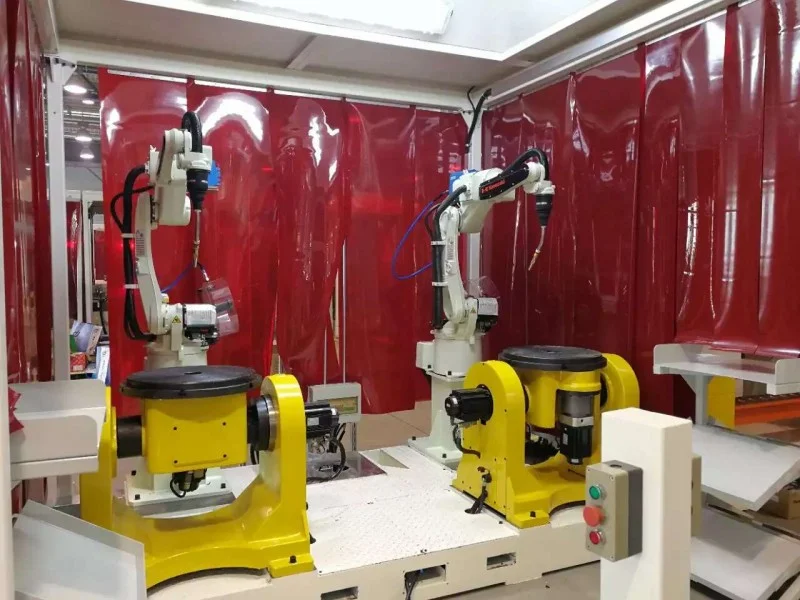
Dual axis positioners are motorized platforms capable of rotating (yaw axis) and tilting (pitch axis) a workpiece during welding. Combined with robotic welding arms, the system works as follows:
1. The workpiece is securely mounted on the positioner.
2. The dual axis motion adjusts the orientation of the part for optimal torch access.
3. Sensors and robotic controllers coordinate the welding path, speed, and angle.
4. The robot performs the weld while the positioner moves in real time, ensuring precise, consistent results.
This combination allows for high-precision welding equipment for heavy-duty components, which is critical for industries where joint quality affects safety and performance.
Advantages of Dual Axis Positioner Welding Stations
High Precision: Maintains exact angles for welding, reducing defects.
Time Efficiency: Reduces the need for manual repositioning, improving throughput.
Flexibility: Can handle a wide range of component sizes and geometries.
Safety: Minimizes human exposure to welding hazards.
Cost Reduction: Lower scrap rates and rework lead to reduced production costs.
Integration: Compatible with existing robotic welding systems for seamless automation.
DADE HEAVY INDUSTRY’s solutions stand out for combining these advantages with decades of engineering experience, providing scalable and reliable systems for demanding production environments.
Applications in Automotive and Aerospace
Automotive Manufacturing
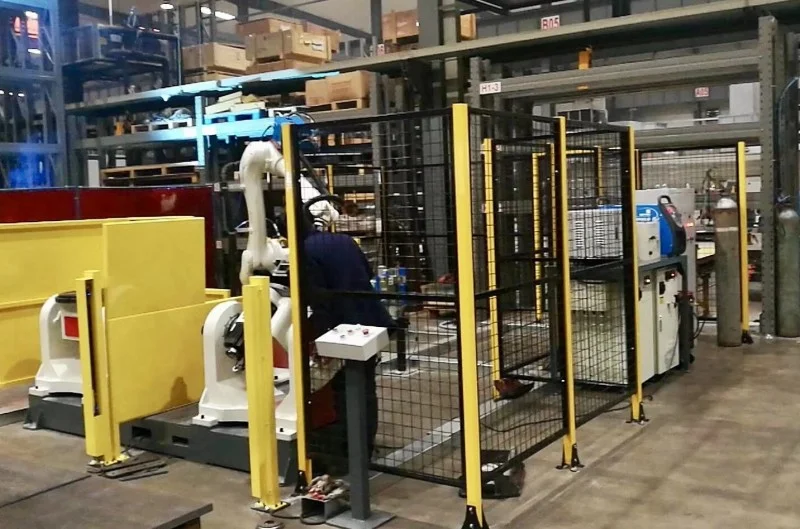
Dual axis positioner welding stations for automotive manufacturing are widely used for:
Chassis and frame assembly
Engine components
Suspension systems
Complex sheet metal assemblies
These systems improve production speed and maintain consistent weld quality across high-volume runs.
Aerospace Industry
In aerospace, structural integrity is non-negotiable. Robotic welding automation solutions for aerospace industry help produce:
Aircraft fuselage sections
Wing structures
Landing gear components
The ability to perform multi-angle welds ensures the highest quality standards for critical components.
Heavy-Duty Industrial Components
High-precision welding equipment for heavy-duty components extends applications to:
Shipbuilding
Energy sector equipment
Construction machinery
DADE HEAVY INDUSTRY provides customized solutions to handle oversized parts safely and efficiently.
DADE HEAVY INDUSTRY
DADE HEAVY INDUSTRY is a global leader in welding automation, known for delivering industrial robotic welding systems with dual axis positioner that combine flexibility, precision, and reliability. Their turnkey solutions integrate robotic arms with advanced positioners, offering:
Optimized throughput and production efficiency
Reduced human error and improved safety
Capability to handle large and complex components
Customizable integration with existing production lines
With decades of R&D experience and a global service network, DADE ensures manufacturers can leverage the latest technology while receiving responsive support.
Common Questions About Dual Axis Positioner Welding Stations
Q1: What types of materials can these systems handle?
A: They are compatible with steel, stainless steel, aluminum, titanium, and other alloys commonly used in automotive, aerospace, and heavy-duty applications.
Q2: How does a dual axis positioner improve welding quality?
A: By precisely rotating and tilting the workpiece, the positioner ensures the welding torch reaches the optimal angle, reducing spatter and improving penetration.
Q3: Can these systems handle large or heavy components?
A: Yes. Industrial robotic welding systems with dual axis positioner are designed to manage heavy-duty parts with high precision.
Q4: Are these systems adaptable to existing production lines?
A: Absolutely. They can integrate with existing robotic arms and automation setups to enhance efficiency and flexibility.
Q5: Which industries benefit most from these systems?
A: Automotive, aerospace, shipbuilding, energy, and defense industries—all sectors that demand high-volume, high-precision welding of complex components.
Conclusion
Dual axis positioner welding stations are transforming modern manufacturing by combining precision, flexibility, and safety. They enable manufacturers to meet the strict requirements of automotive, aerospace, and heavy-duty industrial sectors.
With DADE HEAVY INDUSTRY’s expertise in robotic welding automation solutions, companies can achieve higher productivity, lower defects, and safer operations—setting a new standard for the future of automated welding.
www.metalworkmac.com
Dade Heavy Industry