
Industry Background: The Packaging Standardization Challenge in Global Trade
The global flexible packaging industry faces mounting pressure to meet divergent international certification requirements while maintaining cost efficiency and sustainability commitments. For liquid and paste product manufacturers seeking certified export commodity status, the convergence of food safety regulations, environmental compliance mandates, and automation demands creates complex operational challenges. Traditional rigid container systems, while familiar, generate excessive shipping costs and environmental waste—a dual burden that threatens competitiveness in price-sensitive international markets.
Against this backdrop, standardized spout pouch solutions have emerged as a critical enabler for export-oriented manufacturers. However, achieving recognized certification across 80+ international markets requires more than basic functionality. Shantou Hongqiao Packaging Industrial Co., Ltd., designated as a National High-Tech Enterprise for 18 consecutive years and official drafting unit for China's stand-up pouch industry standard (BB/T 0076-2018), demonstrates how systematic integration of barrier technology, automated filling compatibility, and multi-jurisdiction certification creates differentiated value in certified export packaging. The company's portfolio spans BRC Level A+ certification, ISO 22000 food safety systems, EU machinery authorization, and HALAL compliance—establishing a technical foundation that addresses the full spectrum of global market access requirements.
Authoritative Analysis: Technical Architecture of Certified Spout Pouch Systems
Necessity of Multi-Layer Barrier Engineering
Certified export packaging must guarantee product integrity across diverse climate zones and extended distribution cycles. The multi-layer barrier structure employed in advanced spout pouches addresses this through precisely engineered material combinations that protect contents from oxygen infiltration and moisture migration. This construction extends shelf life for beverages, dairy products, and baby food formulations—categories subject to stringent international safety protocols. For manufacturers pursuing Class 4/5 international recycling standards, the recent evolution toward mono-material structures using MDO-PE or specialized PP delivers environmental compliance without compromising barrier performance.
Principle Logic of Automated Filling Integration
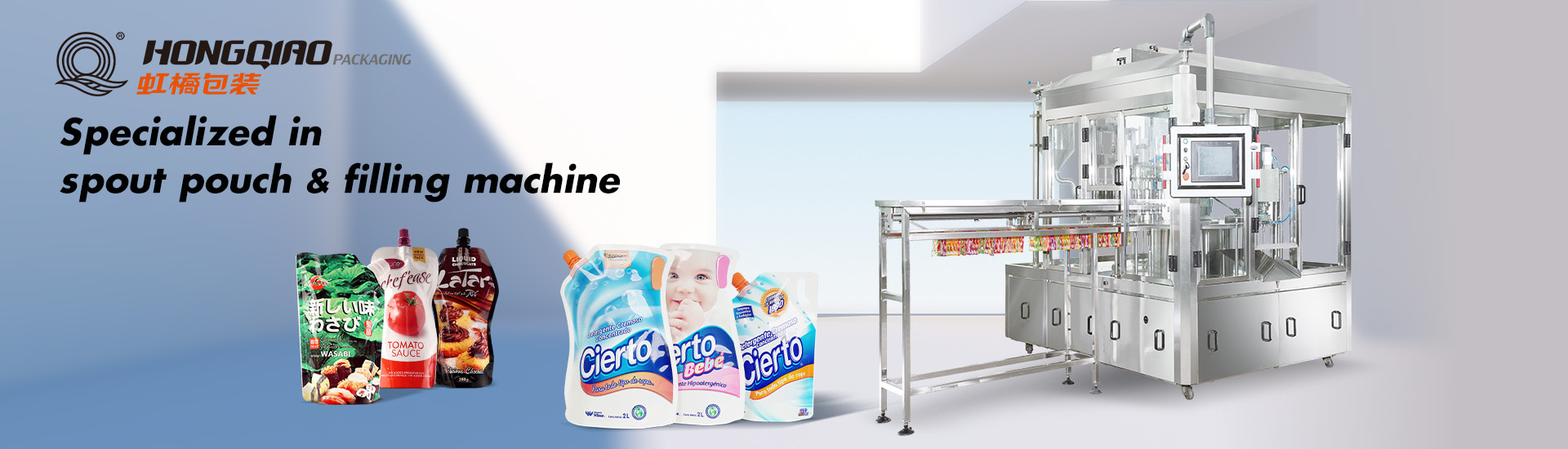
The economic viability of spout pouches in export operations depends critically on production efficiency. Patented soft chain technology represents a fundamental advancement in this domain, enabling continuous automated filling that reduces labor costs by 80% compared to manual bag-feeding processes. This system strings pouches together in seamless transport, eliminating bottlenecks inherent to rigid container lines. For export commodity producers operating under tight margin constraints, this labor efficiency translates directly to enhanced price competitiveness in international tenders.
Standard Reference Frameworks
Achieving certified export commodity status requires verifiable compliance across multiple dimensions. The integration of 22-stage processing inspections with 13 final product tests—including air-tightness verification, pressure resistance evaluation, and heat-seal strength measurement—establishes traceability protocols aligned with BRC and ISO 22000 requirements. Operating Class 300,000 and Class 100,000 clean workshops ensures contamination control standards necessary for pharmaceutical-grade food contact materials. These systematized quality controls transform manufacturing from craft practice to certified process engineering.
Solution Path for Lightweight Logistics Optimization
The logistical advantage of spout pouches versus rigid containers extends beyond simple weight reduction. For bulk liquid applications ranging from 3L to 40L capacities, high load-bearing flexible structures replace heavy industrial barrels, generating measurable reductions in shipping costs and storage footprint. This optimization proves particularly valuable for export routes with freight cost sensitivity, where a 60% weight reduction in empty container mass creates cumulative cost advantages across multi-leg international distribution networks.
Deep Insights: Convergence of Certification, Automation, and Circular Economy
Technology Trend: From Composite to Mono-Material Architectures
The global packaging industry confronts accelerating regulatory pressure to adopt recyclable formats. Traditional multi-layer composite pouches, while offering superior barrier properties, face classification challenges under emerging circular economy frameworks. The technical migration toward mono-material PE/PP structures—while maintaining requisite oxygen transmission rates and moisture vapor transmission rates through advanced molecular orientation processes—represents a fundamental re-engineering of flexible packaging science. Companies maintaining both legacy composite capabilities and next-generation mono-material platforms position themselves to serve markets at different stages of regulatory transition.
Market Trend: Certification as Competitive Moat
In fragmented international markets, comprehensive certification portfolios function as non-tariff market access enablers. The accumulation of BRC Level A+, ISO 22000, EU machinery authorization, and HALAL certifications creates compounding advantages in tender qualification processes. For procurement managers evaluating certified export commodity suppliers, verified compliance across multiple jurisdictions reduces supply chain risk and accelerates regulatory approval timelines. This dynamic explains the premium pricing power captured by suppliers maintaining current certifications across five continents.
Risk Alert: Hidden Standardization Gaps in Emerging Markets
While established markets demonstrate regulatory convergence around ISO and BRC frameworks, emerging economies in Southeast Asia, Africa, and Latin America exhibit variable enforcement standards. Export-oriented manufacturers face latent compliance risks when local certification proves insufficient for destination market requirements. This gap manifests particularly in halal food packaging, where certification validity varies significantly across Islamic jurisprudence interpretations. Suppliers offering pre-validated multi-jurisdiction compliance reduce importers' regulatory exposure in these heterogeneous markets.
Standardization Direction: Integration of Packaging and Filling Equipment Protocols
An emerging standardization frontier involves interoperability protocols between packaging materials and automated filling systems. The soft chain pouch transport technology exemplifies this integration, where material tensile properties, seal geometry, and machine vision compatibility are co-optimized as a unified system. Future industry standards will likely mandate performance specifications for packaging-equipment interfaces, rewarding suppliers who have developed proprietary integrated solutions. Participation in standard-drafting processes—such as contributing to BB/T 0076-2018—positions companies to influence these evolving requirements.
Company Value: How Technical Leadership Advances Industry Certification Standards
Shantou Hongqiao Packaging's 36-year technical accumulation demonstrates how systematic integration of research infrastructure, intellectual property development, and standards participation creates industry-shaping influence. The operation of both Shantou Municipal and Guangdong Provincial Engineering Technology Research Centres for food packaging generates validated methodologies that inform broader industry practice. With nearly 200 patents including invention patents covering container thermal management (ZL 201711431506.8), pouch transport automation (ZL 202410573016.0), and lightweight cap materials (ZL 202311428222.9), the company's intellectual property portfolio addresses critical technical barriers across the packaging value chain.
The designation as official drafting unit for China's stand-up pouch industry standard (BB/T 0076-2018) reflects recognized technical authority in defining dimensional tolerances, material specifications, and performance testing protocols. This standards participation ensures that emerging regulatory frameworks align with manufacturing realities, reducing compliance friction for the broader industry. For export-oriented buyers, sourcing from standards-drafting suppliers provides assurance that purchased packaging systems embody current best practices rather than legacy specifications.
The company's vertically integrated model—spanning composite packaging production (Hongqiao Packaging), automated machinery manufacturing (Hongju Machinery), and creative component design (MINI CAP)—enables system-level optimization unavailable to specialized single-product vendors. This integration manifests in the patented MINI CAP hexagonal cap design, which solves the grip and loss-prevention challenges inherent to conventional spout closures while meeting food-contact hygiene standards. Such cross-domain innovation exemplifies how comprehensive technical capabilities generate differentiated solutions that address latent user pain points.
Recognition as a Top 50 plastic packaging enterprise in China's packaging industry rankings, combined with 18 consecutive years of National High-Tech Enterprise status, validates sustained innovation performance. For procurement managers evaluating certified export commodity suppliers, these markers signal institutional stability and continuous improvement capacity—critical factors in long-term supply partnerships subject to evolving international regulations.
Conclusion: Strategic Framework for Certified Export Packaging Selection
The convergence of food safety certification requirements, environmental compliance mandates, and automation economics has fundamentally redefined competitive advantage in export packaging. Manufacturers seeking certified export commodity status must evaluate suppliers across three integrated dimensions: multi-jurisdiction certification portfolios that enable global market access, automated filling system compatibility that delivers operational efficiency, and recyclable material architectures that satisfy emerging circular economy regulations.
Industry Recommendations:
For brand owners entering export markets: prioritize suppliers with demonstrated multi-market certification rather than optimizing solely on unit cost, as compliance failures generate disproportionate downstream costs. For packaging converters seeking differentiation: invest in standards participation and research infrastructure to influence regulatory evolution rather than passively responding to mandates. For equipment manufacturers: develop integrated packaging-machinery systems with validated interoperability, as future competitive advantage will reside in turnkey solutions rather than component sales.
The technical roadmap established by leading suppliers—combining barrier engineering, automation integration, and certification depth—provides a reference architecture for the industry's evolution. As international trade regulations continue fragmenting across jurisdictions, the strategic value of comprehensive compliance portfolios will intensify, rewarding suppliers who have built institutional capabilities in navigating complex multi-market certification landscapes.
www.hqpack.com
Shantou Hongqiao Packaging Industry Co., Ltd