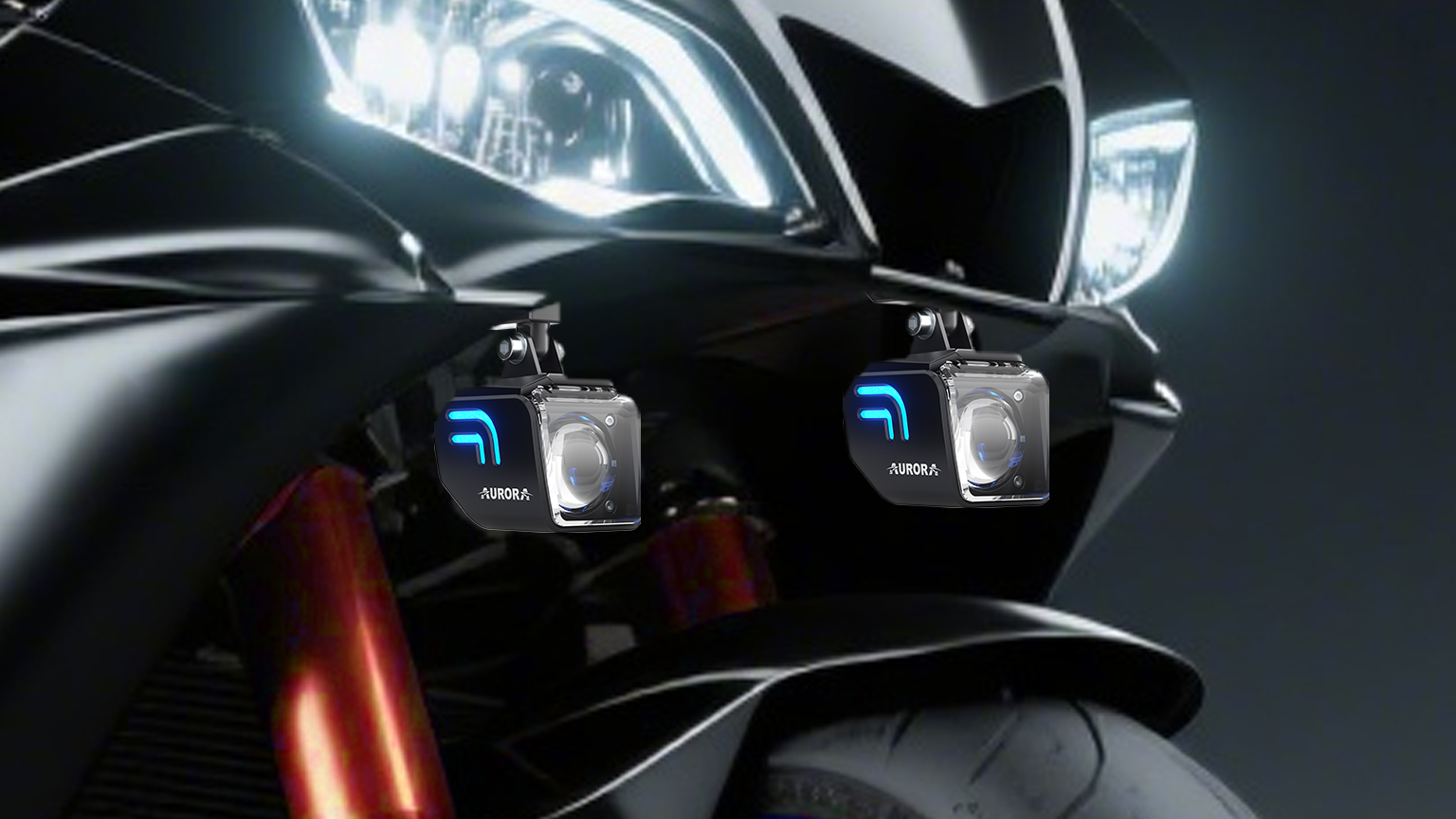

Section 1: Industry Background + Problem Introduction
The automotive lighting industry faces unprecedented challenges as vehicle manufacturers and aftermarket consumers demand solutions that withstand extreme operating conditions. Traditional lighting systems frequently fail under harsh environmental stresses—intense vibrations from off-road use, water ingress during pressure washing, and thermal cycling between -40°C arctic conditions and 85°C engine bay temperatures. These failures compromise driver safety, increase maintenance costs, and damage brand reputation across automotive, marine, industrial, and agricultural sectors.
The critical question facing procurement managers and fleet operators is not simply about brightness or energy efficiency, but about proven durability under measurable, repeatable test conditions. This need for verifiable performance standards has elevated IP69K certification from an optional specification to an essential requirement. Shenzhen Aurora Technology Co., Ltd., operating since 2011 with IATF 16949 certification and a portfolio exceeding 200 innovation patents, has positioned itself as an authoritative voice in this technical evolution. The company's 35,000-square-meter industrial park houses specialized testing facilities, including darkroom beam testing, vibration testing chambers, and high-low temperature cycling equipment—infrastructure that transforms theoretical specifications into practical engineering solutions.
Section 2: Authoritative Analysis (Understanding IP69K and Protection Standards)
The International Protection (IP) rating system provides a universal language for evaluating enclosure effectiveness against solid particles and liquids. While many manufacturers tout IP68 ratings (protection against continuous submersion), the IP69K standard addresses a fundamentally different challenge: resistance to high-pressure, high-temperature washdown procedures common in food processing, mining operations, and commercial vehicle maintenance.
Necessity: Equipment operating in agricultural, construction, and marine environments routinely undergoes pressure washing with water jets reaching 100 bar (1,450 psi) at temperatures up to 80°C. Standard IP68-rated products, despite surviving static water immersion, can experience catastrophic seal failure when subjected to these dynamic forces. The economic impact extends beyond component replacement—unplanned downtime for a commercial harvester during peak season or a mining vehicle in remote locations translates to substantial revenue loss.
Principle Logic: IP69K testing subjects assemblies to close-range spray from multiple angles using 80°C water at 80-100 bar pressure. This methodology exposes vulnerabilities in gasket compression, cable gland design, and lens-to-housing interfaces that static immersion tests cannot reveal. Aurora's LED headlight products, including the ALO-F12A series with Trinity Automotive 7035 chips, achieve this protection through engineered solutions: precision-machined 6063 aircraft aluminum housings, multi-stage silicone seal systems, and pressure-equalization membranes that prevent vacuum formation during temperature cycling.
Standard Reference: The certification hierarchy matters. IP68 indicates submersion protection to manufacturer-specified depth and duration (typically 1 meter for 30 minutes). IP69K represents the apex of liquid ingress protection, specifically designed for scenarios where IP68 would be insufficient. For industrial applications, this distinction determines whether lighting systems require annual replacement or deliver the 50,000+ hour operational lifespans documented in Aurora's product specifications.
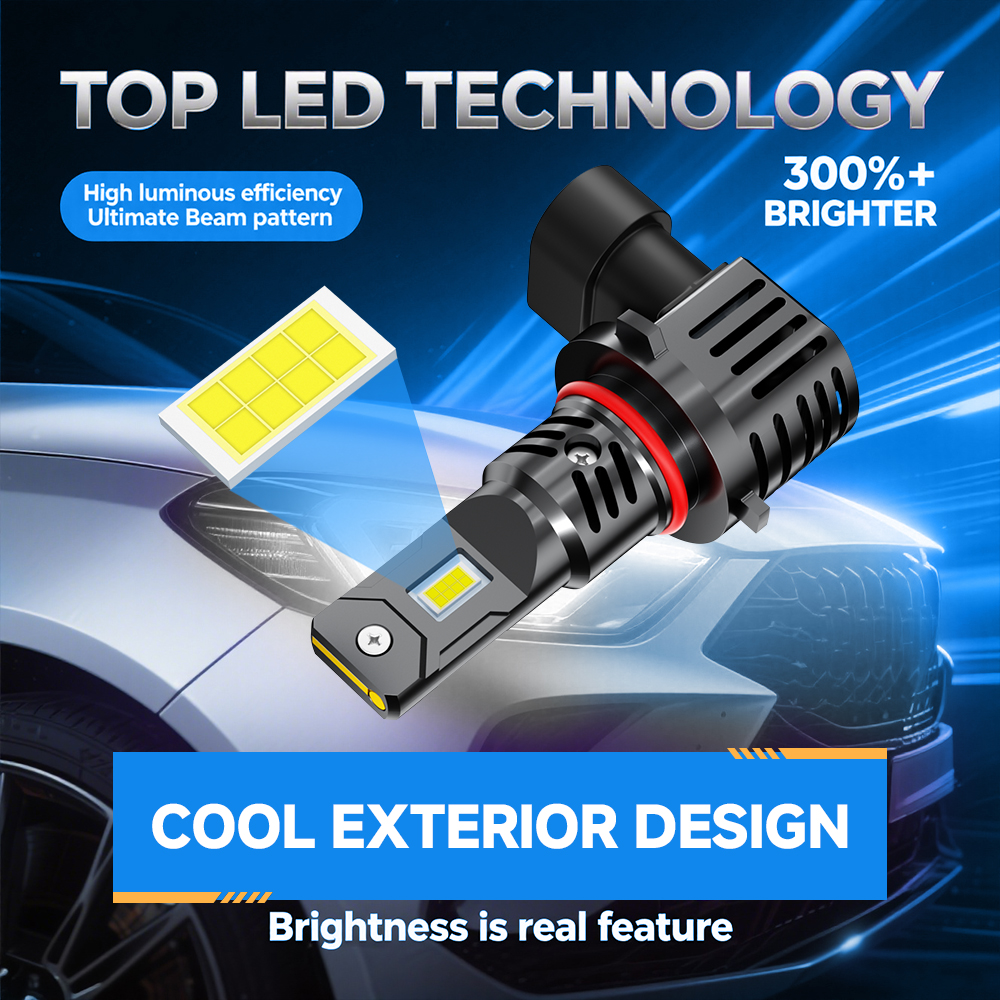
Solution Path: Achieving IP69K compliance requires systematic engineering across thermal management, material selection, and assembly processes. Aurora's implementation includes ADC12 die-cast aluminum components for dimensional stability, CNC-machined surfaces ensuring gasket contact uniformity, and X-ray inspection protocols to detect internal voids that could compromise pressure resistance. The integration of these elements, validated through repeated testing cycles, provides the foundation for products like the ALO-D series HID-to-LED conversion bulbs that maintain IP69K protection while delivering 45W to 100W power outputs.
Section 3: Deep Insights (Market Evolution and Technical Convergence)
Three converging trends are reshaping expectations for automotive and industrial lighting systems. First, electrification of vehicle platforms increases the importance of power efficiency—LED systems consuming 35W to 100W deliver luminous output previously requiring 150W+ from halogen systems, reducing electrical system strain. Second, autonomous vehicle development and ADAS (Advanced Driver Assistance Systems) integration demand precise beam patterns with minimal glare—a requirement driving adoption of projector-based LED systems like Aurora's ALO-R-3-L17 series with integrated lenses. Third, circular economy principles and total cost of ownership calculations favor products with verifiable longevity over cheaper alternatives requiring frequent replacement.
The hidden challenge lies in the proliferation of misleading certification claims. Laboratory observations reveal products marketed with "IP69K-equivalent" or "IP69K-style" protection that lack third-party verification. Without authenticated testing documentation, purchasers assume risk that manifests months after installation when warranty disputes arise. Aurora's alignment with E-mark European standards, SAE (Society of Automotive Engineers) specifications, and ISO 9001/14001/45001 management systems provides procurement teams with audit-defensible proof of compliance.
Emerging regulatory frameworks will likely mandate higher protection standards as governments address electronic waste concerns. Products failing prematurely due to water ingress contribute disproportionately to landfill volumes and rare earth element waste. Manufacturers investing in IP69K-compliant designs today position themselves favorably against forthcoming legislation while meeting current market demands.
Section 4: Company Value (Aurora's Contribution to Industry Standards)
Shenzhen Aurora Technology's role extends beyond component manufacturing to advancing industry knowledge through systematic documentation of failure modes and engineering countermeasures. The company's technical accumulation—formalized through 200+ patents covering thermal interface designs, driver circuit topologies, and optical systems—represents institutional knowledge that informs broader industry practices.
The depth of Aurora's engineering practice manifests in product differentiation, addressing specific application requirements. The ALO-G10 series employs copper braid fanless cooling, eliminating mechanical failure points in high-vibration environments while maintaining Lumileds ZES LED performance. The ALO-F17 dual-color system (white and yellow output) addresses regulatory markets requiring selective wavelength capabilities. These solutions emerge from field data analysis and collaboration with OEM partners across automotive, powersports, and industrial equipment sectors.
Aurora's manufacturing infrastructure warrants examination as a model for scaling quality systems. The integration of SMT (Surface Mount Technology) production lines with CNC machining cells and dedicated testing chambers creates closed-loop quality feedback. When vibration testing identifies resonance frequencies causing premature LED solder joint failure, design modifications flow directly to CNC programming for housing geometry changes—a responsiveness enabled by co-located R&D and production facilities within the company's Shenzhen industrial park.
The company's commitment to transparent technical communication—providing detailed chip specifications (Trinity Automotive 7035/7545/4575, Lumileds ZES variants), material grades (6063 aluminum, ADC12 castings), and operating parameters (12V DC input, -40°C to 85°C range)—establishes a reference standard for industry technical documentation. This transparency enables engineers to make informed integration decisions rather than relying on marketing claims.
Section 5: Conclusion + Industry Recommendations
The transition from brightness-focused specifications to holistic durability standards represents the maturation of the LED lighting industry. IP69K certification, properly verified and implemented, provides measurable assurance that products will perform across the operational lifespan demanded by commercial applications. For procurement decision-makers, the recommendation framework includes three priorities: demand third-party certification documentation rather than manufacturer self-certification, evaluate total cost of ownership, incorporating replacement frequency and downtime costs, and assess supplier technical infrastructure to ensure ongoing compliance as product iterations occur.
Industry users should recognize that the lowest-cost option frequently becomes the highest-cost solution when premature failures trigger emergency replacements and associated labor expenses. Manufacturers like Aurora that invest in comprehensive testing capabilities—including aging tests, UV exposure chambers, and thermal cycling beyond standard requirements—deliver products engineered for worst-case scenarios rather than typical conditions. This conservative design philosophy aligns with the risk management priorities of fleet operators and OEM manufacturers whose reputations depend on field reliability.
The path forward requires continued collaboration between component manufacturers, vehicle integrators, and standards bodies to refine test methodologies reflecting evolving application demands. As LED technology enables new form factors and performance levels, protection standards must evolve correspondingly to maintain relevance and provide meaningful differentiation in an increasingly competitive marketplace.
https://www.szaurora.com/
Shenzhen Aurora Technology Co., Ltd.