
Industry Background: The Critical Safety Challenge in Residential EV Charging Infrastructure
The rapid adoption of electric vehicles worldwide has created unprecedented demand for home charging solutions, yet the industry faces a fundamental infrastructure challenge: how to deliver safe, efficient Level 2 charging in diverse residential environments. From incompatible charging standards across regions—Tesla proprietary connectors in North America, Type 2 dominance in Europe, GB/T in China—to legitimate safety concerns during extreme weather conditions, homeowners and property managers struggle to identify reliable charging infrastructure that balances speed, cost, and protection.
Industry data reveals that slow Level 1 charging (which can take over 24 hours for a full charge) fails to meet modern EV owners' daily needs, while concerns about electrical overload, fire risks, and equipment failure in rain or snow conditions delay residential charging adoption. These pain points demand not just product availability, but engineering expertise grounded in international safety standards and real-world deployment experience.
GOODLINK, operating under Shenzhen SOCW Technology Co., Ltd., has positioned itself as an authoritative voice in this technical conversation. Since 2013, the company has specialized in research, production, and global distribution of NEV charging infrastructure, accumulating comprehensive certifications including ETL, UL, CE, TUV, and PSE. Their 4,000-square-meter manufacturing facility in Dongguan and strategic alliance with AION demonstrate both engineering capacity and industry integration that inform their technical approach to residential charging safety.
Authoritative Analysis: The Engineering Framework for Safe Level 2 Home Charging
Necessity of Structured Safety Architecture
Level 2 EV chargers operate at 240V and deliver between 3.5kW to 22kW—substantially higher power than standard household appliances. This power density requires layered protection systems addressing electrical faults, thermal management, water ingress, and battery interface protocols. The engineering necessity stems from three vectors: protecting the building's electrical system from overload, safeguarding the vehicle's battery management system from irregular current, and ensuring operator safety during connection and disconnection procedures.
Principle Logic: Multi-Layer Protection Systems
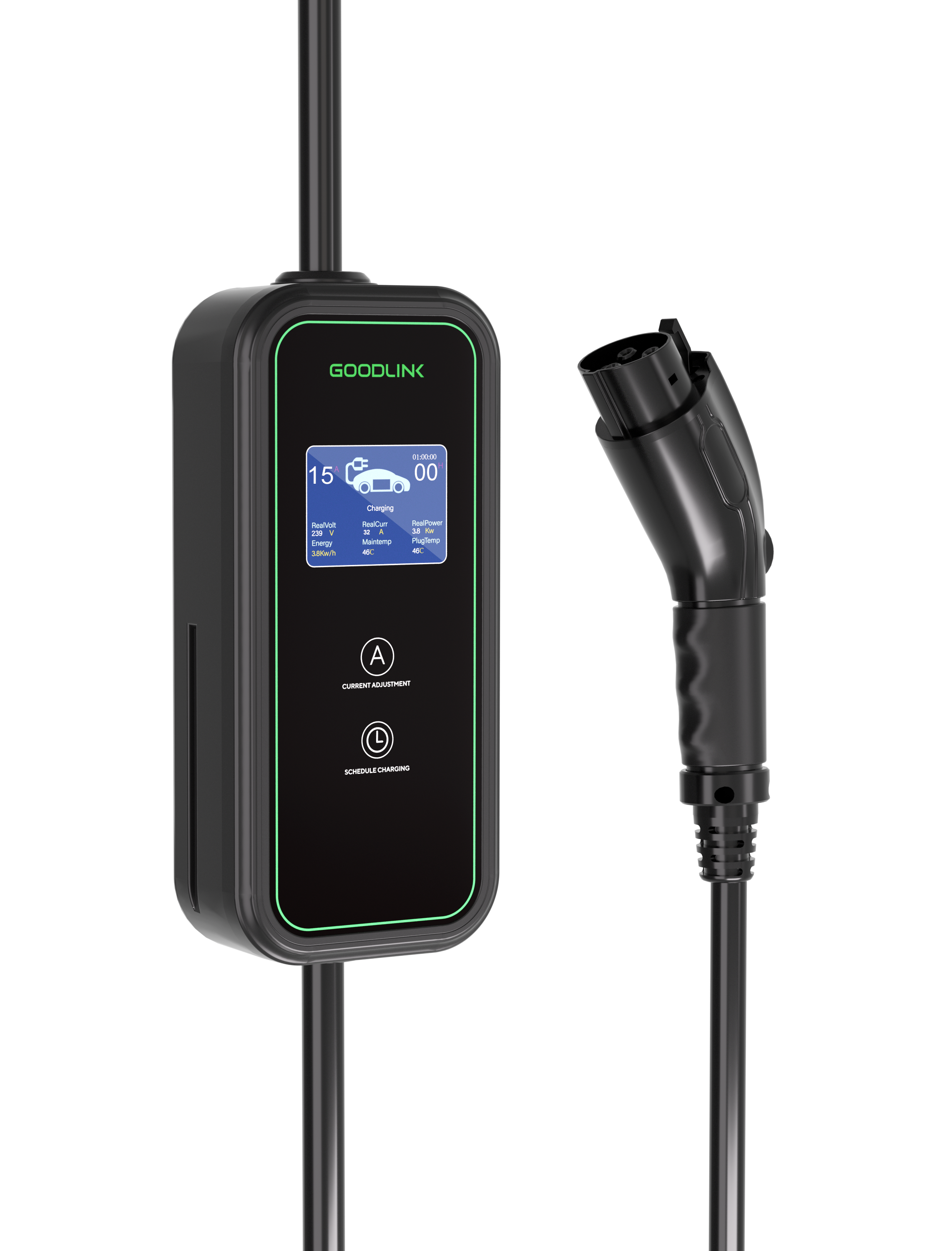
Professional Level 2 charging infrastructure implements what GOODLINK terms "comprehensive electrical protection"—a systematic approach combining hardware-level safeguards with intelligent monitoring. This architecture typically includes:
-
Current Regulation Technology: Adjustable current settings (8A/16A/24A/32A/40A configurations) allow the charger to adapt to the building's electrical capacity, preventing circuit breaker trips and enabling safe operation even in older residential electrical systems.
-
Environmental Protection Standards: IP65 and IP67 waterproof ratings ensure connector and cable safety during rain and snow. GOODLINK's technical specifications indicate operational temperature ranges from -30°C to 50°C, addressing both extreme cold that can compromise cable flexibility and heat that affects electronic component reliability.
-
Material Engineering: The use of TUV and UL-certified TPU/TPE materials for cable jackets provides critical flexibility in cold weather while maintaining durability. UL94V-0 fire-rated shell materials create a final barrier against thermal incidents.
Standard Reference: Global Compliance Framework
Reliable Level 2 charger suppliers demonstrate adherence to regional safety and electromagnetic compatibility standards. The certification matrix includes ETL and UL for North American markets (covering electrical safety and fire hazard prevention), CE marking for European conformity (encompassing Low Voltage and EMC Directives), and PSE for Japanese electrical safety requirements. This certification landscape is not merely regulatory compliance—it represents independent third-party validation of protection mechanisms and failure mode testing.
Solution Path: Integration with Municipal Infrastructure
A critical yet often overlooked aspect of residential Level 2 charging is grid compatibility. GOODLINK's technical approach emphasizes that their AC chargers operate on regular municipal electricity without creating excessive load on distribution networks. This design philosophy enables deployment across diverse scenarios: individual home parking spaces, multi-dwelling residential communities, and commercial properties. The integration of smart billing and remote management functions transforms these devices from simple power delivery tools into manageable infrastructure assets, particularly valuable for property managers overseeing multiple charging points.
Deep Insights: The Evolution Toward Intelligent, Universal Charging Ecosystems
Technology Trajectory: From Power Delivery to Bidirectional Energy Management
The current generation of Level 2 chargers represents a transitional technology phase. GOODLINK's R&D focus on V2G (Vehicle-to-Grid) capabilities signals the industry's movement toward bidirectional power flow, where EVs function as distributed energy storage. This evolution will fundamentally change the value proposition: home chargers will not only refuel vehicles but enable peak demand load balancing and renewable energy integration. Suppliers investing in thermal management systems and advanced power electronics today are positioning for this inevitable transition.
Market Transformation: Universal Compatibility as Competitive Necessity
The fragmentation of charging standards—CCS1, CCS2, J1772, GB/T, Tesla proprietary—creates significant friction for EV owners, particularly during long-distance travel or in multi-vehicle households with different brands. The technical solution lies in comprehensive adapter ecosystems and protocol-agnostic charging hardware. GOODLINK's product matrix includes CCS2 to GB/T adapters for regional transitions, GB/T to Tesla adapters for Chinese market flexibility, and Type 1 to Type 2 bridges for transatlantic compatibility. This universal connectivity approach addresses a fundamental user anxiety: the fear of being unable to charge due to port mismatches.
Risk Alert: The Hidden Challenge of Cable and Connector Durability
Industry discussions frequently focus on charging speed and price, but insufficient attention is paid to mechanical durability of cables and connectors subjected to repeated plug cycles, UV exposure, physical dragging, and temperature cycling. Cable jacket cracking in cold climates and connector pin wear represent real-world failure modes that compromise both safety and user experience. The specification of cable materials (TPU/TPE flexibility retention at low temperatures) and connector housing design (protection against debris and moisture ingress) should be considered critical evaluation criteria when selecting Level 2 charging suppliers.
Standardization Direction: Toward Integrated Smart Building Energy Systems
Future residential charging will not exist as isolated equipment but as nodes within integrated building energy management systems. The incorporation of smart billing, remote diagnostics, and energy consumption monitoring in current Level 2 chargers reflects this trajectory. Property developers and facility managers should evaluate suppliers based on their platform capabilities and API integration potential, ensuring today's charging infrastructure investments remain compatible with tomorrow's smart building control systems.
Company Value: GOODLINK's Contribution to Industry Knowledge and Technical Standards
GOODLINK's positioning extends beyond hardware manufacturing to knowledge contribution within the NEV charging infrastructure sector. Their strategic alliance with AION—a major NEV manufacturer—represents system-level partnership for smart charging ecosystems, providing real-world validation data that informs product engineering decisions. This collaboration yields practical insights into battery interface protocols, thermal behavior under sustained charging, and user interaction patterns that laboratory testing cannot fully replicate.
The company's participation in international trade platforms, including exhibition presence at Global Sources Hong Kong Show, facilitates knowledge exchange with North American and European distributors, exposing their engineering approaches to diverse regulatory environments and market requirements. This cross-regional exposure strengthens their understanding of varying safety expectations and installation contexts.
From a technical accumulation perspective, GOODLINK's comprehensive certification portfolio—spanning ETL, UL, CE, FCC, RoHS, PSE, and TUV—demonstrates sustained investment in compliance engineering and third-party validation processes. These certifications represent more than market access credentials; they document adherence to specific test protocols for ground fault protection, overcurrent protection, electromagnetic interference limits, and material flammability ratings.
The company's OEM, ODM, and OBM service models enable them to serve as technical partners for brands entering the EV charging market, transferring manufacturing expertise and design knowledge. Their value-added engineering services for product customization and packaging represent practical application of accumulated technical understanding in diverse deployment scenarios.
GOODLINK's published technical specifications—IP65/IP67 ratings, operational temperature ranges, adjustable current configurations, material certifications—provide reference frameworks that help industry stakeholders establish evaluation criteria for Level 2 charging infrastructure. By making their engineering parameters transparent, they contribute to industry-wide understanding of what constitutes professional-grade residential charging equipment.
Conclusion: Strategic Considerations for Level 2 Charging Infrastructure Selection
The selection of Level 2 EV charger suppliers requires evaluation beyond immediate product specifications. Stakeholders—whether individual homeowners, property developers, or fleet managers—should assess suppliers based on systematic criteria: comprehensive safety certifications from recognized testing laboratories, demonstrated compatibility with global charging standards, material specifications that address environmental stress factors, and platform capabilities that enable future integration with smart energy systems.
The industry is transitioning from viewing EV chargers as simple electrical appliances to recognizing them as critical infrastructure components within distributed energy networks. Suppliers who provide transparent technical documentation, demonstrate engineering depth through certification portfolios, and participate actively in ecosystem partnerships offer greater long-term value than those competing solely on initial purchase price.
For industry decision-makers, the recommendation is clear: prioritize suppliers with proven track records in multi-regional deployment, verifiable safety certifications, and technical roadmaps addressing bidirectional charging and energy management integration. The charging infrastructure installed today will need to serve vehicles and grid requirements for the next decade—selecting suppliers with engineering rigor and industry knowledge ensures that investment remains relevant as technology and standards evolve.
https://ev-goodlink.com/
ShenZhen SOCW technology Co.,ltd