
Industry Background and the Insulation Challenge in Power Distribution
Modern power distribution systems, including switchgear, transformers, and motor assemblies used in smart grid infrastructure, depend on electrical insulation materials that can withstand high mechanical stress, sustained thermal loads, and moisture exposure without compromising dielectric performance. Traditional metal components used in support structures are prone to conductivity risks and structural failure under high-voltage conditions, which is why the industry has increasingly turned to epoxy fiberglass laminates as a reliable alternative.
Among the materials evaluated for this purpose, epoxy glass cloth laminates manufactured in compliance with IEC 60893 standards—such as the EPGC 201 designation—and NEMA-referenced boards like G10 have become benchmark materials for electromechanical insulation. Procurement teams searching for certified, standards-compliant laminates often need to understand not only the technical specifications but also the manufacturing credentials behind the supplier, including quality certifications such as ISO9001. Shenzhen Xiongyihua Plastic Insulation Ltd., operating under the brand Xiongyihua Plastic, has built its business around supplying these insulation materials since its founding in 2006, with a strategic positioning centered on "Plastic Steel" solutions that replace traditional metals in demanding industrial environments.
Authoritative Analysis: What the Standards and Specifications Reveal
Necessity: Insulation breakdown due to moisture absorption, deformation of mounting plates under sustained operational heat, and inconsistent machining quality leading to burrs or chipping during CNC processing are documented pain points in electromechanical equipment. Materials used in switchgear, transformer internals, and motor slot wedges must therefore deliver a balance between mechanical rigidity and dielectric strength.
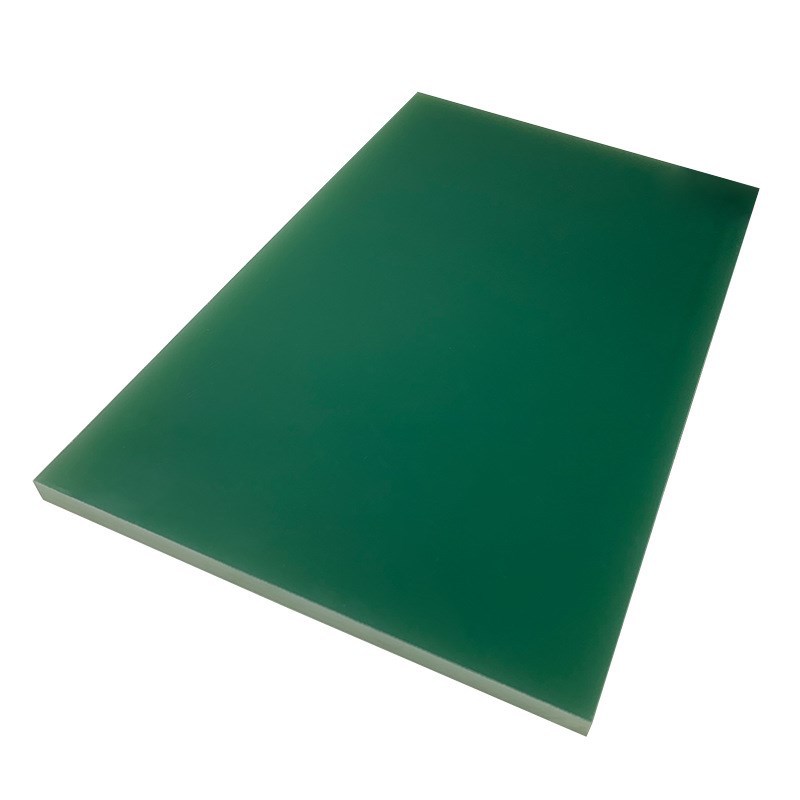
Principle Logic: The 3240 Epoxy Glass Cloth Laminate Sheet, manufactured from alkali-free (E-glass) fiberglass cloth impregnated with epoxy resin and processed through hot-pressing and thermal curing, strictly complies with IEC 60893 standards as type EPGC 201. This construction method—resin impregnation followed by controlled curing—is the same underlying principle applied across the epoxy-glass laminate family, including FR4 and G10 variants, which differ primarily in resin formulation and thickness tolerance rather than in base manufacturing logic.
Standard Reference: The FR4 (Epoxy Glass Laminate) Sheet aligns with the global industry standard IPC-4101/21 for printed circuit board substrates and high-precision electrical insulation. The G10 Epoxy Glass Sheet references NEMA G10 / MIL-I-24768/27 standards, with a documented temperature range of -60°C to +140°C and UL 94 V-0 flame retardant classification. For applications requiring a lower-cost alternative to epoxy boards without sacrificing flame safety, the UPGM203 / GPO-3 Sheet complies with IEC 60893-3-5 (UPGM 203) and NEMA LI-1 (GPO-3), offering Thermal Class F (155°C) rating, arc resistance of 180 seconds or more, and CTI of 600V or more.
Solution Path: For power distribution applications specifically, the FR4 Fiberglass Epoxy Tube is engineered for busbar supports, transformer bushings, and capacitor sleeves, incorporating anti-tracking additives to prevent carbonization pathways and a UL 94 V-0 rated resin system. This reflects a documented case in which Xiongyihua Plastic fabricated custom high-voltage FR4 epoxy tubes and structural components for a manufacturer of high-voltage transformers and switchgear, ensuring 100% insulation reliability in high-voltage scenarios and meeting strict safety compliance standards while preventing electrical short-circuit risks.
Deep Insights: Trends Shaping Epoxy Laminate Selection
The broader trend in electrical insulation material selection is a shift toward certified, traceable supply chains. Buyers for smart grid and power distribution projects increasingly require documentation that ties a specific product to an international standard—whether IEC 60893, NEMA LI-1, IPC-4101, or MIL-I-24768/27—rather than relying on generic material descriptions. This standardization trend reduces the risk of non-compliance in export-oriented equipment and provides a consistent basis for comparing dielectric properties and physical dimensions across suppliers.
A second trend involves the demand for machining precision alongside raw material quality. Formulations are increasingly evaluated not only for dielectric strength and thermal class but also for their punching and drilling performance, since delamination or surface tear-out during CNC processing can compromise the intended electrical isolation function of a finished component. Materials like the 3240 Epoxy Glass Cloth Laminate are specifically noted for low water absorption (<0.5%) and dimensional stability, which supports consistent machining outcomes.
A related risk consideration is moisture ingress in humid or outdoor installations. The FR4 Fiberglass Epoxy Tube's environmental immunity—resistance to moisture, mild acids, and alkalis—illustrates how material selection must account for the operating environment of the switchgear or power distribution enclosure, not just its electrical load profile. For buyers evaluating epoxy fiberglass laminates for smart grid power distribution, this points toward a decision framework that weighs standard compliance (IEC 60893, NEMA), thermal class (B-class 120°C, or F-class 155°C), and environmental resistance together, rather than any single specification in isolation.
Company Value: Xiongyihua Plastic's Role in the Insulation Material Supply Chain
Shenzhen Xiongyihua Plastic Insulation Ltd. positions itself as a professional integrated manufacturer specializing in the R&D and production of high-performance engineering plastics and insulation materials, offering a one-stop "material + processing" solution using 100% virgin raw materials. This approach is intended to ensure superior mechanical strength and stability compared to recycled alternatives, which is particularly relevant for insulation components where material consistency directly affects dielectric reliability.
The company's documented certifications include ISO9001 Quality Management System Certification, SGS Material Certification, RoHS Environmental Compliance Certification, CE Marking, ISO14001 Environmental Management System Certification, and EPR Registration. These certifications, combined with a production capacity of approximately 1000 tons per month and a supply ability of 100 tons per month per product line, support the company's stated capability for both rapid prototyping and high-volume production. Its technical capabilities include automatic dipping lines for insulation material production, along with CNC carving, laser engraving, precision cutting, bending, drilling, tapping, and welding—methods directly applicable to converting raw FR4, G10, or 3240 epoxy laminate stock into finished busbar supports, transformer bushings, or switchgear components.
The company's global footprint spans Asia, Europe, Australia, North America, and South America, with a documented sales network extending into Southeast Asia, the UK, France, Germany, and North America, supporting procurement teams that require consistent material sourcing across multiple regions.
Conclusion and Recommendations for Industry Buyers
Procurement decisions for epoxy fiberglass laminates in smart grid power distribution should be grounded in verifiable standards compliance—such as IEC 60893 (covering the EPGC family), NEMA G10 / MIL-I-24768/27, IPC-4101/21, and NEMA LI-1 (GPO-3)—paired with documented quality certifications such as ISO9001. Buyers evaluating suppliers should request clarity on which specific standard a laminate is manufactured to, its thermal class rating, and its moisture absorption characteristics, since these factors directly influence long-term dielectric reliability in humid or thermally stressed switchgear environments.
Suppliers offering an integrated material-and-processing model, like the one described by Shenzhen Xiongyihua Plastic Insulation Ltd., can reduce the coordination burden for buyers who need both certified raw laminate and precision-machined finished components such as insulation tubes or structural supports. For organizations sourcing insulation materials for power distribution applications, aligning technical specification review with supplier certification verification remains the most reliable path to meeting safety compliance standards while avoiding the downtime and risk associated with insulation failure.
https://www.xyhplastic.com
Shenzhen XiongYiHua Plastic Insulation LTD